BUSINESS
Government’s New Solar Scheme Can Change How Electricity Is Generated: What Is PM Surya Sarovar Yojana?
The government has approved a new solar power initiative that could give a major boost to renewable energy generation across the country. The Pradhan Mantri Surya Sarovar Yojana (PM-SSY) was approved on July 31, 2026, with a focus on generating solar power from water bodies instead of relying only on large areas of land.
The scheme aims to support 5,000 MW of floating solar photovoltaic projects, along with energy-storage systems. For ordinary electricity consumers, the initiative is important because it could help states increase renewable power generation while making better use of existing reservoirs and industrial ponds.
What Is a Floating Solar Project?
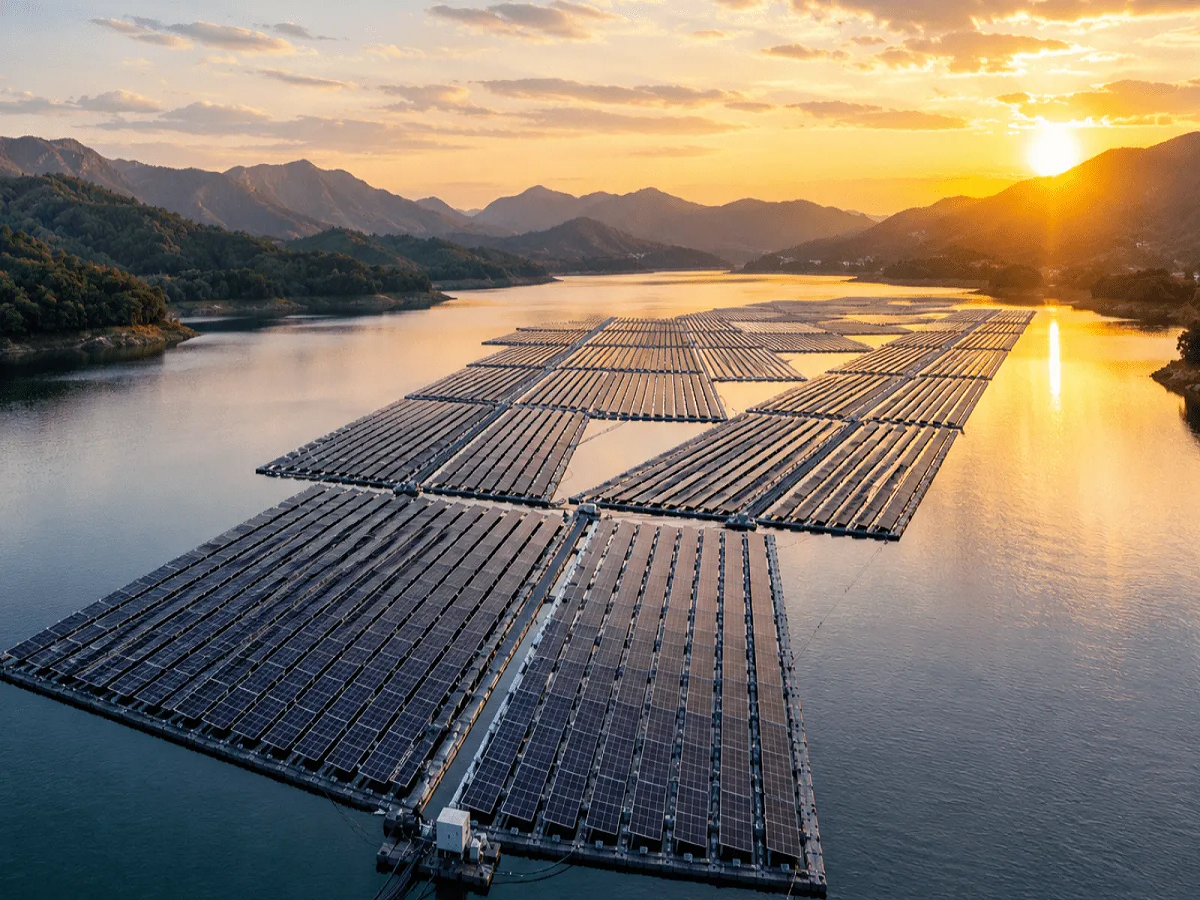
Unlike conventional solar plants, floating solar projects are installed on the surface of suitable water bodies.
Solar panels are mounted on floating structures and placed on reservoirs, ponds or other appropriate water bodies. This approach allows electricity to be generated without requiring large stretches of land for the solar panels.
The government's new scheme specifically aims to encourage this type of solar infrastructure.
Government Targets 5,000 MW of Solar Capacity
Under PM-SSY, the government plans to support floating solar photovoltaic projects with a combined capacity of 5,000 MW.
The projects will also be supported by energy-storage systems with a minimum storage capacity equivalent to two hours. The planned storage capacity is 10,000 MWh.
This storage component is important because solar power generation depends on sunlight and therefore varies throughout the day.
Why Is Energy Storage Important?
Solar panels produce electricity during daylight hours, but electricity demand does not always peak at the same time.
Battery storage can help store some of the electricity generated during periods of high solar production and make it available when demand increases.
This can help states manage peak electricity demand more efficiently while increasing the share of renewable power in the electricity mix.
Less Pressure on Valuable Land
One of the biggest advantages of floating solar projects is that they can make use of existing water bodies.
The government says the scheme will utilise reservoirs and industrial ponds, helping reduce pressure on scarce land resources.
This could be particularly useful in areas where finding large, uninterrupted stretches of land for solar parks is difficult.
Will This Reduce Your Electricity Bill?
The new scheme does not mean that household electricity bills will immediately become cheaper.
Its impact is expected to be more long-term. Increasing renewable generation and adding storage capacity can help strengthen electricity supply and reduce dependence on conventional sources of power.
The actual effect on consumer tariffs will depend on factors such as project costs, state electricity regulations, distribution expenses and the broader power market.
What Does It Mean for Common People?
For an ordinary electricity consumer, the biggest takeaway is that India's power infrastructure is moving towards a greater combination of solar generation and energy storage.
If the planned projects are implemented successfully, they could increase renewable electricity generation without requiring all solar infrastructure to be built on land.
The initiative therefore represents a different approach to India's clean-energy expansion—using the country's existing water infrastructure as another potential platform for solar power generation.
A New Direction for India's Solar Power
India has already expanded its conventional solar capacity significantly. Floating solar adds another option to this growing renewable-energy ecosystem.
With a target of 5,000 MW under PM-SSY and integrated energy storage, the government is looking beyond simply installing more solar panels. The focus is increasingly shifting towards generating renewable electricity and storing it so that it can be used when needed.
For consumers, the benefits may not be visible immediately, but such projects could play an important role in shaping India's electricity system in the years ahead.