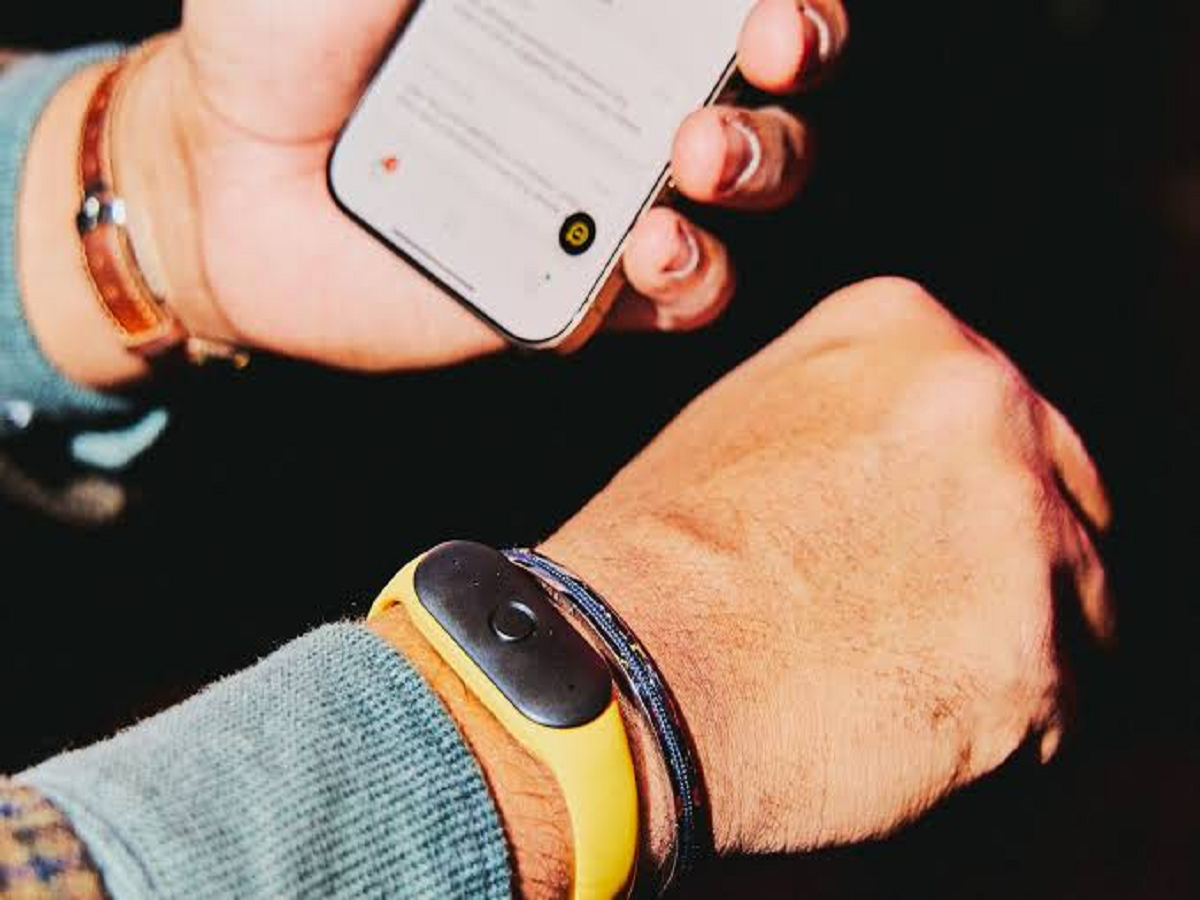
Smartwatches have traditionally been built around displays. Users check notifications, read messages, monitor workouts and view health statistics directly on the screen. But a new generation of wearable technology is beginning to challenge that idea.
Screen-free wearables are emerging as companies experiment with devices that rely on AI, microphones, sensors and smartphone connectivity instead of a traditional display. The goal is to make wearables less distracting while still allowing them to perform useful tasks.
A newly launched AI-powered screen-free fitness band in India shows how quickly this category is developing. The device can record conversations and use AI to turn them into searchable transcripts, summaries, translations and mind maps.
Why remove the screen?
At first, a screenless wearable may sound less useful than a smartwatch. After all, the display is one of the biggest reasons people buy a smartwatch.
However, removing the screen can have some advantages.
A smaller device can be lighter and potentially more comfortable to wear throughout the day. Users also don't need to repeatedly look down at their wrist to interact with it.
Instead, the wearable can collect information through sensors and microphones and send it to an AI system for processing.
AI becomes the main interface
The biggest change is that the AI assistant, rather than the screen, becomes the interface.
For example, a wearable could record a meeting and later provide a summary instead of requiring the user to take notes. It could potentially translate conversations, organise information or answer questions about something that was discussed.
This represents a broader shift in technology: instead of users constantly interacting with screens, devices could increasingly understand their surroundings and provide information when required.
Sensors can continue monitoring activities such as movement, exercise and other health-related metrics. The difference is that users may access the information through their smartphone or an AI-generated summary rather than viewing every statistic directly on the wearable.
This approach could make health tracking less overwhelming for people who don't want to constantly check numbers throughout the day.
India is becoming an important testing ground
India's growing smartphone and 5G ecosystem makes it an attractive market for new wearable technology. The country's large technology user base is also increasingly comfortable with AI-powered services.
The Indian government's broader push toward semiconductor and AI capabilities is also aimed at building a stronger domestic technology ecosystem, covering areas ranging from chip manufacturing to AI research and advanced computing.
But privacy could become a major concern
There is one major issue with AI wearables: they may collect much more personal information than traditional fitness bands.
A device capable of recording conversations could potentially capture information about other people as well. That makes data storage, consent and security extremely important.
As AI becomes more autonomous, cybersecurity is also becoming a bigger concern. The Financial Stability Board has recently warned that advanced AI could accelerate the speed and scale of cyberattacks, highlighting the need for stronger safeguards.
Could screenless wearables replace smartwatches?
Probably not immediately.
Smartwatches remain useful for navigation, notifications, calls, fitness tracking and many other functions that benefit from having a display.
Instead, screenless AI wearables are likely to become a new category alongside smartwatches.
The interesting part is that the future of wearable technology may not be about putting increasingly larger screens on our wrists. It could move in the opposite direction—smaller devices, fewer distractions and AI doing more of the work in the background.