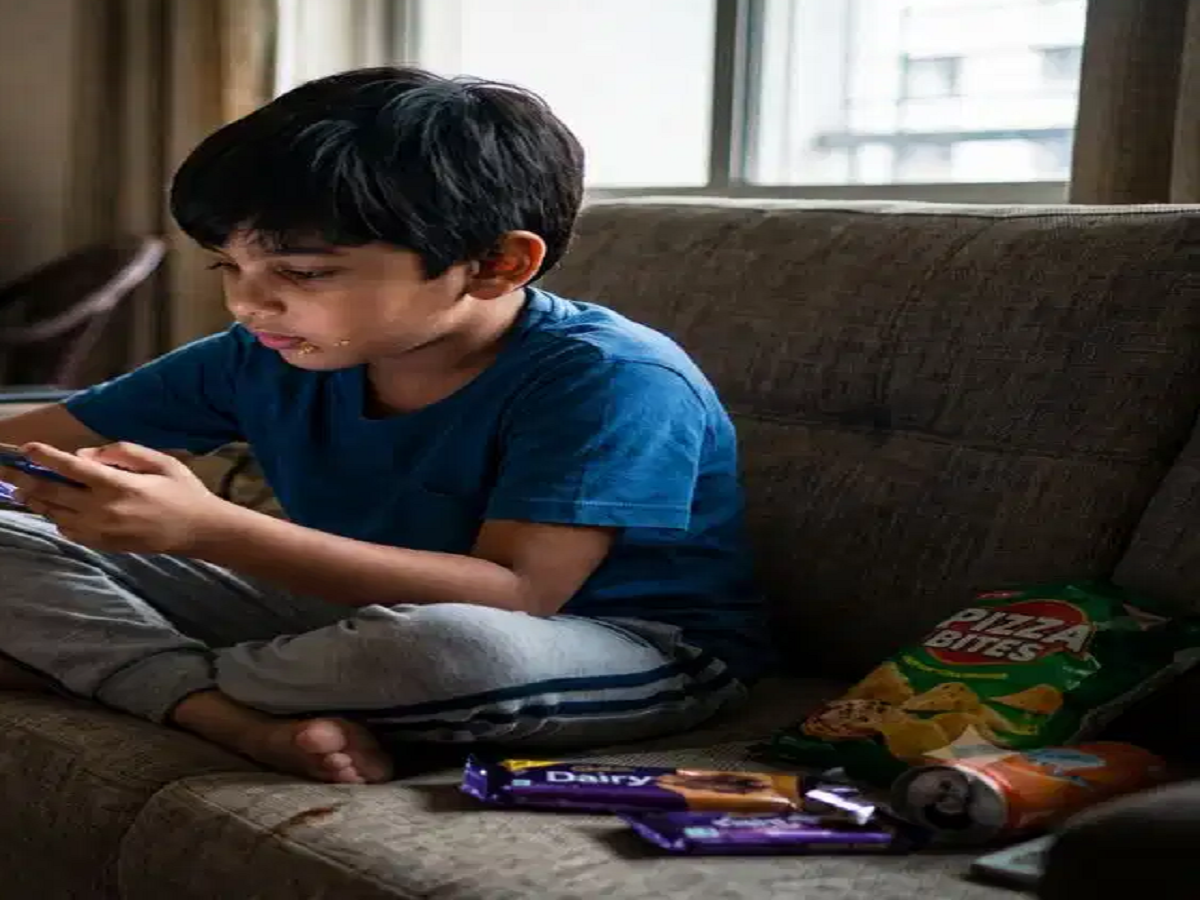
Children today are spending more time than ever in front of mobile phones, tablets and televisions. At the same time, packaged snacks such as chips, chocolates, biscuits and sugary treats have become a common part of their daily diet.
For many parents and grandparents, giving a child a favourite snack while keeping them occupied with a phone may seem harmless. However, when these two habits become routine, they can contribute to unhealthy eating patterns and a less active lifestyle.
Why Eating While Watching a Screen Can Be a Problem
When children eat while watching videos or playing games, their attention is focused on the screen rather than their food. This can make it harder for them to notice hunger and fullness cues.
As a result, they may continue eating even after they have had enough. Over time, this distracted eating can encourage overeating and make it difficult for children to develop healthy eating habits.
The Problem With Too Much Junk Food
Packaged snacks and fast foods can often contain high amounts of salt, added sugar and unhealthy fats while providing relatively little nutritional value.
Regularly consuming large amounts of such foods can contribute to excessive calorie intake and increase the risk of unhealthy weight gain. Replacing nutritious foods with highly processed snacks can also mean that children get fewer essential nutrients needed for growth and development.
More Screen Time Can Mean Less Physical Activity
Another concern is that long periods spent on phones or other screens can reduce the amount of time children spend playing outdoors, exercising or participating in active games.
A sedentary routine combined with frequent consumption of calorie-dense snacks can make maintaining a healthy weight more difficult.
Screen Use Can Also Affect Sleep
Using phones and other screens, particularly close to bedtime, can interfere with a child's sleep routine. Poor or insufficient sleep can affect mood, concentration, school performance and overall well-being.
That's why creating screen-free periods during the day, especially around meals and before bedtime, can be a useful habit.
What Can Parents Do?
Parents don't necessarily need to completely ban screens or snacks. Instead, the focus should be on creating healthier routines.
-
Keep mealtimes screen-free whenever possible.
-
Encourage children to eat at a table rather than while watching videos.
-
Offer fruits, vegetables, nuts, homemade snacks and other nutritious options regularly.
-
Keep packaged snacks as occasional foods rather than everyday staples.
-
Encourage outdoor games and other physical activities.
-
Establish a consistent bedtime and reduce screen use before sleeping.
-
Most importantly, set an example by following healthy eating and screen habits yourself.
A phone in one hand and a packet of chips in the other may seem like an easy way to keep a child occupied, but making mindful eating and active play part of their routine can have much greater long-term benefits.