INTERNATIONAL
Diplomatic Deadlock: UAE and Iran Clash at BRICS Summit Over Strait of Hormuz and US Sanctions
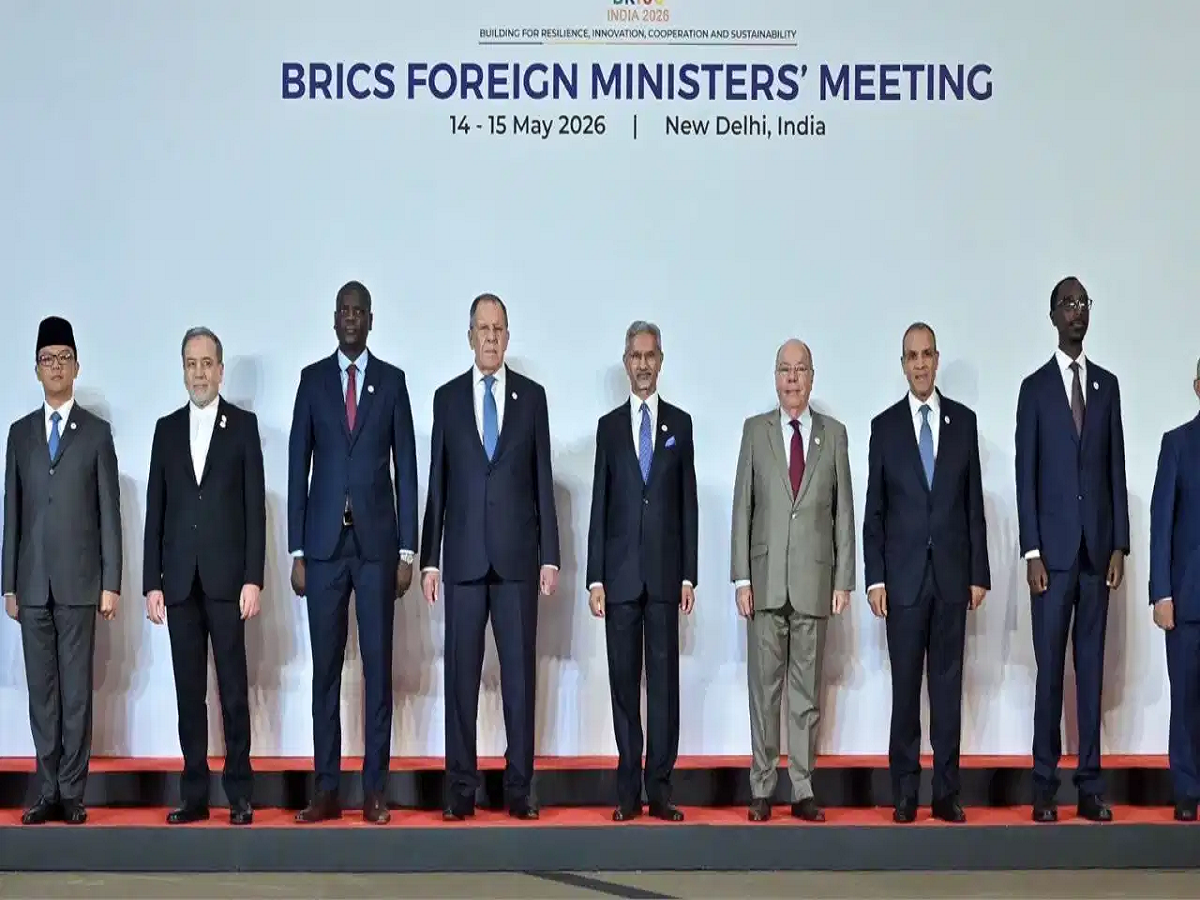
The BRICS Foreign Ministers' meeting in New Delhi reached a standstill as tensions between the UAE and Iran boiled over, preventing the group from issuing a customary joint statement. Russian Foreign Minister Sergey Lavrov confirmed that due to the lack of consensus, the summit would instead conclude with a "Presidential Statement" issued by the host nation, India.
The friction highlights the growing internal complexities of the expanded BRICS bloc, which now includes several major Middle Eastern powers with conflicting regional interests.
The Core of the Conflict: Two Dueling Demands
The meeting descended into disagreement as both nations attempted to steer the group’s official stance on the ongoing regional crisis:
-
Iran’s Objective: Tehran sought a formal resolution from BRICS condemning the United States for recent military actions against Iran. According to Iranian officials, while most members were open to the idea, the UAE reportedly blocked the move.
-
The UAE’s Objective: Abu Dhabi pushed for the bloc to pressure Iran into reopening the Strait of Hormuz and to address attacks directed at the UAE. The UAE has been hit hard by the maritime blockade, which has stifled its energy exports.
Russia’s Stance: "Diplomacy Doesn't Work Like That"
Foreign Minister Lavrov took a firm stance against the UAE's request, siding with the Iranian position that the blockade is a byproduct of U.S. aggression rather than a BRICS issue.
-
On the US: Lavrov argued that U.S. actions were a "provocation" designed to destabilize the relationship between Iran and its neighbors.
-
On the Blockade: He dismissed the UAE's demand for collective pressure on Iran, stating it was "not appropriate" and that Russia would not interfere in what it views as a conflict sparked by Washington.
Key Revelations and Alliances
The meeting saw several sharp exchanges and strategic observations:
-
The Israel Connection: In a bid to counter the UAE, Iranian officials cited reports from the Israeli Prime Minister’s Office suggesting a clandestine wartime visit by the Israeli leader to the UAE.
-
India as a Mediator: Lavrov suggested that India is uniquely positioned to act as a long-term mediator between Iran and its Arab neighbors, leveraging its balanced diplomatic ties with both sides.
Why the BRICS Voice Matters
The inability to reach a consensus is significant given the sheer scale of the organization. Since its recent expansion, the group now represents:
-
49.5% of the global population.
-
40% of the world’s GDP (surpassing the G-7’s 30% share).
The inclusion of Brazil, Russia, India, China, South Africa, Iran, Egypt, Ethiopia, Saudi Arabia, and the UAE has made BRICS a formidable economic force, but as this meeting proves, it also brings local geopolitical rivalries directly to the global table.