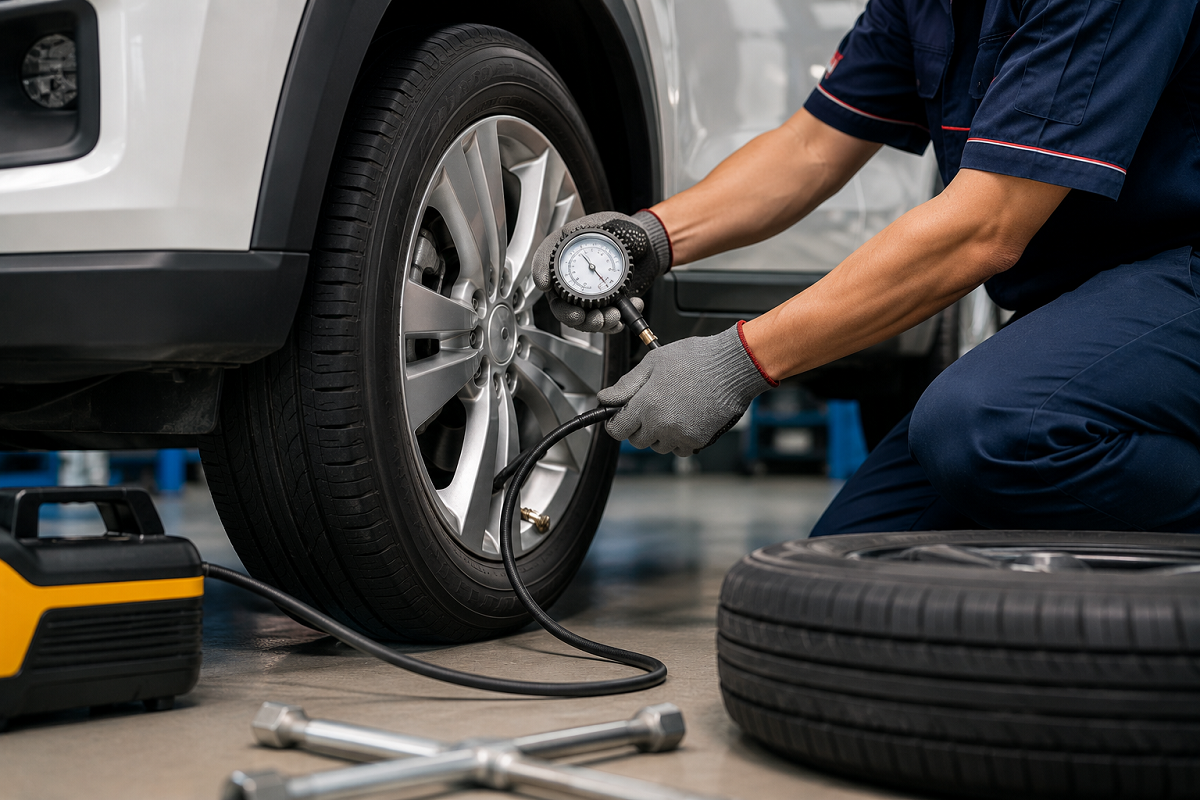
Your car's tyres are the only point of contact between the vehicle and the road, making them one of the most critical components for safe driving. While many vehicle owners pay close attention to engine maintenance and exterior cleaning, tyre care is often overlooked.
Properly maintained tyres not only improve road grip and braking performance but can also enhance fuel efficiency and reduce long-term maintenance costs. A few simple checks performed regularly can go a long way in ensuring safer and more comfortable journeys.
Here are some essential tyre maintenance tips every vehicle owner should follow.
Check Tyre Pressure Regularly
Maintaining the correct tyre pressure is one of the easiest and most important aspects of vehicle maintenance.
Driving with incorrect tyre pressure can affect:
-
Road grip
-
Braking performance
-
Fuel efficiency
-
Tyre lifespan
-
Overall driving comfort
Low Tyre Pressure
Underinflated tyres can:
-
Increase rolling resistance
-
Reduce fuel efficiency
-
Cause excessive wear along the tyre edges
-
Generate additional heat during driving
High Tyre Pressure
Overinflated tyres may:
-
Reduce the tyre's contact with the road
-
Affect ride comfort
-
Cause faster wear in the centre of the tread
-
Reduce grip, especially on uneven roads
Tyre pressure should ideally be checked once a week or before starting a long journey. It is recommended to measure pressure when the tyres are cold for more accurate readings.
Rotate Tyres at Recommended Intervals
Tyres do not always wear evenly because the front and rear wheels experience different loads and driving forces.
For example, front tyres usually wear faster due to:
-
Steering movement
-
Braking forces
-
Vehicle weight distribution
Periodic tyre rotation helps distribute wear more evenly across all four tyres, improving their overall lifespan.
Follow the rotation schedule recommended by your vehicle manufacturer or service centre.
Ensure Proper Wheel Balancing and Alignment
Wheel balancing and wheel alignment play an important role in vehicle stability and tyre health.
You should have your wheels inspected if you notice:
-
Steering wheel vibration
-
Vehicle pulling to one side
-
Uneven tyre wear
-
Reduced steering control
Proper balancing and alignment improve handling, increase tyre life, and provide a smoother driving experience.
Inspect Tread Depth Regularly
Tyre tread is responsible for maintaining grip on the road, particularly during wet weather.
Adequate tread depth helps:
-
Improve braking performance
-
Reduce the risk of skidding
-
Channel water away from the tyre surface
-
Enhance traction on slippery roads
If the tread becomes excessively worn, the tyre may no longer provide sufficient grip and should be replaced according to applicable safety recommendations.
Check for Cuts, Cracks, and Bulges
A visual inspection of your tyres can help identify early signs of damage.
Look for:
-
Sidewall cracks
-
Cuts or punctures
-
Bulges or deformities
-
Embedded stones or sharp objects
Removing trapped debris and addressing visible damage early may help prevent further tyre deterioration.
If significant damage is found, consult an authorised tyre service centre for inspection.
Avoid Harsh Driving Habits
Driving style has a direct impact on tyre wear.
Habits that may reduce tyre life include:
-
Sudden acceleration
-
Hard braking
-
Aggressive cornering
-
High-speed driving on rough roads
Smooth acceleration, gradual braking, and careful driving can help tyres wear more evenly and improve vehicle safety.
Drive Carefully on Bad Roads
Potholes, broken roads, and sharp road edges can damage the tyre's internal structure, even if the outer surface appears normal.
When driving on poor road surfaces:
-
Reduce speed.
-
Avoid hitting potholes aggressively.
-
Maintain a safe distance from other vehicles.
-
Inspect tyres after severe impacts.
Careful driving reduces the risk of hidden tyre damage.
Park Your Vehicle Properly
Environmental conditions also affect tyre health.
Whenever possible:
-
Park in a shaded area.
-
Avoid prolonged exposure to direct sunlight.
-
Protect tyres from excessive heat and moisture.
Long-term exposure to harsh weather conditions may accelerate rubber ageing.
Avoid Overloading Your Vehicle
Every vehicle has a specified load-carrying capacity.
Driving with excessive weight places additional stress on tyres, which may:
-
Increase wear
-
Raise operating temperatures
-
Affect braking performance
-
Reduce handling stability
Always stay within the manufacturer's recommended load limits.
Easy Tips to Keep Your Tyres in Good Condition
To improve tyre life and driving safety:
-
Check tyre pressure regularly.
-
Rotate tyres at recommended intervals.
-
Maintain wheel balancing and alignment.
-
Monitor tread depth.
-
Inspect tyres for cuts and damage.
-
Drive smoothly without harsh acceleration or braking.
-
Avoid overloading the vehicle.
-
Replace worn tyres when necessary.
Final Takeaway
Regular tyre maintenance is one of the simplest ways to improve vehicle safety, driving comfort, and fuel efficiency. Simple practices such as maintaining the correct tyre pressure, rotating tyres on schedule, checking tread wear, and driving carefully can significantly extend tyre life while reducing the risk of unexpected breakdowns.
By making tyre inspection a regular part of your vehicle maintenance routine, you can help ensure safer journeys for yourself and your passengers while avoiding unnecessary repair and replacement costs.
Disclaimer: This article is intended for general informational purposes only. Tyre maintenance requirements may vary depending on the vehicle model, tyre type, and driving conditions. Always refer to your vehicle owner's manual and consult an authorised service centre or tyre specialist for vehicle-specific recommendations.