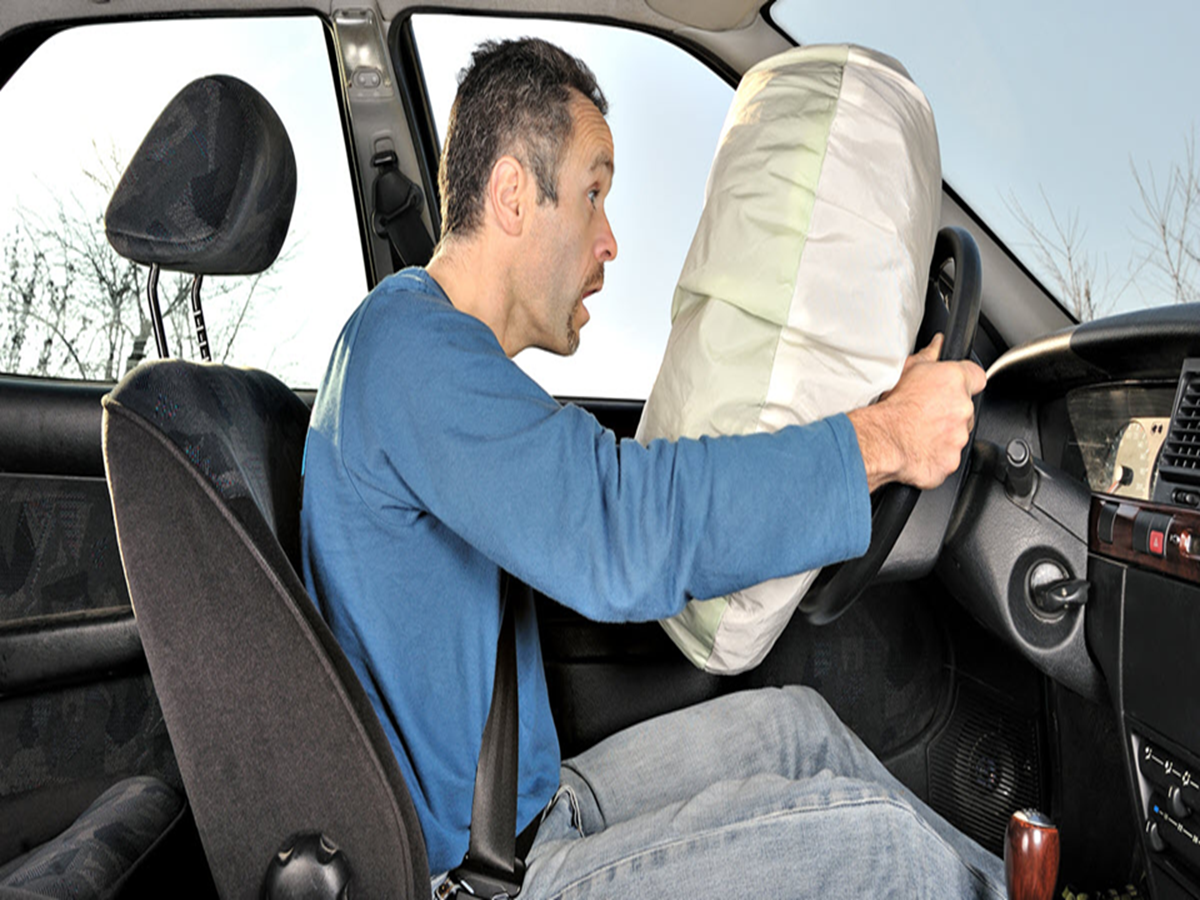
A recent incident in Thane, Maharashtra, has raised concerns about vehicle safety systems. A 25-year-old man reportedly died after an airbag deployed in a parked, 15-year-old car. According to reports, the sudden airbag deployment caused severe injuries, leading to excessive blood loss and his death.
The incident has sparked an important question among car users: Can an airbag deploy without an accident?
Can Airbags Open Without a Crash?
Airbags are designed to protect passengers during collisions by deploying instantly when a crash is detected. However, in rare cases, they may activate even without a major accident due to technical or system-related faults.
According to automotive safety experts and sources such as MyAirbags, several factors can lead to unintended deployment:
Possible Reasons for Unexpected Airbag Deployment
1. Sensor malfunction
Airbag systems rely on crash sensors. If these sensors fail or send incorrect signals, the airbag may deploy even without a collision.
2. Electrical faults
Short circuits or wiring issues in the vehicle’s electrical system can trigger sudden airbag activation.
3. Strong impact or sudden shock
Driving over deep potholes, high speed breakers, or hitting a curb at speed may sometimes confuse sensors into detecting a crash.
4. Airbag control module failure
The airbag control unit may malfunction due to software glitches, aging components, or internal errors, leading to unintended deployment.
5. Improper repairs or modifications
Incorrect servicing, tampering, or non-standard repairs in the airbag system can increase the risk of malfunction.
What You Should Do to Stay Safe
Airbags are one of the most important safety features in modern vehicles, but their effectiveness depends on proper usage and maintenance. A few precautions can significantly improve safety:
Always wear a seat belt
Seat belts ensure you stay in position so the airbag can protect you effectively rather than cause injury on impact.
Maintain proper seating distance
Keep at least 25 cm (about 10 inches) between your chest and the steering wheel to reduce injury risk during deployment.
Avoid sitting too upright or too close
A slightly reclined seating position can help reduce the force of impact if the airbag activates.
Children should sit in the back seat
Children under 12 should always travel in the rear seat with appropriate child safety restraints.
Adjust the steering wheel correctly
Position it so the airbag impacts the chest area, not the face or neck.
When to Take Airbag Issues Seriously
If an airbag deploys without a clear accident or if warning lights appear on the dashboard, the vehicle should be inspected immediately at an authorized service center. Ignoring such signs can increase safety risks.
Final Note
Airbags are life-saving systems that prevent thousands of injuries every year. However, they work best when combined with seat belts, proper seating posture, and regular vehicle maintenance. Understanding how these systems function—and what can go wrong—can help drivers stay better prepared and safer on the road.