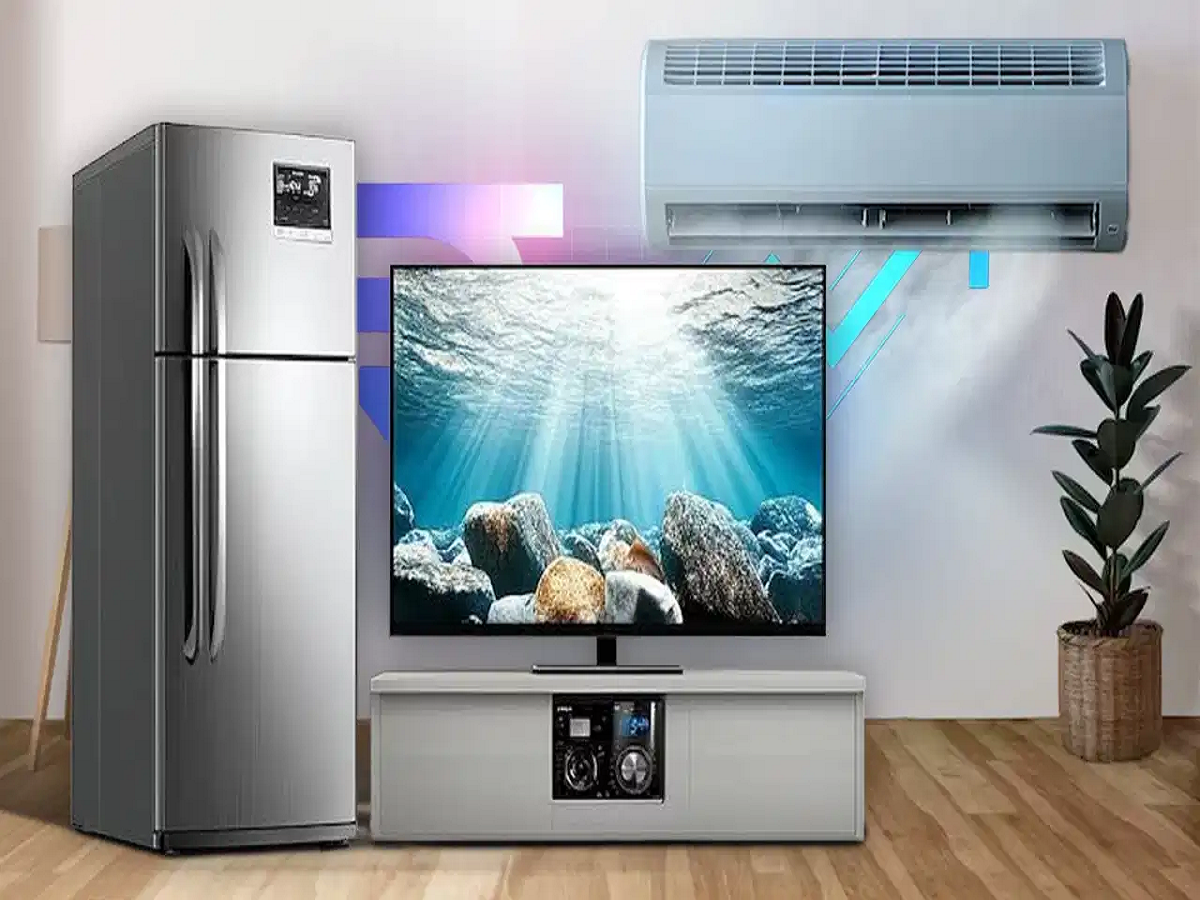
Consumers planning to buy a new air conditioner, television, refrigerator or washing machine during the festive season may need to set aside a little more money. Price increases across several consumer-durable categories have started becoming visible from October, with manufacturers and retailers citing higher input and logistics costs.
Depending on the brand, product category and model, reported price revisions range from around 3% to 8% in several categories, although some companies have announced increases of as much as 10% on selected products.
This means the additional amount customers actually pay will vary significantly. A ₹30,000 television, for example, will be affected differently from a ₹60,000 air conditioner.
Here's how the latest price changes could affect your festive shopping budget.
AC Prices Could See One of the Biggest Increases
Air conditioners are among the appliances expected to see a noticeable impact.
According to industry reports, AC prices could increase by approximately 5% to 8%, depending on the manufacturer and model.
To understand the impact, consider an AC that previously cost ₹40,000.
A 5% increase would add around ₹2,000, taking the price to approximately ₹42,000. An 8% increase would add ₹3,200, potentially pushing the same product to around ₹43,200.
For a premium AC priced at ₹60,000, a 5% increase works out to ₹3,000, while an 8% rise would mean an additional ₹4,800.
Actual retail prices can still differ because of dealer discounts, festive promotions and available inventory.
LED TVs May Become 3% to 7% Costlier
Consumers planning to upgrade their televisions may also see higher prices.
Reported increases for LED TVs are in the range of approximately 3% to 7%.
Suppose an LED television was previously available for ₹50,000. A 3% increase would add ₹1,500, while a 7% increase would add ₹3,500.
That would take the indicative price to between ₹51,500 and ₹53,500 before accounting for any promotional discount.
The final impact will depend on screen size, brand, technology and individual retailer pricing.
Refrigerators and Washing Machines May Rise 3% to 4%
The increase is expected to be somewhat smaller for refrigerators and washing machines, with reported revisions of approximately 3% to 4% in some cases.
If a refrigerator costs ₹30,000, a 3% hike translates into an additional ₹900. A 4% increase would add ₹1,200.
Similarly, a washing machine previously priced at ₹25,000 could become ₹750 to ₹1,000 more expensive if the entire increase is passed on to consumers.
Even relatively small percentage changes can therefore add several thousand rupees to a household's total bill when multiple appliances are purchased together.
How Much More Could You Pay?
Here's an illustrative calculation showing what different percentage increases could mean:
| Previous Price | 3% Increase | 5% Increase | 8% Increase |
|---|---|---|---|
| ₹20,000 | ₹20,600 | ₹21,000 | ₹21,600 |
| ₹30,000 | ₹30,900 | ₹31,500 | ₹32,400 |
| ₹40,000 | ₹41,200 | ₹42,000 | ₹43,200 |
| ₹50,000 | ₹51,500 | ₹52,500 | ₹54,000 |
| ₹60,000 | ₹61,800 | ₹63,000 | ₹64,800 |
| ₹1,00,000 | ₹1,03,000 | ₹1,05,000 | ₹1,08,000 |
These figures are examples rather than confirmed retail prices. Actual increases may vary by brand and model, while discounts can reduce the effective amount paid by customers.
Several Appliance Brands Have Revised Prices
According to an Economic Times report cited in the original information, companies including Blue Star, Godrej Appliances, Haier, Daikin and Super Plastronics have revised prices across different product categories.
Reported increases across these companies range from approximately 4% to 10%, depending on the product.
Panasonic, meanwhile, was reported to be assessing market conditions before deciding whether additional price revisions would be required.
Separate reporting by PTI indicated that LG and Bosch Home Comfort had also increased air-conditioner prices by around 5%. Bosch Home Comfort markets Hitachi-branded air conditioners in India.
Since manufacturers can take different pricing decisions across categories and models, consumers should check the latest price of the specific product they intend to purchase rather than assuming that every appliance from a particular brand has become costlier by the same percentage.
Why Are ACs, TVs and Refrigerators Getting Costlier?
Manufacturers are facing higher costs for several materials used extensively in appliances and consumer electronics.
Copper is particularly important in air conditioners because it is used in components such as coils and connecting pipes. Steel, aluminium and different types of plastics are also widely used across refrigerators, washing machines, televisions and ACs.
When the prices of these inputs increase, manufacturing costs can rise.
Transportation is another factor. Higher freight, logistics and shipping expenses can increase the cost of moving raw materials, components and finished products through the supply chain.
Companies may absorb some of these increases temporarily, but sustained cost pressure can eventually result in higher retail prices.
Old Stock Could Still Offer Some Relief
Not every product in every showroom will necessarily become more expensive immediately.
Some retailers may still have inventory purchased before the latest price revision. Depending on the dealer's pricing policy, these older units could potentially be offered at earlier prices or with more attractive discounts.
That creates an opportunity for consumers willing to compare prices across multiple retailers.
However, old inventory does not automatically guarantee an old price. Retailers ultimately determine the selling price, and availability can vary significantly by model and location.
Festive Discounts Could Offset Part of the Increase
The timing of the price hikes is important because the festive season is traditionally one of India's biggest periods for consumer-electronics and appliance sales.
Brands, e-commerce platforms, banks and retailers frequently offer promotional discounts, cashback, exchange bonuses and no-cost EMI options during major festive sales.
As a result, the listed price of an appliance may increase while its effective purchase price after offers could be lower.
Customers should therefore compare the final payable amount rather than looking only at the MRP or headline discount.
For example, a retailer offering a ₹3,000 discount on a product whose base price has just increased by ₹2,000 may still provide a competitive deal.
Don't Rush Into a Purchase Just Because Prices Are Rising
A reported price increase doesn't necessarily mean consumers should immediately purchase an appliance.
Before buying, compare prices across authorised offline retailers and online platforms, check the manufacturing date and model number, and confirm whether installation charges or extended warranties are included.
For ACs, installation expenses can make a significant difference to the final bill. Consumers should check charges for standard installation, copper piping beyond the included length, outdoor-unit stands and other accessories.
Similarly, energy efficiency should be considered for refrigerators and air conditioners because a cheaper purchase price can sometimes be offset by higher electricity consumption over several years.
Your Festive Shopping Bill Could Rise by Thousands
The impact becomes more noticeable when a household is buying several appliances together.
For instance, someone purchasing a ₹50,000 television, ₹45,000 AC and ₹30,000 refrigerator would previously have spent ₹1.25 lakh before discounts.
Even an average increase of 5% would add approximately ₹6,250 to that combined amount.
This is why consumers making multiple purchases during the festive season may feel the effect more strongly than someone buying a single small appliance.
For now, the extent of the increase varies by manufacturer and product. Buyers should check current prices, compare old and new stock where available and factor in festive discounts before finalising a purchase.
The important takeaway is that ACs, TVs, refrigerators and washing machines have not all become costlier by one uniform percentage. Depending on the category and manufacturer, reported increases vary—and the actual amount coming out of your pocket will ultimately depend on the model, retailer and offers available at the time of purchase.