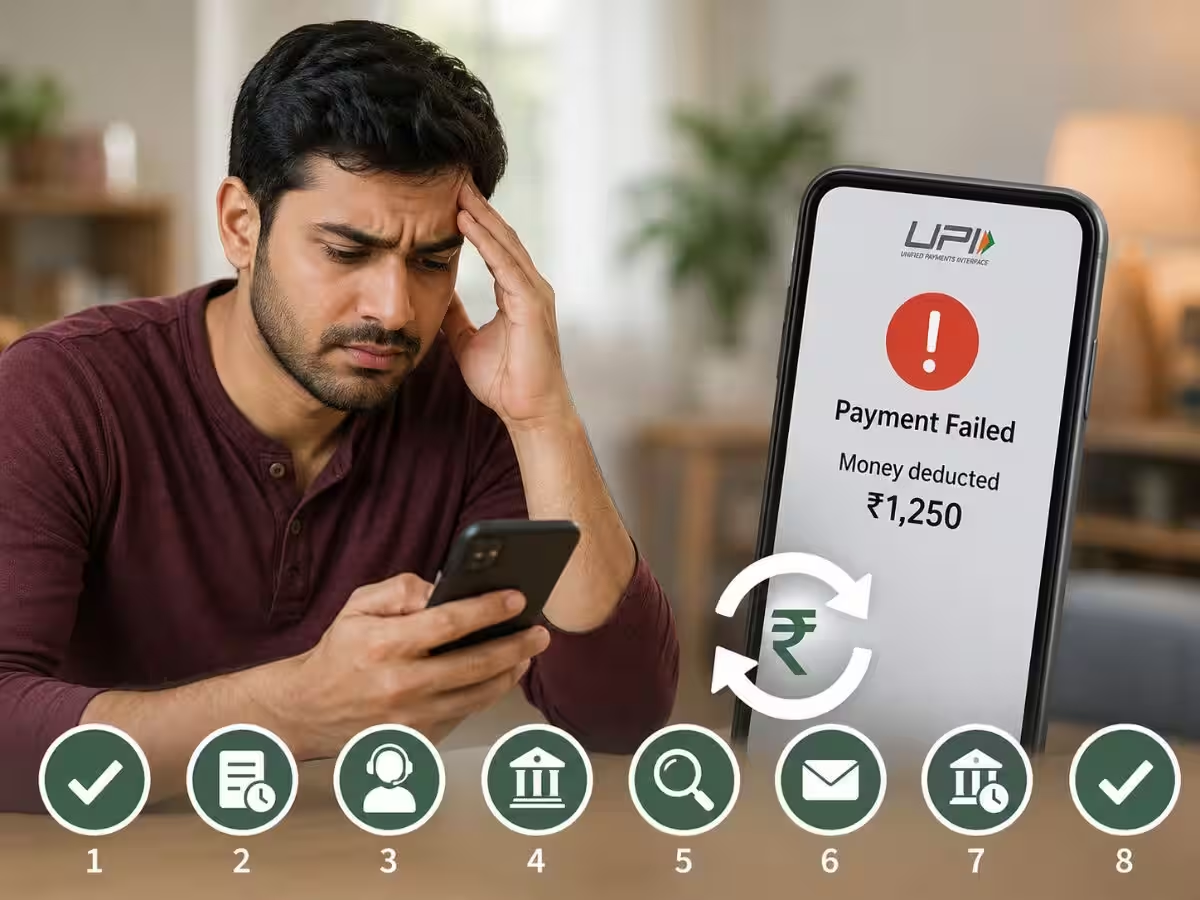
Digital payments have become a part of everyday life in India. From paying at grocery stores and restaurants to transferring money to friends, Unified Payments Interface (UPI) makes transactions quick and convenient. However, one situation can leave users worried: the payment fails, but the money is deducted from their bank account.
Whether you use Google Pay, PhonePe, Paytm or another UPI application, a failed transaction does not necessarily mean your money is lost. In many cases, the amount is automatically reversed. Knowing what to do, where to raise a complaint and how long to wait can help you resolve the issue without unnecessary stress.
Why Does a UPI Payment Fail Even After Money Is Deducted?
A UPI transaction involves communication between your payment application, the bank and the recipient's bank. If a technical issue occurs during this process, the transaction may not be completed successfully.
Common reasons include:
-
Temporary bank server problems.
-
Poor internet connectivity during the transaction.
-
Delays in receiving confirmation from the recipient's bank.
-
Technical issues with the payment application.
-
Transactions that remain pending despite the money being debited.
Sometimes, the sender's bank deducts the amount before receiving final confirmation of whether the recipient's account has been credited. This can create confusion, particularly when the payment status shows failed or pending.
How Long Does It Take to Get Your Money Back?
The applicable reversal timeline depends on the type of transaction and the reason it failed.
Under the Reserve Bank of India's failed-transaction framework, when a UPI transfer is debited but the beneficiary's account is not credited, the amount should generally be reversed within T+1 day. Here, T refers to the transaction date.
For a merchant payment where the account is debited but confirmation is not received at the merchant's location, the applicable framework generally provides for an automatic reversal within T+5 days.
If the applicable deadline is exceeded, compensation may be payable under the RBI framework, subject to the relevant conditions.
These timelines relate to specified failed-transaction situations. A pending transaction, a successful payment to the wrong recipient and a disputed transaction may require different handling.
What Should You Do If Your UPI Payment Fails?
If your bank account shows a debit but the payment application displays a failed transaction, follow these steps.
Step 1: Check the Transaction Status
Open your UPI application and visit the transaction history. Check whether the payment is marked as successful, pending or failed.
Do not immediately repeat the payment if the original transaction is still pending. Doing so could result in paying twice if the first transaction is eventually completed.
Step 2: Save the Transaction Reference Number
Record the transaction ID or UPI reference number, transaction date, amount and recipient details. Keep a screenshot of the status for your records, but avoid sharing screenshots containing sensitive banking information publicly.
These details will help your bank investigate the transaction.
Step 3: Raise a Complaint in the UPI App
Most UPI applications provide a help or support option within the transaction details.
Select the relevant transaction and report the issue. Follow the instructions provided by the application and retain the complaint reference number.
Step 4: Contact Your Bank
If the issue remains unresolved, contact your bank through its official mobile application, website, customer-care number or branch.
Explain that the amount was debited but the recipient was not credited, if that is what happened. Provide the transaction reference number and ask for the reversal status.
Step 5: Escalate the Complaint if Necessary
If the issue is not resolved through the initial complaint process, you can escalate it through the appropriate banking grievance channel.
The National Payments Corporation of India (NPCI) provides information about UPI and transaction dispute procedures on its official website, npci.org.in.
If you have first complained to the relevant regulated entity and the complaint remains unresolved for 30 days, or you receive an unsatisfactory response, you may be eligible to approach the RBI's Complaint Management System under the applicable Integrated Ombudsman Scheme. Eligibility and procedural requirements should be checked before filing.
What If You Accidentally Send Money to the Wrong Person?
A payment sent to the wrong UPI ID is different from a failed transaction.
If the transaction is successful, an automatic reversal is generally not guaranteed simply because you entered the wrong details.
Contact your bank and UPI application immediately, provide the transaction reference number and request assistance with the recovery process. If fraud is involved, report it promptly through your bank's official channels and India's cybercrime reporting system.
Do not assume that the recipient's bank can reverse a successful transfer without following the applicable process.
Important Safety Tips to Remember
While resolving a payment problem, be cautious of anyone claiming they can process a refund on your behalf.
-
Never share your UPI PIN or OTP with anyone.
-
You do not need to enter your UPI PIN simply to receive a refund.
-
Avoid scanning QR codes or approving collect requests to obtain a refund.
-
Do not install remote-access applications at the request of an unknown caller.
-
Use only official banking and payment-app support channels.
Fraudsters sometimes target people who are already worried about missing money. A fake refund offer can turn a temporary payment problem into a larger financial loss.
Final Takeaway
A failed UPI payment with a bank debit is often resolved through an automatic reversal, but the applicable timeline depends on the transaction type.
Check the status, save the transaction reference number and raise a complaint if the money is not returned within the prescribed period. If the payment was successful but sent to the wrong person, contact your bank immediately because the recovery process is different.
Above all, never share your UPI PIN or approve an unfamiliar payment request in the name of receiving a refund. Knowing the correct procedure can help you protect your money and resolve digital payment problems more confidently.