BUSINESS
Road Accident Victims Can Get Cashless Treatment Up to ₹1.5 Lakh Under PM-RAHAT Scheme: Know the Rules
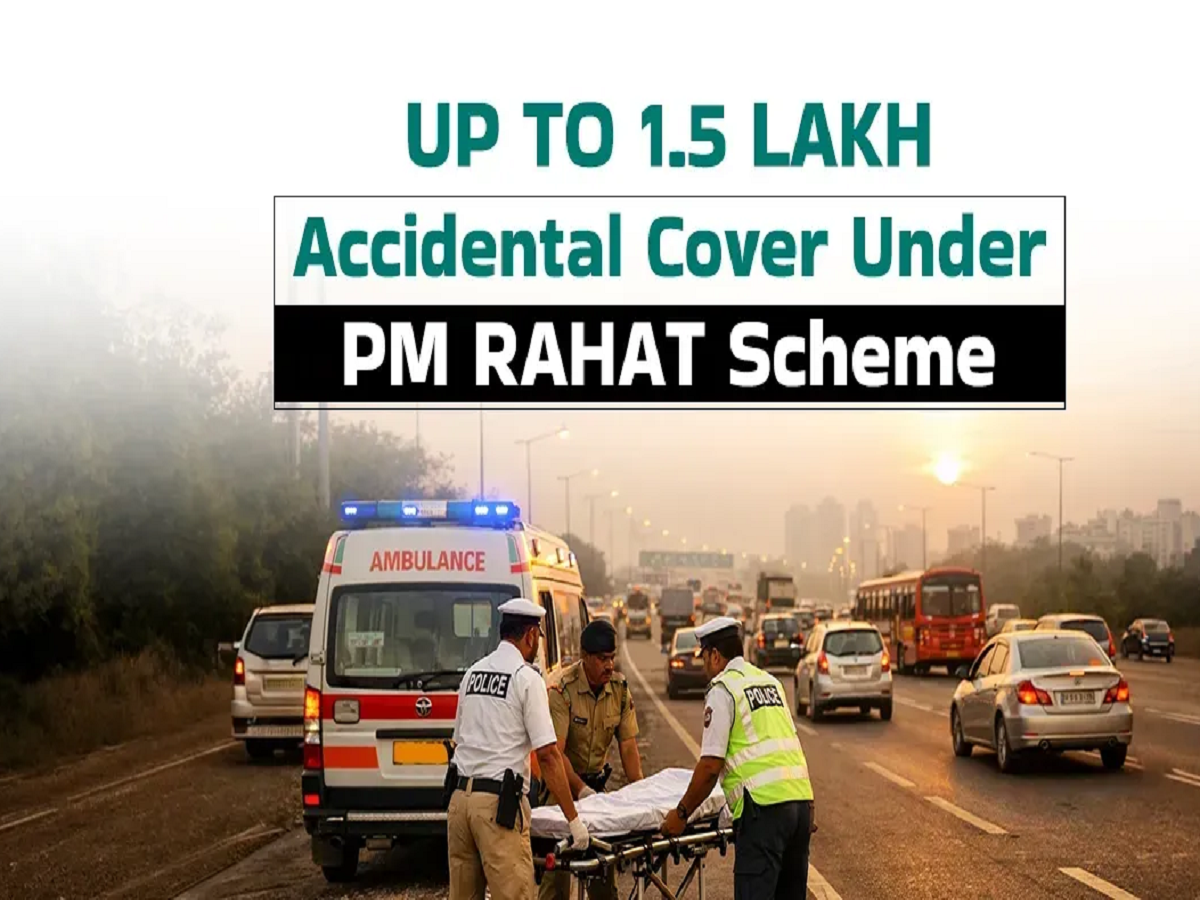
A road accident can turn into a medical emergency within seconds. For many families, the immediate concern is not only saving the injured person but also arranging money for hospital treatment. To address this challenge, the Government of India has introduced the Prime Minister – Road Accident Victims’ Hospitalisation and Assured Treatment (PM-RAHAT) Scheme.
Launched in February 2026, the scheme provides eligible road accident victims with cashless treatment of up to ₹1.5 lakh for a maximum period of seven days from the date of the accident. The initiative aims to ensure that financial difficulties do not prevent victims from receiving timely medical attention.
What Is the PM-RAHAT Scheme?
PM-RAHAT is a government initiative designed to support the emergency treatment of people injured in road accidents involving motor vehicles.
The scheme covers eligible victims regardless of the category of road on which the accident occurs. It is intended to make emergency medical care more accessible during the critical period immediately following an accident.
The treatment is provided through designated hospitals under the scheme, with eligible expenses handled through the prescribed cashless treatment and reimbursement process.
How Much Treatment Is Covered?
Under the scheme, eligible road accident victims can receive:
-
Cashless treatment worth up to ₹1.5 lakh per victim.
-
Treatment for a maximum of seven days from the date of the accident, subject to the financial limit.
-
Stabilisation treatment for up to 24 hours in non-life-threatening cases.
-
Stabilisation treatment for up to 48 hours in life-threatening cases, subject to the scheme’s applicable procedures.
The actual assistance depends on eligibility, the treatment provided and the applicable scheme guidelines. The seven-day period and ₹1.5 lakh ceiling are limits, not a guarantee that every victim will receive the full amount.
Who Can Benefit From the Scheme?
The scheme is intended for people who sustain injuries in road accidents caused by motor vehicles and require eligible trauma or polytrauma treatment.
It applies to accidents on different categories of roads, rather than being restricted exclusively to national highways.
However, treatment must follow the scheme’s prescribed procedures, including the required verification and hospital processes. Citizens should not assume that every medical expense or every type of treatment automatically qualifies for coverage.
What Should You Do After a Road Accident?
In an emergency, getting medical assistance should be the first priority.
Step 1: Call 112. India’s emergency response number can be used to request assistance and help coordinate an emergency response.
Step 2: Arrange immediate medical care. Do not delay hospitalisation while trying to understand the financial arrangements. If possible, avoid moving a seriously injured person unless there is an immediate danger.
Step 3: Reach a designated hospital. The scheme operates through hospitals covered by the prescribed arrangements. Emergency responders can help direct victims towards appropriate medical facilities.
Step 4: Follow the hospital’s verification process. The hospital and relevant authorities follow the applicable procedures to establish eligibility and process the cashless treatment.
Step 5: Keep relevant information available. If readily available, details such as the accident location, date, police information and the victim’s identity can help with the required process. However, do not delay urgent medical assistance to collect documents.
Does the Victim Need to Pay First?
The scheme is designed to provide cashless treatment for eligible expenses within its prescribed limits. It is intended to reduce the need for victims or their families to arrange immediate funds for covered treatment.
However, coverage is subject to the scheme’s rules and verification procedures. Expenses outside the approved scope or above the applicable limit may not be covered under this arrangement.
If a hospital raises questions about eligibility or payment, the family should seek clarification from the hospital’s designated scheme representative or the relevant authorities.
Is PM-RAHAT the Same as Ayushman Bharat?
No. PM-RAHAT is a separate statutory scheme focused on cashless treatment for eligible road accident victims. It uses digital systems and designated hospital arrangements to facilitate treatment and payment processing.
Ayushman Bharat–Pradhan Mantri Jan Arogya Yojana is a separate health assurance programme with its own eligibility conditions and benefits. People should not assume that the eligibility requirements of one programme automatically apply to the other.
Why Is This Scheme Important?
The first few hours after a serious accident can be critical. Delays in reaching medical facilities may worsen injuries, while uncertainty about treatment costs can create additional stress for families.
By providing a defined cashless treatment limit, PM-RAHAT seeks to improve access to emergency care and give hospitals a structured process for handling eligible cases.
Public awareness is equally important. Many people may not know the scheme exists or understand that emergency assistance can be requested through the 112 helpline.
The Bottom Line
PM-RAHAT provides eligible road accident victims with cashless treatment of up to ₹1.5 lakh for a maximum of seven days, subject to the scheme’s conditions. Knowing how to seek emergency assistance and understanding the basic rules can help families act more confidently during a difficult situation.
In any road accident, do not delay emergency medical care because of uncertainty about money. Call 112, seek immediate assistance and let the hospital and relevant authorities guide you through the applicable treatment process.