TECH
India Wants Its Own Samsung or Xiaomi: ₹62,500 Crore Plan Could Create a Global Indian Smartphone Brand
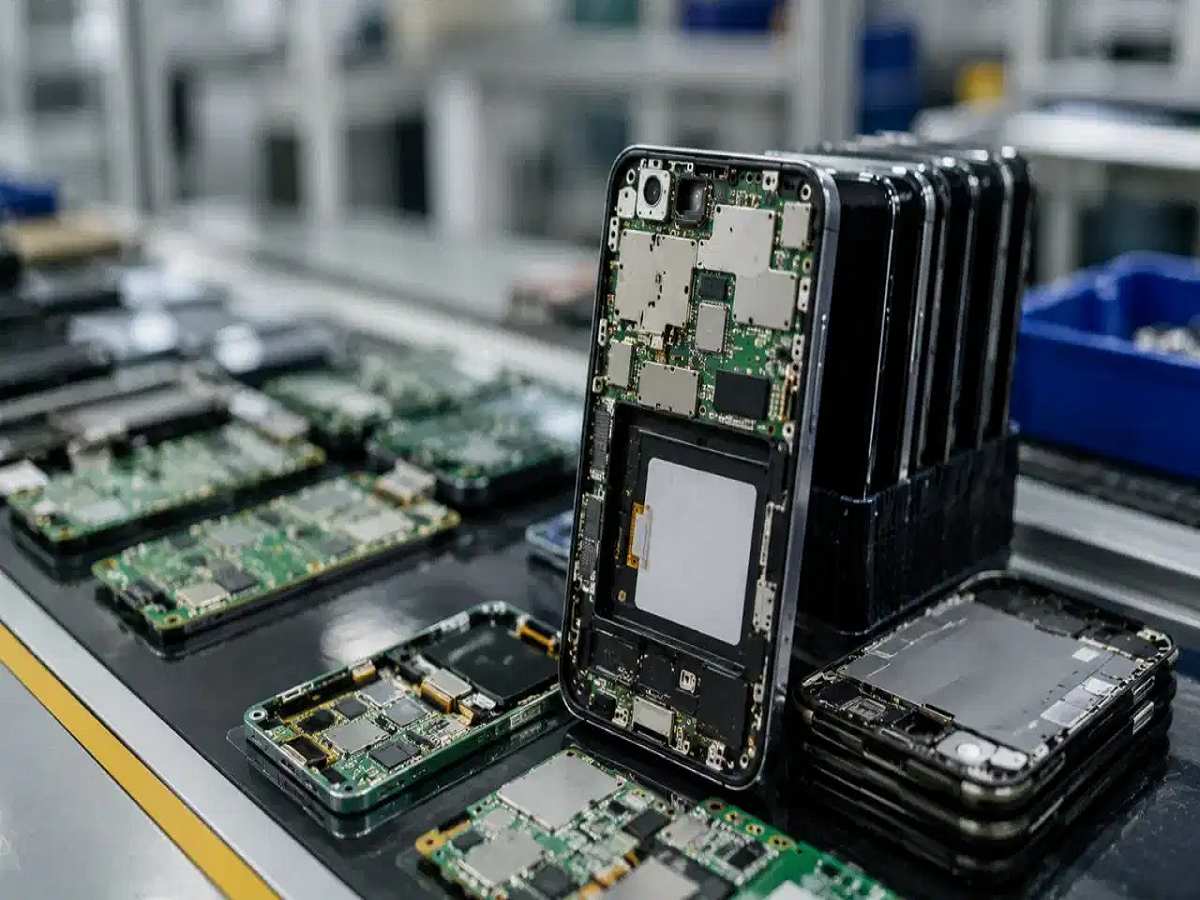
India has emerged as one of the world's major smartphone manufacturing hubs, but the country still lacks something important—a homegrown smartphone brand capable of challenging global giants such as Samsung, Xiaomi, Vivo and Oppo.
That could be the next big target for India's electronics industry.
After successfully attracting large-scale smartphone manufacturing, the government's focus is reportedly shifting from simply “Made in India” to “Designed and Branded in India.” A new ₹62,500 crore manufacturing initiative aims to encourage Indian companies to develop their own technology, intellectual property, product designs and brands.
The ambition is clear: India shouldn't just manufacture smartphones for international companies; it should eventually create a global smartphone company of its own.
99.2% of Phones Used in India Are Now Made Locally
India's mobile manufacturing journey has changed dramatically over the past decade.
According to the figures cited, approximately 99.2% of mobile phones sold or used in India are now manufactured domestically.
Smartphones have also emerged as a major contributor to India's exports, reflecting the rapid expansion of the country's electronics manufacturing ecosystem.
Global manufacturers and their production partners now operate extensive facilities in India, producing millions of devices for domestic consumers as well as overseas markets.
But there is a difference between manufacturing a global company's smartphone in India and creating an Indian smartphone company with international influence.
That is the gap policymakers now want to address.
Government's ₹62,500 Crore Smartphone Manufacturing Push
The government has reportedly announced a ₹62,500 crore mobile phone manufacturing scheme aimed at taking India's electronics industry to the next stage.
The focus isn't expected to remain limited to assembling smartphones from imported or externally designed components.
Instead, companies would be encouraged to develop products within India, create their own designs, generate patents and build intellectual property.
Most importantly, the policy aims to help Indian-owned companies establish brands capable of competing at a much larger scale.
According to the details cited, eligible Indian brands could receive an incentive of around 5% on qualifying sales.
Companies developing products through in-house design could potentially receive an additional 3% benefit.
The initiative is reportedly intended to favour businesses with at least 51% Indian ownership.
Can India Get a Major Homegrown Smartphone Brand by 2027?
Electronics and Information Technology Minister Ashwini Vaishnaw reportedly believes India could see the emergence of a strong indigenous smartphone brand by around the middle of 2027.
If achieved, that would represent an important change in India's electronics strategy.
The country has already demonstrated its ability to manufacture devices at massive scale. The next challenge is controlling more valuable parts of the business—including product development, software, intellectual property, branding and customer relationships.
Creating a successful smartphone brand, however, will be considerably more difficult than building manufacturing facilities.
India has tried before.
Micromax, Lava and Intex Once Controlled a Big Share of the Market
About a decade ago, Indian smartphone companies were much more prominent in the domestic market.
Brands such as Micromax, Lava and Intex collectively commanded a significant share of Indian handset sales. Around 2015, the combined market share of domestic companies was reportedly close to 35%.
Micromax, in particular, emerged as a serious challenger to Samsung in India.
Then the competitive landscape changed dramatically.
Chinese smartphone manufacturers such as Xiaomi, Vivo and Oppo entered the market with aggressive pricing, strong distribution, frequent product launches and increasingly attractive specifications.
Their supply-chain strength allowed them to introduce feature-packed devices at prices that became difficult for many Indian companies to match.
Why Indian Smartphone Brands Fell Behind
Price wasn't the only reason Indian brands lost ground.
Smartphones were rapidly becoming more sophisticated, and success increasingly depended on research and development, software optimisation, camera technology, display quality, processors, after-sales service and regular operating-system updates.
Global and Chinese manufacturers invested heavily in these areas.
Many Indian brands, meanwhile, were unable to keep pace with the speed at which smartphone technology was evolving.
As a result, their combined market presence declined sharply. According to the figures cited, by early 2020 their share had fallen to below 1%.
But one major difference exists between then and now: India today has a far stronger electronics manufacturing ecosystem.
Lava Could Become an Important Player
Among India's existing smartphone brands, Lava is emerging as one of the companies to watch.
Unlike several other domestic brands that largely disappeared from the mainstream smartphone market, Lava continued operating and has been attempting a comeback, particularly in affordable segments.
According to the cited estimates, Lava's market share has reached roughly 2%, while the company has reportedly been growing at around 40-50% annually.
More importantly, Lava is looking beyond basic handset assembly.
The company is reportedly investing around ₹1,100 crore in areas including display and camera-module manufacturing, potentially giving it greater control over the smartphone production chain.
If the government's new incentives successfully encourage domestic design and technology development, companies such as Lava could be among the potential beneficiaries.
India's Manufacturing Ecosystem Is Now Much Stronger
Another factor working in India's favour is the emergence of large electronics manufacturers such as Dixon Technologies.
Contract manufacturers can provide the scale, production infrastructure and supply-chain capabilities needed by smartphone brands without requiring every company to build enormous factories independently.
This could lower one of the barriers facing new Indian smartphone companies.
Micromax's manufacturing operations are also reportedly exploring opportunities for a renewed push.
In other words, the manufacturing infrastructure that Indian brands lacked during their earlier battle against Chinese competitors is considerably stronger today.
The Biggest Challenge Isn't Manufacturing Phones
Building factories may no longer be India's biggest problem.
Winning consumers could be much harder.
Samsung, Xiaomi, Vivo and other established smartphone companies have spent years building their brands. They have invested heavily in camera systems, software interfaces, service networks, marketing and product development.
Indian brands therefore cannot expect customers to switch simply because a phone is domestically owned or manufactured.
They will have to compete on the factors that matter most to buyers—price, performance, camera quality, design, software experience, updates, reliability and after-sales service.
Another challenge is that India's smartphone market is maturing. With fewer first-time smartphone buyers entering the market than during the industry's initial boom, domestic brands may have to persuade existing Samsung, Xiaomi, Vivo and other users to switch.
That is considerably more difficult than attracting consumers buying their first smartphone.
From ‘Make in India’ to ‘Create in India’
The reported ₹62,500 crore initiative, expected to take effect from 2026-27, could therefore represent a new phase for India's smartphone industry.
The first phase was about bringing manufacturing to India.
The next could be about ensuring that more of the design, technology, patents and brand ownership also originate in the country.
Ultimately, the success of the initiative won't be measured simply by how many smartphones India manufactures.
The bigger test will be whether an Indian company can create a smartphone that consumers voluntarily choose over established global competitors—and eventually sell that device successfully outside India.
India has already proved it can manufacture smartphones for the world. The next challenge is much bigger: creating an Indian smartphone brand that the world wants to buy.