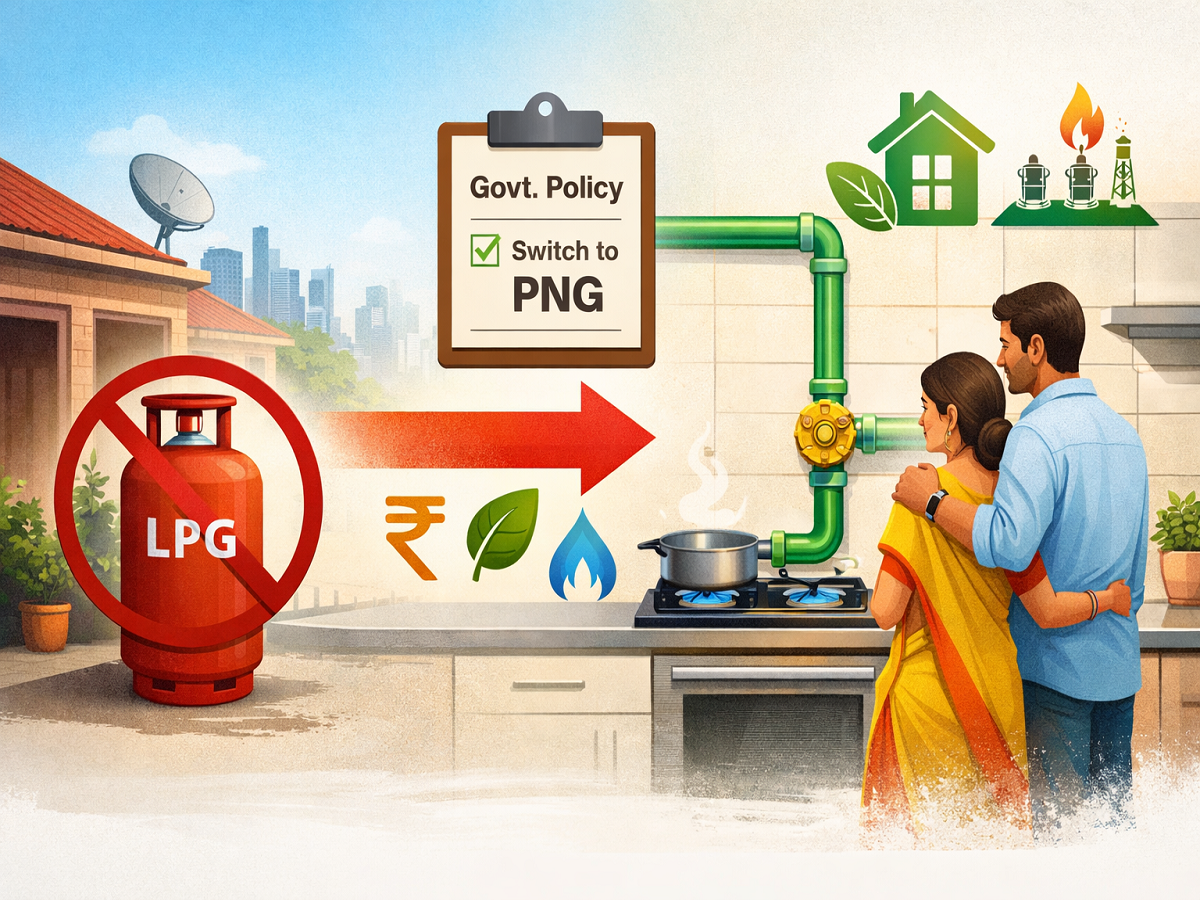
In a major step toward strengthening India’s energy system, the central government has introduced a new directive encouraging households to move from LPG cylinders to piped natural gas (PNG) wherever pipeline infrastructure is already available. The policy is part of a broader strategy to improve fuel distribution, enhance energy security, and reduce dependency on traditional cylinder-based systems.
The move comes amid global uncertainties in fuel supply, prompting authorities to focus on more stable and efficient alternatives. Under the new guidelines, households located in areas with existing PNG networks will be required to switch within a specified time frame.
Three-Month Deadline to Switch from LPG to PNG
According to the directive, once households are officially notified about the availability of piped gas in their locality, they will have a period of three months to apply for and install a PNG connection. If they fail to make the transition within this deadline, LPG supply to that address may be discontinued.
This provision is designed to ensure faster adoption of PNG and to streamline the country’s fuel distribution system.
Why the Government Is Promoting PNG
Piped natural gas is being positioned as a modern and efficient alternative to LPG cylinders. Unlike LPG, which requires booking, delivery, and refilling, PNG provides a continuous gas supply directly through pipelines.
This not only eliminates the hassle of cylinder management but also offers greater convenience for daily household use. Additionally, PNG is considered a more reliable and consistent fuel source.
Another key objective behind this policy is better resource allocation. By shifting households with pipeline access to PNG, LPG supplies can be redirected to regions where pipeline infrastructure is still unavailable. This helps reduce pressure on existing LPG distribution networks and ensures more equitable fuel access across the country.
Simplified Approvals and Faster Connections
To accelerate the expansion of gas infrastructure, the government has introduced time-bound approval mechanisms and simplified procedures.
- Authorities must grant permissions for pipeline installation within fixed timelines
- In residential areas, approvals for pipeline work should be given within three working days
- If approvals are delayed beyond the deadline, they may be treated as automatically granted
Once approvals are in place, service providers are expected to complete last-mile PNG connections within 48 hours. These measures are aimed at removing bureaucratic delays and speeding up implementation.
Clear Responsibilities for Households
The new policy clearly places responsibility on residents in notified areas to initiate the transition. Once informed, households must apply for a PNG connection within the given timeframe.
Failure to comply could result in discontinuation of LPG supply. However, the government has emphasized that this transition is part of a long-term plan to create a more efficient and sustainable energy ecosystem.
Strict Timelines for Gas Operators
Pipeline operators and authorized entities are also required to follow strict timelines. They must begin pipeline installation within four months of receiving approvals.
Non-compliance or delays could lead to penalties, including the possibility of losing exclusive rights to operate in certain areas. Regulatory oversight will be handled by the Petroleum and Natural Gas Regulatory Board (PNGRB), which will monitor progress and ensure adherence to guidelines.
Exceptions Allowed in Special Cases
The policy also provides flexibility in situations where providing a PNG connection is technically not feasible. In such cases, households can continue using LPG if they receive a no-objection certificate (NOC) from the authorized entity.
However, this exemption is not permanent. Once infrastructure becomes feasible, the NOC can be withdrawn, and the household may be required to switch to PNG.
What This Means for Consumers
For consumers, this shift could bring significant benefits, including uninterrupted gas supply, reduced dependency on cylinder deliveries, and improved convenience.
At the same time, it signals a larger transformation in India’s energy distribution system. As pipeline networks expand across urban and semi-urban areas, more households are expected to come under the PNG framework.
Final Takeaway
The government’s push for a mandatory transition to piped natural gas marks a significant shift in India’s energy landscape. While the change may require initial adjustments, it promises long-term advantages in terms of efficiency, accessibility, and sustainability.
Households in affected areas should stay informed, act within the stipulated timeline, and prepare for a smoother, more reliable cooking fuel experience in the future.