India’s digital payment revolution has made highway travel faster and more convenient through the use of FASTag. Long queues at toll plazas have reduced significantly, and commuters now enjoy seamless toll payments directly from linked bank accounts or wallets. However, as FASTag usage continues to rise across the country, cybercriminals are finding new ways to exploit users through fake recharge links, fraudulent customer care numbers, and phishing scams.
Cybersecurity experts are warning users to stay alert, as fraudsters are increasingly targeting FASTag users by creating fake websites and misleading advertisements that closely resemble official platforms. A small mistake while recharging FASTag or contacting fake support numbers can lead to financial loss and personal data theft.
How FASTag Scams Usually Work
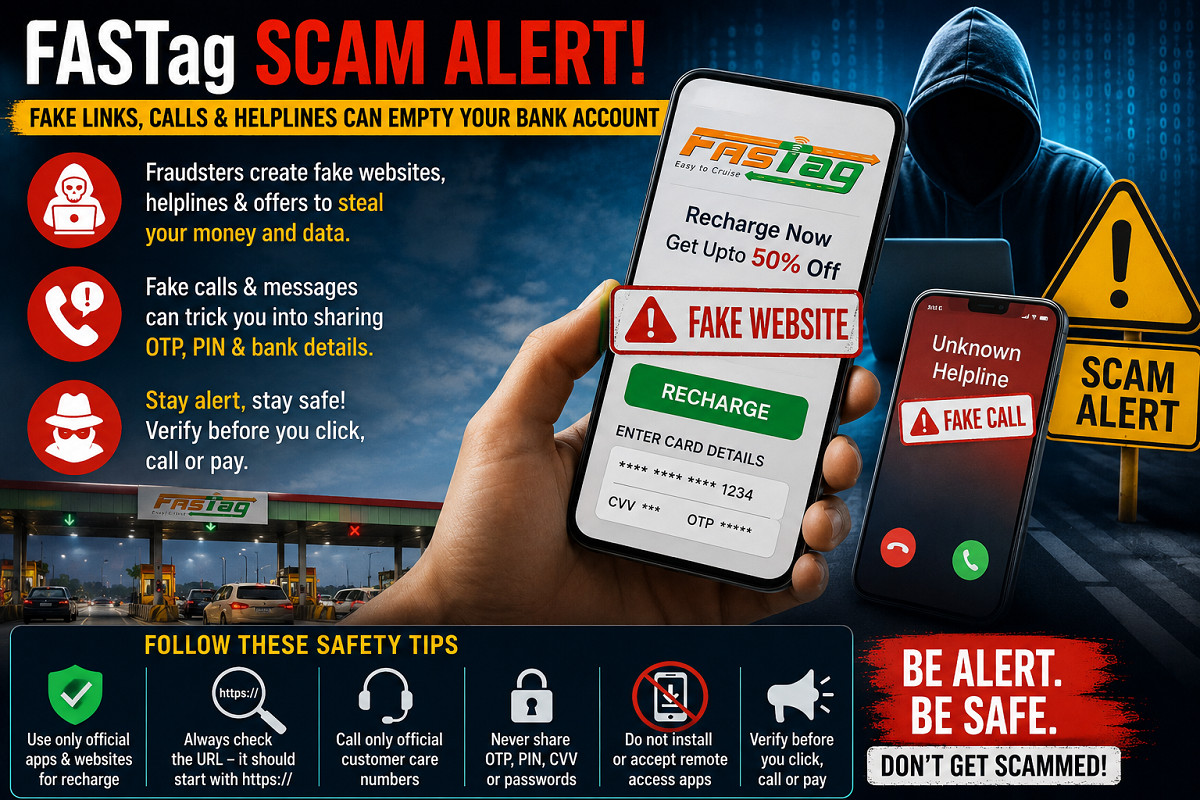
Fraudsters typically begin by creating fake websites designed to look identical to official FASTag portals. These fake platforms often use names, logos, and designs similar to government agencies and toll authorities, making them difficult to identify at first glance.
Scammers also run social media advertisements and promotional offers promising huge discounts on FASTag recharge plans, annual toll passes, or cashback rewards. Many users unknowingly click on these fake links believing they are genuine offers.
Once a victim opens the fraudulent website, they are asked to provide sensitive information such as:
- Vehicle registration details
- Mobile number
- FASTag account information
- Bank account details
- Debit or credit card credentials
After entering payment information, the money is transferred to scam accounts instead of official FASTag services. In many cases, users neither receive the recharge nor recover their money.
Fake Helpline Numbers Are Another Major Threat
Cybercriminals are also exploiting people searching for FASTag customer care support online. Fraudsters publish fake helpline numbers on search engines and social media platforms.
When users call these numbers, scammers pretend to be customer support executives and ask victims to:
- Share OTPs
- Install remote access apps
- Reveal banking information
- Click suspicious verification links
Once scammers gain remote access or banking credentials, they can steal funds directly from bank accounts.
Risks of Ignoring FASTag Security
Failing to verify recharge platforms or customer care numbers can create serious financial and privacy risks.
Possible consequences include:
- Unauthorized bank transactions
- Theft of personal and banking information
- Misuse of registered mobile numbers
- Fake calls and phishing attempts
- Duplicate toll deductions
- FASTag suspension or blocking
Cyber experts say many victims realize the fraud only after their money has already been withdrawn.
How to Stay Safe From FASTag Fraud
Use Only Official Platforms
Always recharge FASTag through trusted sources such as:
- Official bank apps
- Bank websites
- Official FASTag applications
- Authorized payment platforms
Avoid using random links received through WhatsApp, SMS, Telegram, or social media.
Verify Website Security Before Payment
Before entering payment details, carefully check whether the website URL begins with “https://” and verify the spelling of the domain name.
Fake websites often use slightly modified URLs that look similar to genuine websites.
Never Trust Random Customer Care Numbers
Avoid calling customer support numbers found in random Google search results or social media comments. Always verify FASTag support numbers through official bank or NHAI platforms.
Avoid Installing Remote Access Apps
Scammers frequently ask users to install apps such as AnyDesk or TeamViewer under the pretext of solving FASTag problems.
These apps allow fraudsters to remotely control your smartphone and access sensitive banking information.
Never Share OTPs or Passwords
No legitimate FASTag support executive will ever ask for:
- OTPs
- UPI PINs
- Debit card PINs
- Internet banking passwords
Sharing such details can result in immediate financial fraud.
Why FASTag Users Need to Stay Extra Careful
As digital toll collection becomes more common across India, FASTag-related cyber scams are also increasing rapidly. Fraudsters rely on urgency, confusion, and attractive discount offers to trap users.
Cybersecurity experts advise users to remain cautious while making online payments and to avoid clicking on unknown links, even if they appear convincing.
A few seconds spent verifying a recharge platform or helpline number can help prevent major financial losses and protect sensitive personal information.