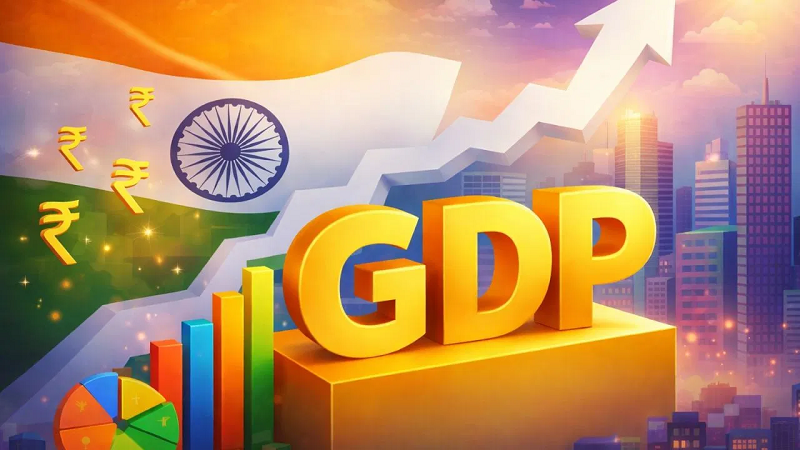
India’s economic growth story remains strong. Despite gradual easing of government spending and monetary support from the central bank, India’s real GDP growth is expected to stay above 7 percent, while nominal GDP growth could hover around 10 percent in the coming financial year. This indicates that the economy is holding up better than many earlier estimates suggested.
According to projections, real GDP growth could remain above 7 percent and overall GDP growth slightly above 10 percent in FY26. Improving global conditions and easing trade and tariff-related uncertainties are also expected to support India’s growth momentum.
Inflation outlook and scope for rate cuts
Samiran Chakraborty, Chief Economist at Citi India, said inflation is likely to average around 3.8 percent over the year. This relatively comfortable inflation level gives the Reserve Bank of India room to consider further interest rate cuts.
However, he cautioned that the timing of any such easing will depend on upcoming GDP and inflation data, as well as movements in the rupee. While some monetary easing is possible, decisions will be data-driven rather than aggressive.
Why strong GDP growth isn’t fully visible in stock markets
Chakraborty also addressed the gap between strong economic data and relatively weak stock market performance. He explained that a large part of India’s growth is coming from areas not fully represented in listed companies.
Services now account for nearly 60–80 percent of total consumption, and rural demand is currently outperforming urban demand. Additionally, many unlisted companies are growing rapidly. As a result, GDP numbers are improving, but the earnings growth of listed firms has not reflected the same strength yet.
He added that if overall GDP growth sustains around 10 percent, corporate earnings should eventually rise as well, and the current gap between economic growth and market earnings may narrow over time.
Rupee outlook improves
On the currency front, Chakraborty said the outlook for the rupee appears more stable now. India’s external position could improve, with the balance of payments expected to move from a deficit to a surplus. Citi estimates the current account deficit at around 0.5 percent of GDP, with the possibility of a BoP surplus in the January–March quarter.
Citi expects the rupee to remain around the 91 level, suggesting that the sharp weakness seen in 2025 may not repeat in 2026.