BIZARRE
Draupadi's Curse: Why did Draupadi curse her own son, Ghatotkacha, with death? Learn the hidden secret of the Mahabharata
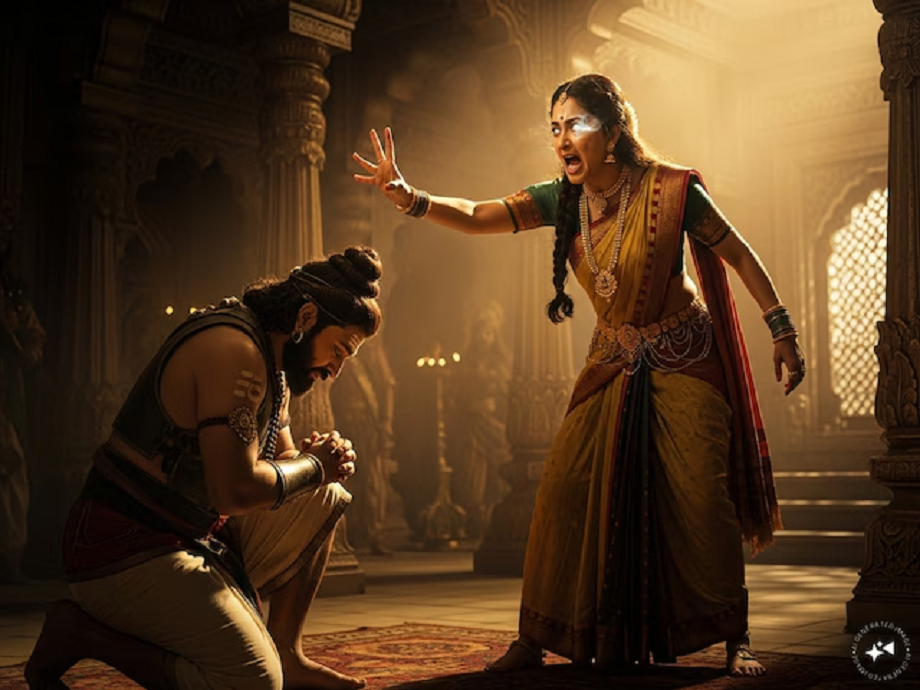
Draupadi's Curse Mystery: In a fit of rage, Draupadi cursed Bhima's son Ghatotkacha with an early death, which proved true during the Mahabharata War. Although Draupadi later regretted it, she could not revoke the curse. This curse later played a crucial role in the outcome of the war.
Draupadi's Curse Mystery: The Mahabharata isn't just a story of war, power, and revenge; it also holds the complexities of relationships, a storm of emotions, and the truth of human weakness. The mention of Draupadi in the Mahabharata conjures up images of a woman who changed the course of the entire epic to avenge her own humiliation. However, few people know about an incident related to Draupadi. That incident is the curse Draupadi uttered on Bhima's son. Even today, many are shocked to learn that Draupadi cursed her own son with a death sentence. And to whom? Ghatotkacha, the son of Bhima and Hidimba, who had defeated the Kaurava army in the Mahabharata war. For Draupadi, Bhima was not just her husband, but the companion she trusted the most. Whenever an attempt was made to harm her honor, Bhima would unhesitatingly enter the fire of battle for her. But in a moment of anger, Draupadi cursed Bhima's son with such force that its impact would later change the course of the entire war. So what happened that day? Why was Draupadi so angry? And did she later feel remorse? Let's understand this entire mystery in simple and clear terms. Bhopal-based astrologer and Vastu consultant Pandit Hitendra Kumar Sharma provides further information on this topic.
Story Begins: Hidimba, Bhima, and Ghatotkacha
Before marrying Draupadi, Bhima had married a demoness named Hidimba. This is why Ghatotkacha is known as half-human, half-demon. He was second to none in strength, power, and martial arts. Although Draupadi was not Ghatotkacha's biological mother, in the culture of the Mahabharata period, a father's second wife was considered a mother. This is why Ghatotkacha respected Draupadi, and Draupadi considered him a part of the family.
Draupadi's Wrath - Where the Story Begins
Shortly before the Mahabharata War, Ghatotkacha arrived in Indraprastha. He had come to meet his father after a long time. He was so overjoyed that he inadvertently overlooked Draupadi, who was present in the assembly.
This mistake deeply hurt Draupadi
Draupadi wasn't just a queen or the wife of the Pandavas; she often bore the burden of insults and humiliation. Perhaps this was why she had a sensitive heart and a quick temper. She became convinced that Ghatotkacha had deliberately ignored her.
In anger he spoke without thinking:
“Ghatotkacha, your end will be quick, and you will die without a fight.”
Hearing this, the assembly fell silent
Despite receiving the curse, Ghatotkacha did not protest. He accepted it by touching Draupadi's feet.
Regret - but it was too late.
Only after some time did Draupadi realize that she had committed a grave injustice. She apologized to Bhima and even begged Ghatotkacha, but in the world of the Mahabharata, there was no provision for taking back a curse once uttered.
This was the moment that shook Draupadi from within.
The Mahabharata War and the Effects of Draupadi's Curse
When the war began, Ghatotkacha emerged as the Pandavas' greatest weapon.
Even the largest Kaurava army surrendered before him.
Duryodhana feared that if Ghatotkacha was not stopped, the war would spell his end.
He then asked Karna to use his divine weapon, given to him by Lord Indra for protection—a weapon that could only be used once.
Karna fired the same weapon at Ghatotkacha.
The weapon hit, and as per the curse…
Ghatotkach died without a long fight.
But this outcome also held a mystery
According to Krishna's plan, if Karna had used this divine weapon against Arjuna, Arjuna's death was certain.
Ghatotkacha's sacrifice became a shield for the Pandavas.
In a way, Draupadi's curse changed the course of the war and saved Arjuna's life.
The curse that took a son from his mother...
later proved to be a shield in the Pandavas' favor.
PC:HindiNews18