BUSINESS
Can You Run Your Entire Home on Solar Power? Here’s What You Need for a Complete Off-Grid Setup
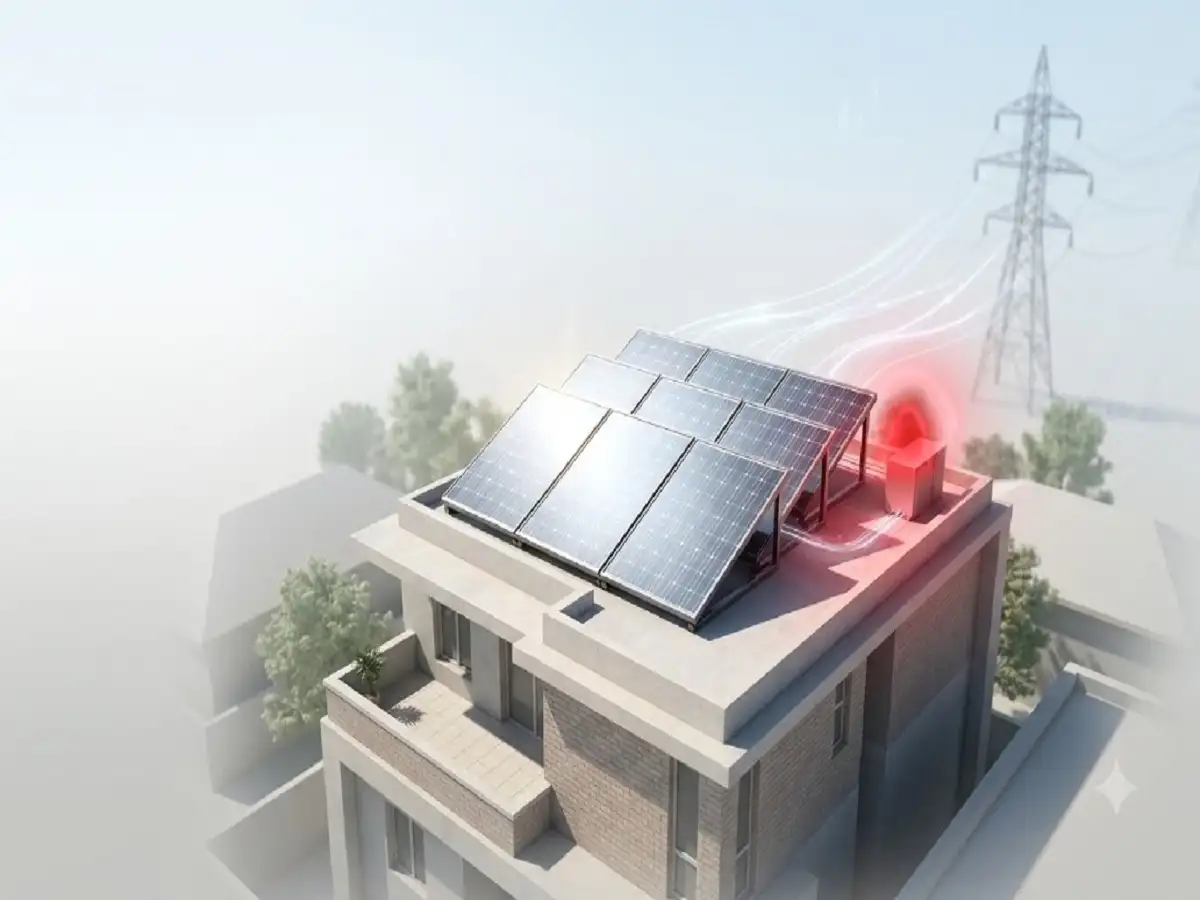
Solar System for Home: Rising electricity bills are encouraging more households to consider rooftop solar, but one question often comes up: can an entire house run only on solar power without depending on the electricity grid?
The answer is yes, technically it can. A properly designed off-grid solar system can supply electricity to a home independently of the utility grid. However, achieving complete energy independence requires more than simply installing a few solar panels on the roof.
An off-grid home generally needs sufficient solar-panel capacity, battery storage, a compatible inverter and careful management of electricity consumption. The system must also be designed to handle periods when solar generation falls because of clouds, rain or seasonal changes.
Here is how a fully solar-powered home works and what you should consider before planning one.
What Is an Off-Grid Solar System?
An off-grid solar system operates independently from the regular electricity distribution grid.
During daylight hours, rooftop solar panels convert sunlight into electricity. That electricity can be used immediately to run appliances inside the home.
When the panels generate more electricity than the household is consuming, the surplus can be directed toward charging batteries.
Once the sun goes down, the panels stop producing meaningful power and the home begins drawing electricity stored in the battery bank.
This cycle allows a house to continue operating without relying on a conventional grid connection—provided the solar array and battery system are large enough for the household's requirements.
What Equipment Does a Fully Solar-Powered Home Need?
A complete off-grid setup generally requires several components working together.
The solar panels generate electricity during daylight hours.
A solar inverter converts the electricity produced by the panels into a form that household appliances can use.
The battery bank stores surplus energy so that electricity remains available after sunset or when solar generation is insufficient.
The installation also requires appropriate electrical protection, wiring, mounting structures and system controls.
Depending on the design, additional charge-control and energy-management equipment may also be required.
The quality and compatibility of these components are important because an off-grid system has to function as the home's primary electricity source.
Why Are Batteries Essential for an Off-Grid Home?
Solar panels alone cannot provide reliable 24-hour electricity.
Generation drops sharply after sunset, while household electricity demand often remains significant during the evening and night.
Lights, fans, televisions, refrigerators, Wi-Fi routers and other appliances may continue operating for hours after solar production ends.
That is where batteries become essential.
During the day, surplus solar electricity charges the batteries. At night, the stored energy is discharged to power the home.
The larger the household's nighttime electricity requirement, the greater the usable battery capacity it will need.
How Much Battery Storage Do You Need?
There is no single battery size suitable for every house.
Battery capacity needs to be calculated according to actual energy consumption.
For example, a household using only LED lights, fans, a refrigerator and basic electronics will require substantially less storage than a home operating multiple air conditioners, electric water heaters, pumps and other high-power appliances.
Another consideration is how long the system should operate without receiving enough sunlight.
A battery designed only to cover one normal night may not provide sufficient backup during several cloudy or rainy days.
For a genuinely off-grid installation, system designers may therefore consider additional storage or another form of backup.
Lithium Batteries Are Becoming More Common
Lithium-based batteries are increasingly used in residential solar installations.
They generally offer higher energy density, relatively high usable capacity and good cycle life compared with some traditional battery technologies.
They can also be more compact for the amount of energy stored.
However, lithium battery systems can represent a significant portion of the total cost of an off-grid installation.
Battery chemistry, warranty, usable capacity, expected cycle life, thermal management and safety protections should all be considered rather than choosing a battery solely on price.
How Many Solar Panels Does a House Need?
There is no universal answer such as “five panels” or “ten panels.”
The required solar capacity depends primarily on how much electricity the household consumes.
A professional system assessment should consider factors such as:
-
Average daily electricity consumption in kWh
-
Peak electricity demand
-
Number and type of appliances
-
Daytime versus nighttime consumption
-
Required battery backup duration
-
Local solar irradiation
-
Roof area available for panels
-
Roof direction, angle and shading
-
Seasonal changes in electricity consumption
-
Expected solar-system losses
The household's electricity bills from several months can provide a useful starting point for estimating average consumption.
Don't Look at Solar Panel Capacity Alone
One common mistake is choosing a solar system only by looking at its panel rating.
For example, someone may decide they need a 5 kW system without calculating when and how electricity is actually used.
A successful off-grid setup needs several capacities to be matched correctly.
Solar panels must generate enough daily energy.
The inverter must be able to handle the household's operating and surge loads.
The batteries must store enough usable electricity for periods when the panels cannot meet demand.
If any one of these components is undersized, the system may not perform as expected.
Air Conditioners Can Change the Entire Calculation
Running high-power appliances significantly increases the size and cost of an off-grid solar installation.
Air conditioners are an obvious example.
A home using several AC units for many hours—especially after sunset—will require much more battery storage than a household using primarily fans.
Electric geysers, induction cooktops, ovens, large water pumps and room heaters can also place substantial loads on an off-grid system.
This does not mean they cannot be powered by solar.
It means the solar array, inverter and battery bank must be designed accordingly.
What Happens During Rainy or Cloudy Weather?
Solar panels can still generate some electricity under cloudy conditions, but production may be considerably lower than on a clear, sunny day.
That creates one of the biggest challenges for completely off-grid homes.
If several low-generation days occur consecutively, the battery may not receive enough energy to recharge fully.
Once stored electricity falls too low, the household must either reduce consumption or rely on another backup source.
This is why off-grid systems are often designed with some reserve capacity rather than assuming every day will provide ideal sunshine.
Is a Backup Generator Necessary?
Not every off-grid installation requires a generator, but some households choose to include one for emergencies.
A generator can provide electricity when extended poor weather prevents the batteries from recharging adequately.
It may be particularly useful in locations where uninterrupted electricity is essential.
However, using a fuel-powered generator means the property is no longer operating exclusively on renewable solar energy during those periods.
Another alternative is a hybrid system that retains access to the electricity grid.
Off-Grid vs On-Grid Solar: What's the Difference?
An on-grid solar system remains connected to the utility network.
Solar panels supply electricity when sunlight is available, while the grid can provide power when solar generation is insufficient.
Depending on local regulations and the installation, surplus solar electricity may also be exported to the grid through an approved metering arrangement.
An off-grid system, by comparison, is designed to operate without regular grid support.
This makes battery storage particularly important.
A hybrid solar system combines elements of both approaches by using solar panels and batteries while maintaining a grid connection as backup.
For many urban households, a hybrid arrangement may offer a more practical balance between electricity savings and reliability than disconnecting from the grid completely.
Can Solar Run a Refrigerator 24 Hours a Day?
Yes, provided the system is properly designed.
During daylight hours, solar generation can supply the refrigerator while also charging the battery.
At night, the refrigerator can operate using stored battery energy.
Because refrigerators cycle on and off rather than consuming their maximum rated power continuously, their actual daily energy consumption should be considered when sizing the system.
Checking the appliance's energy label or measured consumption can provide a more accurate estimate.
Can Solar Run an AC at Night?
Yes, but the electricity has to come from storage once solar generation stops.
Running an air conditioner for several hours at night can consume a substantial amount of battery energy.
Therefore, households planning nighttime AC use may need significantly larger batteries.
Using energy-efficient inverter ACs, maintaining reasonable temperature settings and improving home insulation can help reduce overall electricity demand.
Roof Space Also Matters
Even if a household is willing to invest in a large solar system, the available roof area can become a limiting factor.
Panels need sufficient unshaded space and suitable structural support.
Trees, nearby buildings, water tanks and other objects can cast shadows that reduce generation.
A site assessment is therefore important before deciding how much solar capacity can realistically be installed.
Can an Off-Grid Solar System Eliminate Your Electricity Bill?
If a home is genuinely disconnected from the utility grid and all its electricity comes from its own solar and storage system, there would naturally be no regular grid electricity consumption bill.
However, that does not mean electricity becomes completely free.
The homeowner must pay for the solar panels, batteries, inverter, installation and maintenance.
Batteries and some other components may eventually require replacement.
The real financial question is therefore whether the long-term savings justify the initial investment and future maintenance costs.
Is Going Completely Off-Grid Right for Everyone?
Not necessarily.
Off-grid solar can be particularly valuable in remote locations where grid electricity is unavailable, unreliable or expensive to extend.
For homes that already have reliable grid access, however, maintaining a grid connection may provide useful backup while solar reduces daytime electricity purchases.
A hybrid system can offer another option by combining rooftop generation, battery backup and grid availability.
The best choice depends on the household's electricity use, location, budget, reliability requirements and local electricity regulations.
Calculate Your Load Before Buying a Solar System
Before purchasing solar panels, review your electricity consumption for several months rather than relying only on the most recent bill.
Identify which appliances consume the most power and note when they are normally used.
A qualified installer can then estimate the required panel capacity, battery storage and inverter rating.
Consumers should also compare warranties, equipment certifications, after-sales service and expected battery replacement costs before making a decision.
A Fully Solar-Powered Home Is Possible, but Planning Is Critical
Running an entire house on solar energy is technically achievable.
But the key is designing the system around the home's actual electricity requirements—not simply installing the maximum number of panels that fit on the roof.
A reliable off-grid home needs enough generation for normal daily consumption, adequate battery storage for nighttime use, an inverter capable of handling peak loads and a strategy for extended periods of weak sunlight.
Households with high electricity demand, particularly those using multiple air conditioners and other heavy appliances, may find that complete off-grid independence requires a much larger investment.
For many families, an on-grid or hybrid solar installation may therefore be a more practical way to reduce electricity bills while retaining backup power.
Before investing, calculate your daily consumption in kilowatt-hours, assess your roof and obtain a detailed system design from a qualified solar professional.
Disclaimer: Solar-system performance depends on location, weather, shading, equipment efficiency, electricity consumption and system design. Installation and electrical work should be carried out by appropriately qualified professionals and in accordance with applicable local regulations.