TECH
AI Search Is Changing Google: What Happens When Chatbots Start Answering Instead of Showing Links?
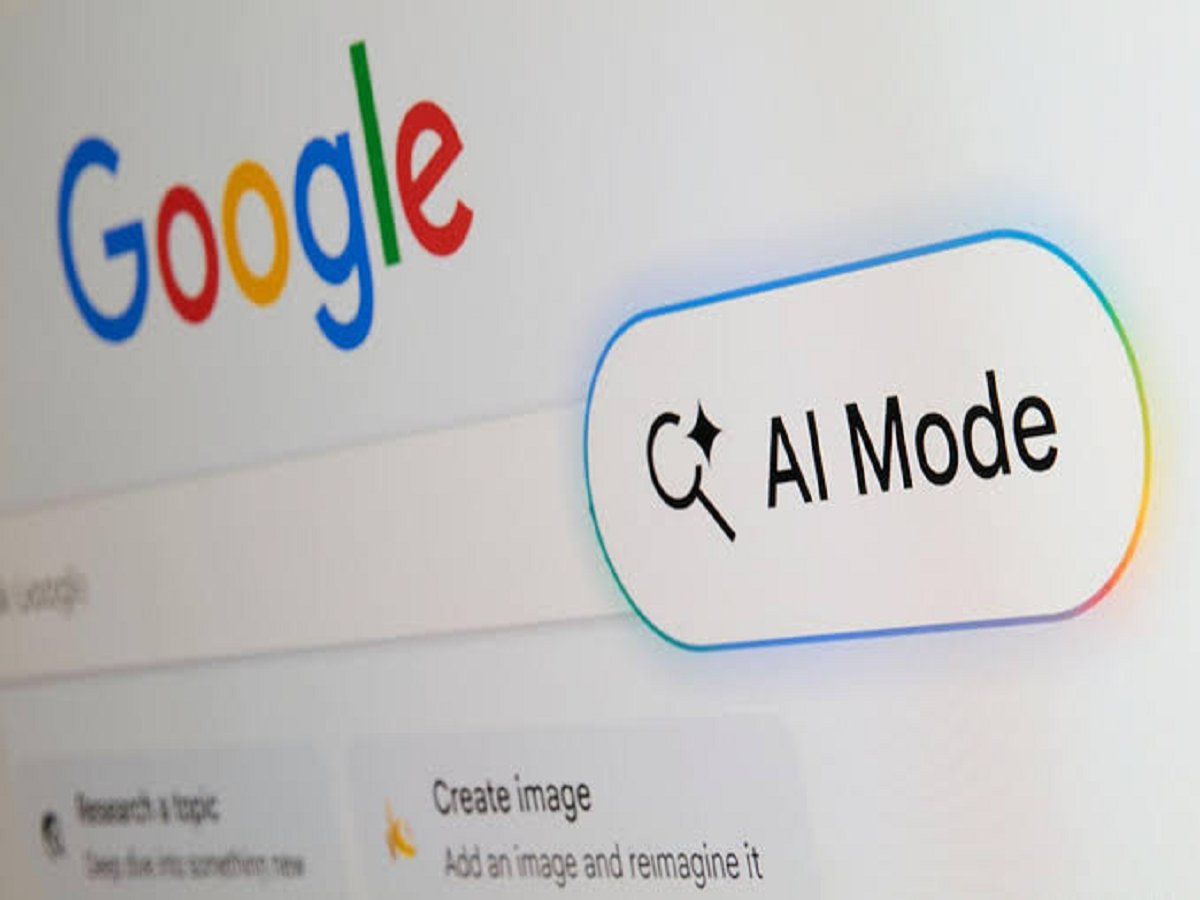
For years, searching the internet meant typing a question into a search engine, scanning a list of links and opening websites to find the answer. That experience is changing rapidly.
Artificial intelligence is increasingly being integrated into search engines, browsers and smartphones. Instead of simply displaying links, AI-powered search can understand a question, combine information from multiple sources and provide a conversational answer.
This could make finding information faster, but it also introduces new questions about accuracy, privacy and the future of websites.
What is AI-powered search?
Traditional search engines primarily identify webpages that are relevant to your query.
AI-powered search goes a step further. It can interpret the context of your question and generate a response based on information it has retrieved or learned.
For example, instead of searching:
"Best laptop under ₹50,000"
you could ask:
"I need a laptop under ₹50,000 for office work, Excel and occasional video editing. Which specifications should I prioritise?"
An AI-powered search system can understand the additional requirements and provide a more personalised response.
Why is this becoming popular?
People often don't search using perfectly formed keywords anymore.
They ask questions naturally, just as they would ask another person.
AI systems are particularly good at understanding this conversational style.
You can ask follow-up questions without repeating the entire context.
For example:
"Which one is better?"
followed by:
"What about battery life?"
The system can understand that "which one" refers to the products discussed earlier.
Does AI search eliminate websites?
Not necessarily.
AI search still depends heavily on information published across the internet. News organisations, government websites, research institutions, businesses and individual creators continue to produce the information that AI systems can retrieve and summarise.
The difference is that users may increasingly see the answer before deciding which websites to visit.
This could change how people discover online content.
The biggest problem: AI can be wrong
One of the most important things users need to understand is that an AI-generated answer isn't automatically correct.
AI systems can misunderstand a question, combine information incorrectly or provide outdated information.
This is particularly important for topics such as:
-
Medical advice
-
Tax rules
-
Government schemes
-
Legal matters
-
Financial decisions
-
Travel regulations
-
Product specifications
For important decisions, users should verify the information against an authoritative source.
AI search can also save considerable time
There is a major advantage when the technology works correctly.
Instead of opening ten websites and comparing information manually, an AI search tool can help organise the information into a structured response.
This can be particularly useful for research, comparisons, learning and planning.
The user can then go deeper into the original sources if necessary.
What happens to online publishers?
This is one of the biggest unanswered questions.
Websites have traditionally relied on search engines to send visitors to their pages. If users receive the information directly from an AI-generated answer and never click through to the original website, publishers could potentially lose traffic.
That creates a difficult balance.
AI systems need high-quality information from publishers, while publishers need visitors to sustain their businesses.
The way this relationship develops could significantly influence the future of the internet.
Your search history may become more conversational
AI assistants can understand much more context than traditional search queries.
Instead of making ten separate searches, users may have one extended conversation.
For example:
"Find me a two-day trip from Delhi."
Then:
"Keep it under ₹10,000."
Then:
"I want good food and don't want too much travelling."
The system can progressively refine the recommendation.
This makes search feel less like using a database and more like talking to an assistant.
What should users do differently?
The arrival of AI search doesn't mean you should stop using traditional search engines.
Instead, become more careful about the information you receive.
A few simple habits can help:
-
Check the date of important information.
-
Look at the original source when possible.
-
Don't rely on a single AI-generated answer for high-stakes decisions.
-
Be cautious when an answer makes an unusually strong claim.
-
Check government or official websites for rules and schemes.
-
Don't provide sensitive personal information unnecessarily.
The search box may become an AI assistant
The biggest change may be psychological.
People are moving from asking:
"What websites contain this information?"
to asking:
"Give me the answer and help me understand it."
That shift could make the internet considerably easier to navigate.
But it also means users will need stronger digital-literacy skills. When an AI gives you a confident answer, the most important question may no longer be simply "Does this sound right?"
It may be:
"How can I verify it?"
AI-powered search is still evolving, but one thing is already clear: the future of finding information online is likely to involve far more conversation and far fewer traditional lists of blue links.