TECH
Your Phone Could Soon Work Without Mobile Towers: How Satellite-to-Phone Connectivity Is Changing Smartphones
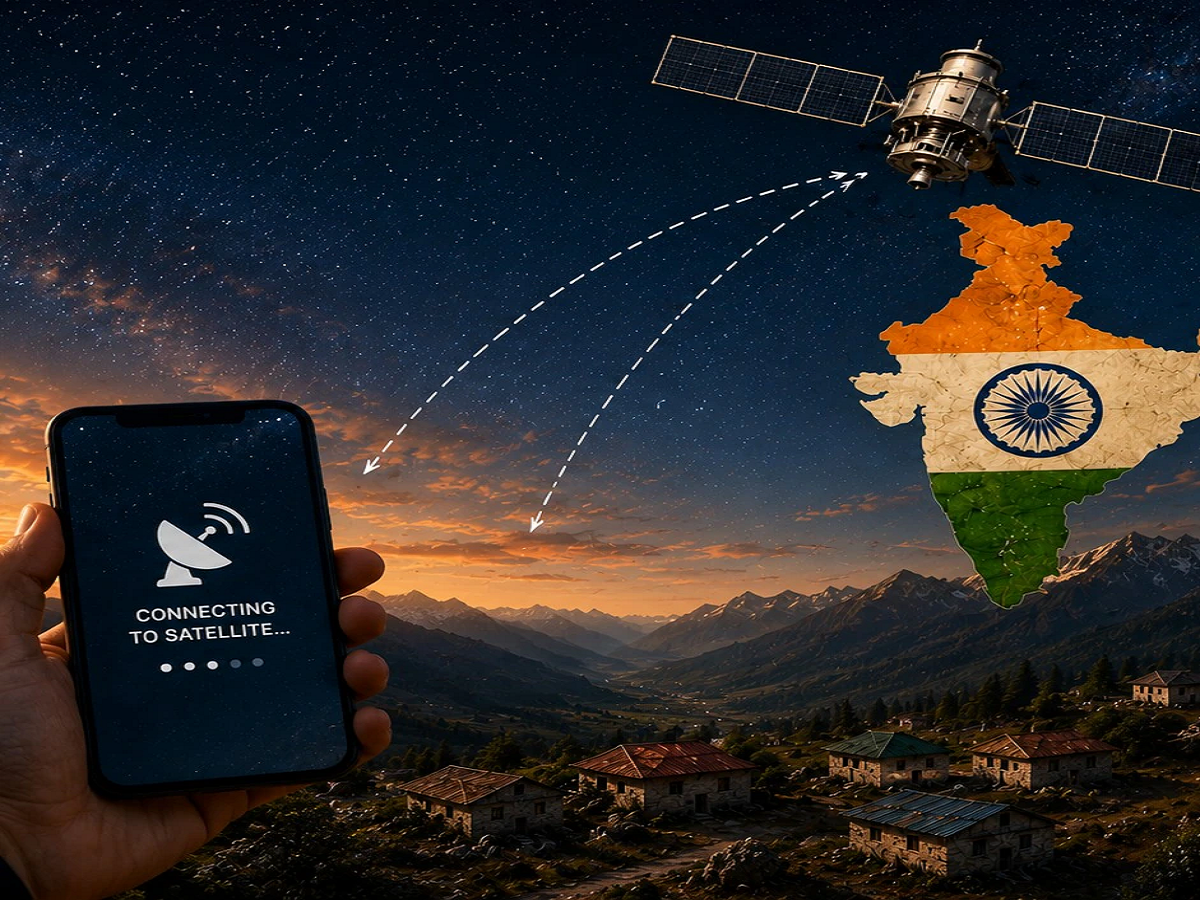
Imagine getting a message from your smartphone even when you are standing in a remote mountain area with no mobile tower nearby.
That idea is moving closer to reality as satellite-to-phone technology develops. Instead of relying entirely on traditional cellular towers, compatible phones can communicate directly with satellites in certain situations.
The technology could eventually change how people stay connected during travel, emergencies and in areas where conventional networks are unavailable.
How does satellite-to-phone connectivity work?
Traditional mobile phones communicate with nearby cellular towers. If there is no tower or the signal cannot reach your location, your phone normally loses network connectivity.
Satellite-to-phone services take a different approach.
A compatible phone can communicate directly with a satellite passing overhead. The satellite then connects the communication to the relevant network infrastructure.
The technology is particularly useful in locations where building conventional telecom infrastructure is difficult or expensive.
You may not need a special satellite phone
This is what makes the technology particularly interesting.
Traditional satellite communication has generally required specialised equipment. Newer satellite-to-phone systems are designed to work with compatible ordinary smartphones.
However, this does not mean every smartphone can suddenly connect to satellites. Hardware compatibility, software support, operator partnerships and regulatory approvals are all important.
Where could this technology be useful?
The biggest benefit could be in remote areas.
Trekkers, campers, travellers and people working in isolated locations could potentially remain connected even after leaving normal cellular coverage.
It could also be extremely valuable during natural disasters.
Earthquakes, floods, cyclones and other emergencies can damage mobile towers or power infrastructure. Satellite connectivity could provide an alternative communication channel when conventional networks are unavailable.
Emergency communication could be the biggest use case
You don't necessarily need high-speed internet for an emergency.
Being able to send a short message explaining your location or requesting assistance could be far more important.
Future satellite-to-phone services could therefore focus heavily on emergency messaging, location sharing and other low-bandwidth communication before expanding to more demanding applications.
Why isn't satellite connectivity available everywhere yet?
There are several challenges.
Satellites are much farther away than mobile towers, so establishing a reliable connection requires sophisticated technology.
The phone also needs an unobstructed enough view of the sky. Buildings, mountains and dense urban environments can make satellite communication more difficult.
Network capacity is another challenge. A satellite cannot provide unlimited bandwidth to millions of users simultaneously.
Regulations and spectrum allocation also differ from one country to another.
Will satellite internet replace 5G?
Probably not.
Satellite and terrestrial networks are more likely to complement each other rather than compete directly.
5G and future 6G networks can provide much higher speeds and capacity in populated areas. Satellites, meanwhile, can extend connectivity to locations where terrestrial infrastructure is unavailable.
The future could therefore involve phones automatically switching between different types of networks depending on availability.
What could this mean for travellers?
For travellers, the technology could eventually eliminate one major concern: losing connectivity after leaving populated areas.
Imagine driving through a remote region where there are no conventional towers. Instead of seeing "No Service", a compatible phone could potentially connect through a satellite for essential communication.
This could be particularly valuable on road trips, trekking routes and remote tourist destinations.
The technology still has limitations
Satellite-to-phone connectivity isn't a replacement for a normal mobile network.
Connection speeds can be limited, availability may depend on the service provider, and users may need to move to an open area for a connection to work properly.
The service may also initially support only certain functions, such as emergency messaging or text communication.
The bigger change is coming
The smartphone has already transformed from a simple communication device into a miniature computer, camera, wallet and navigation system.
Satellite connectivity could add another important capability: the ability to remain connected even when conventional networks disappear.
As satellite networks become more sophisticated and smartphone technology improves, the phrase "no network" could eventually become much less common—even in some of the most remote places on Earth.