ASTROLOGY
Vastu Tips: Can You Keep Tulsi, a Conch Shell, and a Shivling Together at Home? Know the Traditional Guidelines
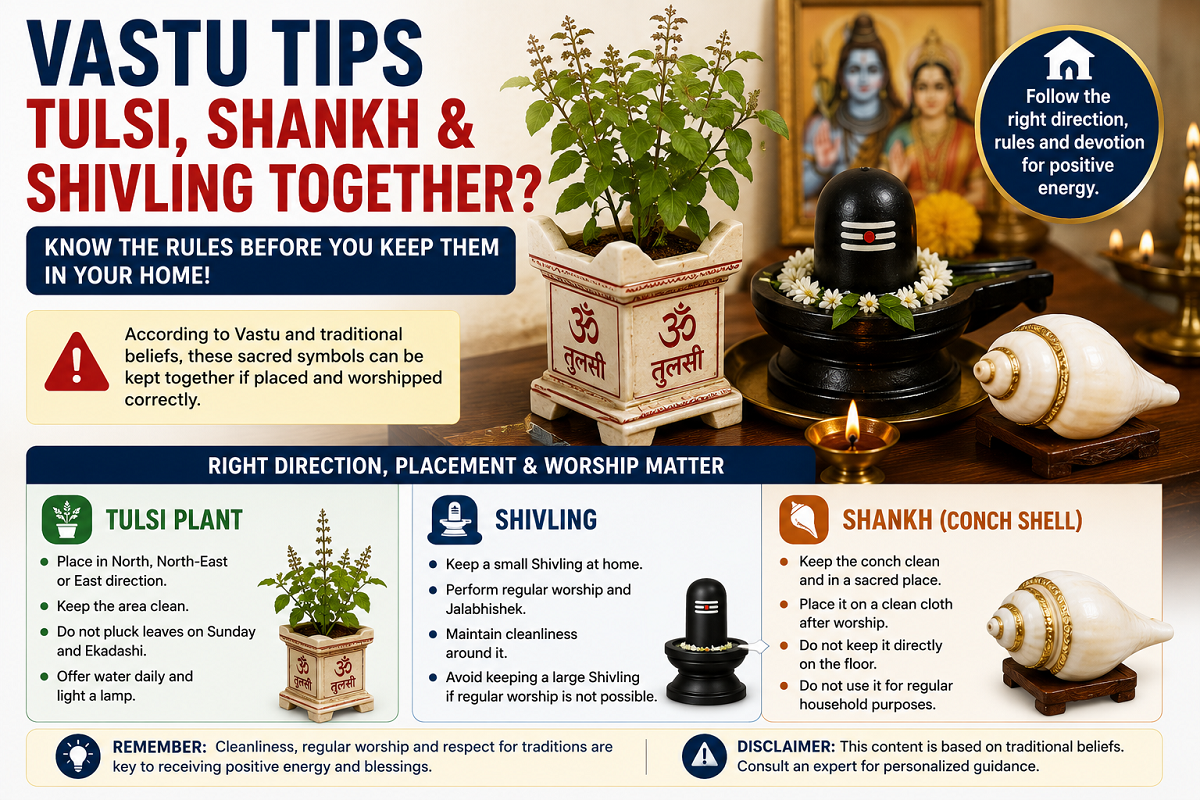
Religious Beliefs and Vastu Suggestions for Placing Sacred Symbols in Your Home Temple
Many Hindu households keep sacred symbols such as the Tulsi plant, a conch shell (Shankh), and a Shivling in their home temple. These items hold deep spiritual significance in Hindu traditions and are associated with worship, devotion, and positive energy. However, a common question among devotees is whether all three can be placed together in the same home and whether there are any Vastu or religious guidelines to follow.
According to traditional Hindu beliefs and Vastu practices, there is no prohibition against keeping a Tulsi plant, a conch shell, and a Shivling in the same household. However, it is believed that each sacred object should be installed, maintained, and worshipped according to established religious customs to preserve its spiritual importance.
Can All Three Sacred Symbols Be Kept Together?
Traditional beliefs suggest that these three sacred symbols can coexist in a home temple, provided they are placed respectfully and cared for properly.
In Hindu tradition:
-
The Tulsi plant is considered especially sacred to Lord Vishnu.
-
The Shankh (conch shell) is closely associated with Lord Vishnu and Goddess Lakshmi.
-
The Shivling represents Lord Shiva and is regarded as one of the most revered symbols in Shaivism.
Because of their spiritual significance, many devotees include all three in their daily worship. Religious traditions emphasize that proper placement, cleanliness, and regular पूजा (worship) are considered important while keeping these sacred objects at home.
Traditional Guidelines for Keeping a Tulsi Plant
According to Vastu beliefs, the Tulsi plant is ideally placed in specific directions to maintain a spiritually harmonious environment.
Commonly suggested locations include:
-
North direction
-
Northeast (Ishan) corner
-
East direction
Traditional practices also recommend:
-
Keeping the surrounding area clean and well maintained.
-
Watering the plant regularly.
-
Lighting a lamp near the Tulsi plant during daily worship, where customary.
-
Avoiding plucking Tulsi leaves on Sundays and on Ekadashi, in accordance with certain religious beliefs observed by many devotees.
These customs vary among families and regional traditions.
Guidelines Traditionally Followed for a Shivling at Home
Many religious practitioners advise that if a Shivling is installed at home, it should generally be of a modest size rather than a large temple-style Shivling.
Traditional recommendations include:
-
Performing regular worship and Jalabhishek (offering water) if possible.
-
Maintaining cleanliness around the Shivling.
-
Avoiding installation of a large Shivling at home if regular rituals cannot be performed consistently.
These practices are based on long-standing religious traditions and may differ among various schools of worship.
Proper Care of a Worship Conch (Shankh)
The conch shell used during religious ceremonies is also treated with reverence.
According to customary practices:
-
Keep the Shankh in a clean and sacred place.
-
After worship, place it on a clean cloth or a designated stand.
-
Avoid placing the conch shell directly on the floor.
-
A conch shell reserved for worship is generally not used for ordinary household purposes.
Maintaining cleanliness is considered an important part of preserving its ritual significance.
Importance of Respecting Religious Practices
Many devotees believe that the spiritual benefits associated with these sacred objects depend not only on their presence but also on the sincerity of worship and proper observance of traditional practices.
Since customs can vary across regions, communities, and family traditions, individuals often follow the guidance of their family priests or religious scholars regarding installation and worship methods.
Final Takeaway
According to traditional Hindu beliefs and Vastu practices, keeping a Tulsi plant, a Shankh, and a Shivling in the same home is generally considered acceptable when each is placed respectfully and maintained according to customary religious practices. Proper placement, regular cleanliness, and devotional worship are commonly emphasized as important aspects of these traditions.
Disclaimer
This article is based on traditional religious beliefs, Vastu principles, and cultural practices. These views are matters of faith and tradition and are not scientifically established. Readers should consult a qualified religious scholar or Vastu expert before making decisions based on these beliefs.