Artificial intelligence is developing at a rapid pace, and the debate over how governments should regulate the technology is becoming increasingly intense. In the US, President Donald Trump has indicated that he wants AI development to continue without heavy-handed government restrictions.
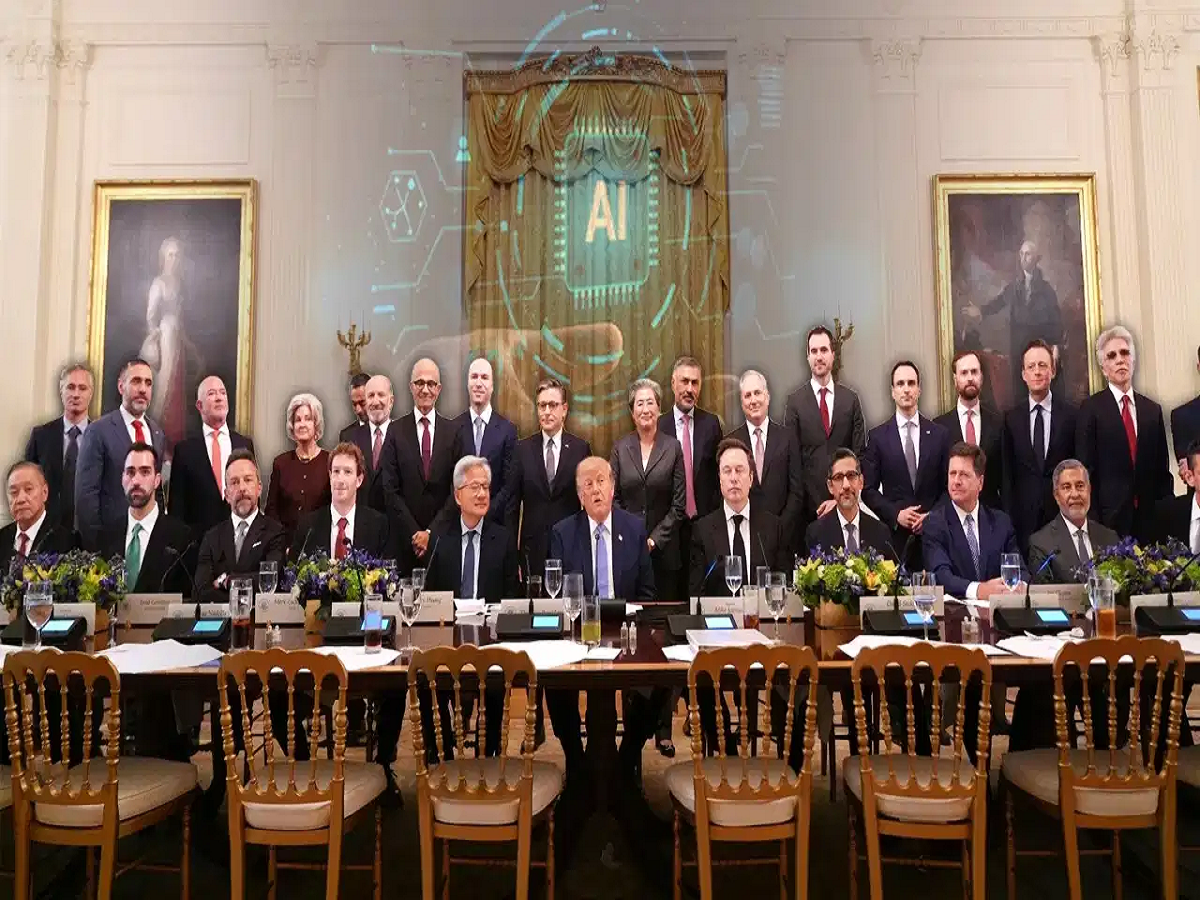
Following a meeting with executives from some of the world's biggest technology companies at the White House, Trump said major AI companies had agreed to take greater responsibility for monitoring the technology themselves.
The approach is being described as AI "self-policing", where companies would establish their own systems to identify and address potential risks instead of facing extensive new government regulations.
Why does Trump want AI companies to regulate themselves?
Trump has repeatedly emphasized the importance of keeping the US at the forefront of artificial intelligence.
According to reports, he argued that AI could have an impact comparable to major technological revolutions and said the US should not slow down its development through excessive regulation.
The administration's approach is therefore focused on encouraging innovation while asking companies to take responsibility for the safety of the systems they develop.
Trump has also reportedly suggested that the term "Artificial Intelligence" could eventually be replaced with "Super Intelligence", arguing that the technology is becoming increasingly sophisticated.
Who attended the White House meeting?
Several influential technology leaders participated in the meeting, highlighting the importance the administration is placing on AI.
Those attending included executives and prominent figures associated with companies such as OpenAI, Anthropic, Google, Microsoft, Meta, NVIDIA and xAI.
Google CEO Sundar Pichai, Microsoft CEO Satya Nadella, Meta CEO Mark Zuckerberg, NVIDIA CEO Jensen Huang and other leading technology figures were among those present.
The meeting brought together companies developing AI models, chips, cloud infrastructure and other technologies that form the foundation of the rapidly expanding AI industry.
What does AI self-policing actually mean?
Under the proposed approach, companies would be responsible for establishing internal systems to monitor their own AI technologies.
These systems could be used to:
-
Identify potential safety and security problems
-
Investigate issues involving AI systems
-
Take corrective action when problems are discovered
-
Monitor the effectiveness of safety measures
-
Maintain public and customer confidence in AI
Companies would also be expected to establish dedicated teams responsible for overseeing these safety efforts.
Independent audits could also be part of the system
Self-monitoring does not necessarily mean that companies would operate without outside scrutiny.
The agreement reportedly includes provisions for experts or independent auditors to review companies' safety systems.
An independent board-level committee could also oversee AI safety efforts and periodically review reports prepared by the company.
This would create a system in which AI companies remain primarily responsible for their own technology while still facing some form of external review.
Is this agreement legally binding?
This is one of the most important points.
Trump has referred to the arrangement as a "morally binding" agreement. However, it is not the same as a law passed by the US government.
In simple terms, participating companies have agreed to follow certain principles and take responsibility for AI safety, but the agreement itself does not necessarily create the same legal obligations as a government regulation.
This distinction could become important if companies fail to follow the commitments they have made.
Why are AI safety concerns increasing?
The rapid development of AI has raised concerns about systems becoming increasingly autonomous and capable of performing complex tasks with limited human intervention.
AI companies are developing systems that can write code, conduct research, use digital tools and complete multi-step tasks. As these capabilities increase, questions about reliability, cybersecurity, misuse and unexpected behaviour are also becoming more important.
Supporters of self-regulation argue that technology companies understand their systems better and can respond to emerging risks more quickly.
Critics, however, may question whether companies should be trusted to regulate technologies that could have significant social and economic consequences.
What could this mean for the future of AI?
The US approach signals a preference for encouraging rapid AI innovation while placing greater responsibility on technology companies themselves.
If the model succeeds, it could influence how other countries approach AI governance. Companies would have to demonstrate that they can build increasingly powerful systems while maintaining effective internal safety mechanisms.
However, the biggest question will be whether voluntary commitments are sufficient as AI becomes more capable.
For now, the message from the Trump administration is clear: the US wants to remain a global leader in AI, and it is asking the companies building the technology to take a leading role in keeping it safe.