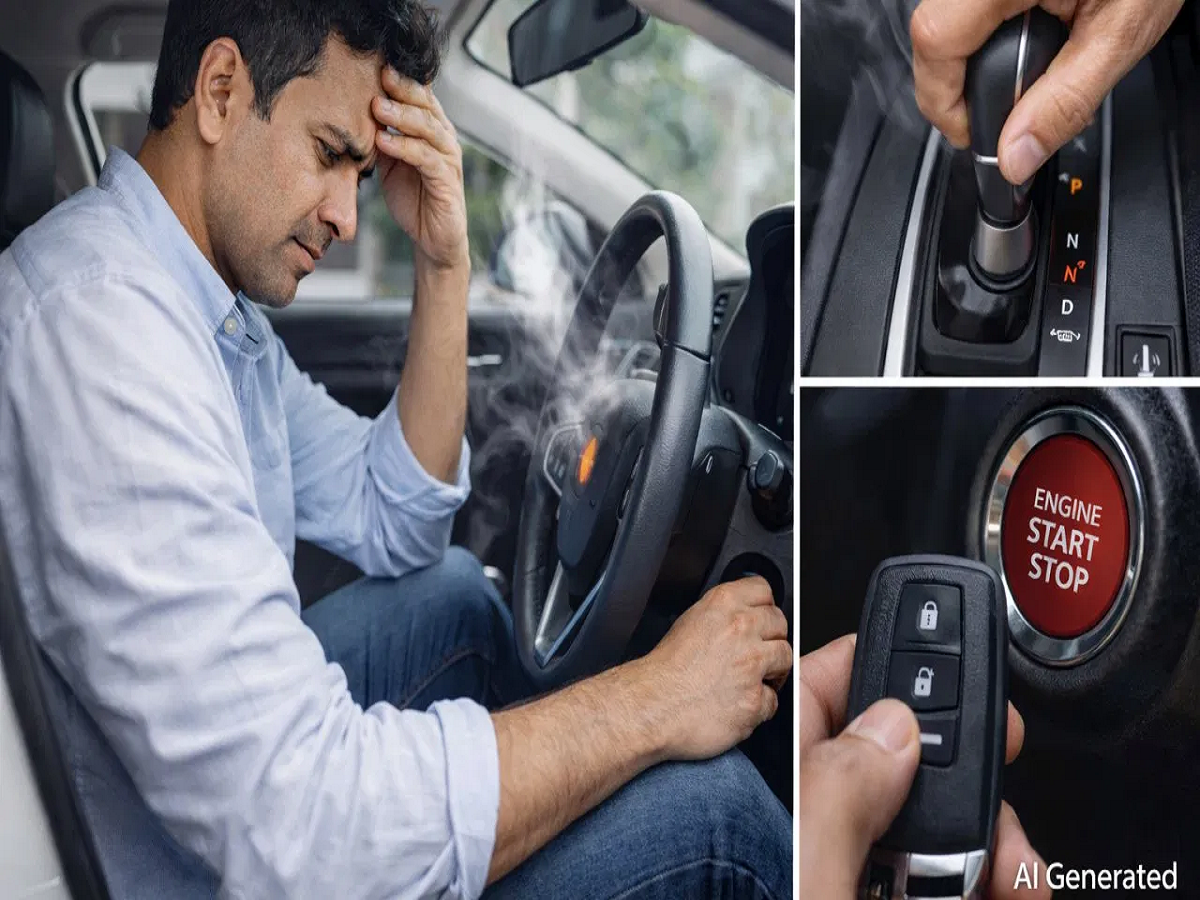
Most cars don’t suffer damage because of manufacturing defects, but due to everyday driving habits. Many drivers unknowingly shorten their vehicle’s lifespan by making small mistakes while starting or stopping the car. These habits can harm crucial components such as the engine, gearbox, battery, sensors, and even the turbocharger. Here’s what experts say you should avoid—and why it matters.
Common mistakes that damage your car
Experts advise switching off the headlights, air conditioner, and other electrical accessories before starting the car. If these remain on, the battery faces a sudden load during ignition, which can cause a voltage drop. Over time, this can damage sensitive and expensive electronic components.
Don’t rev the engine immediately after starting
One of the most common morning mistakes is pressing the accelerator right after starting the car. The engine oil takes about 20–30 seconds to circulate properly and reach all internal parts. Revving the engine too early increases friction, accelerates wear and tear, and negatively affects both engine performance and fuel efficiency.
Know the correct way to stop your car
Many drivers abruptly switch off the engine immediately after stopping, without allowing it to idle. This habit puts unnecessary stress on the engine and transmission. In turbocharged vehicles, it can be especially harmful. Sudden shut-off interrupts lubrication, increasing the risk of turbocharger damage or seizure—an expensive repair.