TECH
IndiaAI Update 2026: Government Opens 45,000+ GPUs for AI Development; Startups and Researchers to Benefit
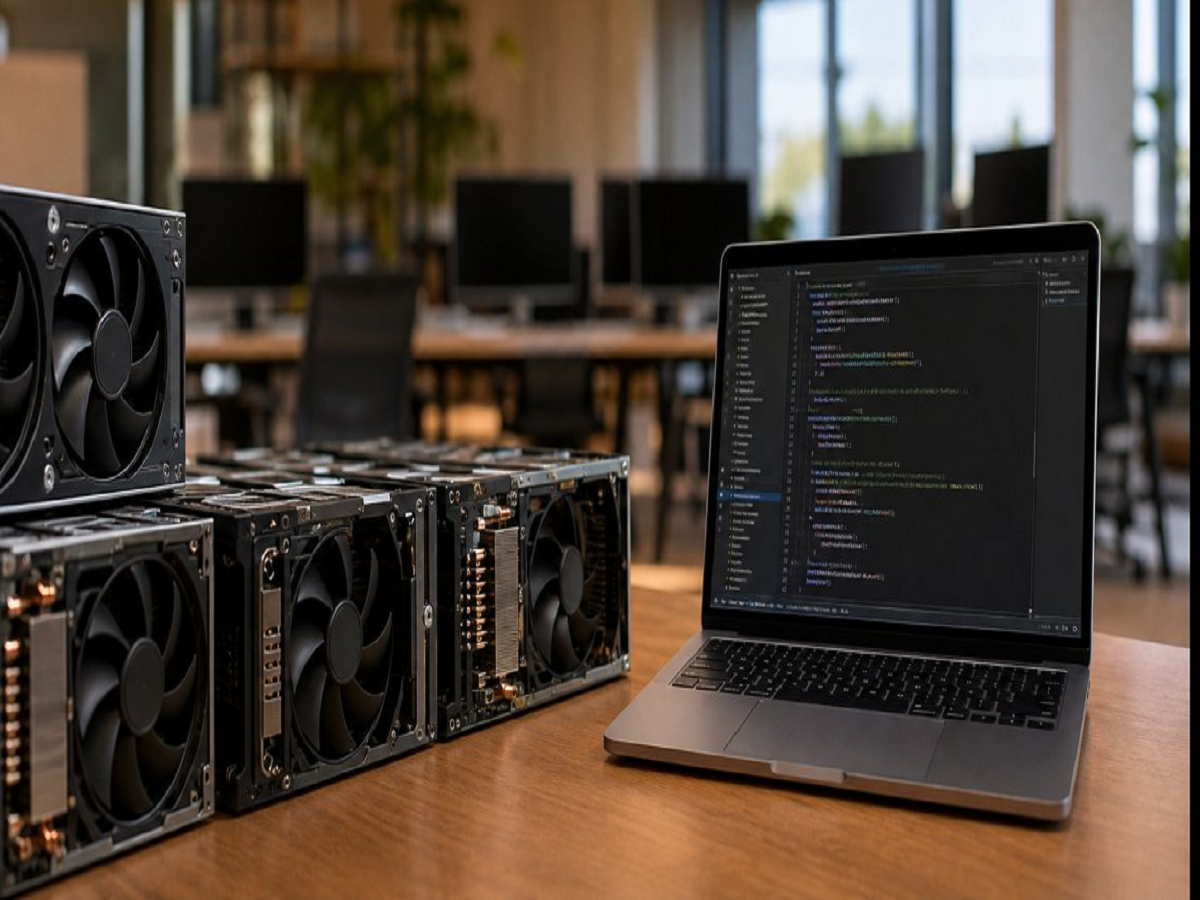
India is accelerating its artificial intelligence push by expanding access to one of the most important resources needed to build AI models—powerful computing infrastructure.
According to the government's latest update, the IndiaAI Mission's shared computing capacity has crossed 45,000 GPUs as of June 2026. The initiative is designed to give Indian startups, researchers and innovators access to high-performance computing without requiring them to build expensive AI infrastructure of their own.
The government has also selected 20 proposals for developing indigenous foundation models, signalling a push towards AI systems designed around Indian languages and local requirements.
What Is the IndiaAI GPU Facility?
GPUs, or Graphics Processing Units, are specialised processors widely used for training and running artificial intelligence models.
Developing advanced AI models can require hundreds or even thousands of GPUs. Purchasing and maintaining such infrastructure can be prohibitively expensive, particularly for startups and academic researchers.
Under the IndiaAI Mission, the government is creating shared computing infrastructure that eligible users can access at subsidised rates.
The aim is to reduce the cost barrier for developing AI technologies in India.
More Than 45,000 GPUs Now Available
According to the August 13 government factsheet, shared computing capacity under the IndiaAI Mission had expanded to more than 45,000 GPUs by June 2026.
By August, 237 projects had accessed subsidised AI computing resources, accounting for approximately 93.18 lakh GPU hours.
This computing infrastructure can be used for AI model development, training, testing and research.
India Is Developing Its Own AI Models
The government isn't focusing only on computing infrastructure.
Under the IndiaAI Mission, proposals were invited to develop indigenous foundation models. Out of 506 applications received, 20 proposals have been selected.
These include:
-
12 Large Multimodal Model proposals
-
8 Small Language Model proposals
The objective is to develop AI systems that better understand Indian languages, requirements and contexts.
AI Kosh Gets Thousands of Datasets
Data is another essential ingredient for developing artificial intelligence.
As of July 2026, the government's AI Kosh platform hosted more than 14,000 datasets and 331 AI models.
Providing researchers and developers with access to datasets can make it easier to experiment with and build new AI applications without having to create every dataset from scratch.
Government Is Also Working on Safe AI
As AI adoption increases, concerns surrounding deepfakes, privacy, bias and unreliable AI-generated information are also growing.
The government says 13 Responsible AI projects had been approved under the Safe & Trusted AI pillar of the IndiaAI Mission as of July 2026.
These projects cover areas including deepfake detection, bias mitigation, privacy-preserving AI, explainability, machine unlearning and AI risk assessment.
This suggests that India's AI strategy is focusing not only on building powerful models but also on addressing some of the risks associated with the technology.
AI Solutions Are Moving Into Government Services
Artificial intelligence is also moving beyond research laboratories.
According to the latest government figures, IndiaAI initiatives had developed 62 AI prototypes, while 20 AI solutions had already been deployed across public-sector institutions by August 2026.
The government has also approved AI Centres of Excellence across states and Union Territories to encourage specialised research and practical applications.
Why Does This Matter for Indian Startups?
Building an AI startup can require enormous investment in computing infrastructure.
If startups can access subsidised GPU resources instead of purchasing expensive hardware themselves, they may be able to spend more of their funding on product development, hiring and research.
The initiative could also benefit universities and independent researchers who previously lacked access to large-scale AI computing infrastructure.
India Wants AI Built for Indian Users
Most of the world's leading foundation models have historically been developed outside India.
India's strategy is increasingly focused on creating domestic alternatives that can understand the country's linguistic diversity and address local use cases.
This could eventually lead to AI tools designed specifically for sectors such as agriculture, healthcare, education, governance and Indian-language services.
With 45,000+ GPUs, 20 selected indigenous foundation-model proposals and thousands of datasets available through AI Kosh, India's AI programme is moving from policy announcements towards building the infrastructure needed for domestic AI development.
The bigger test will now be whether this computing capacity translates into AI products and models that can compete globally while solving problems relevant to Indian users.