LIFESTYLE
Solar Eclipse 2026: Why Do People Add Tulsi to Food During an Eclipse? Know the Health Benefits of This Sacred Leaf
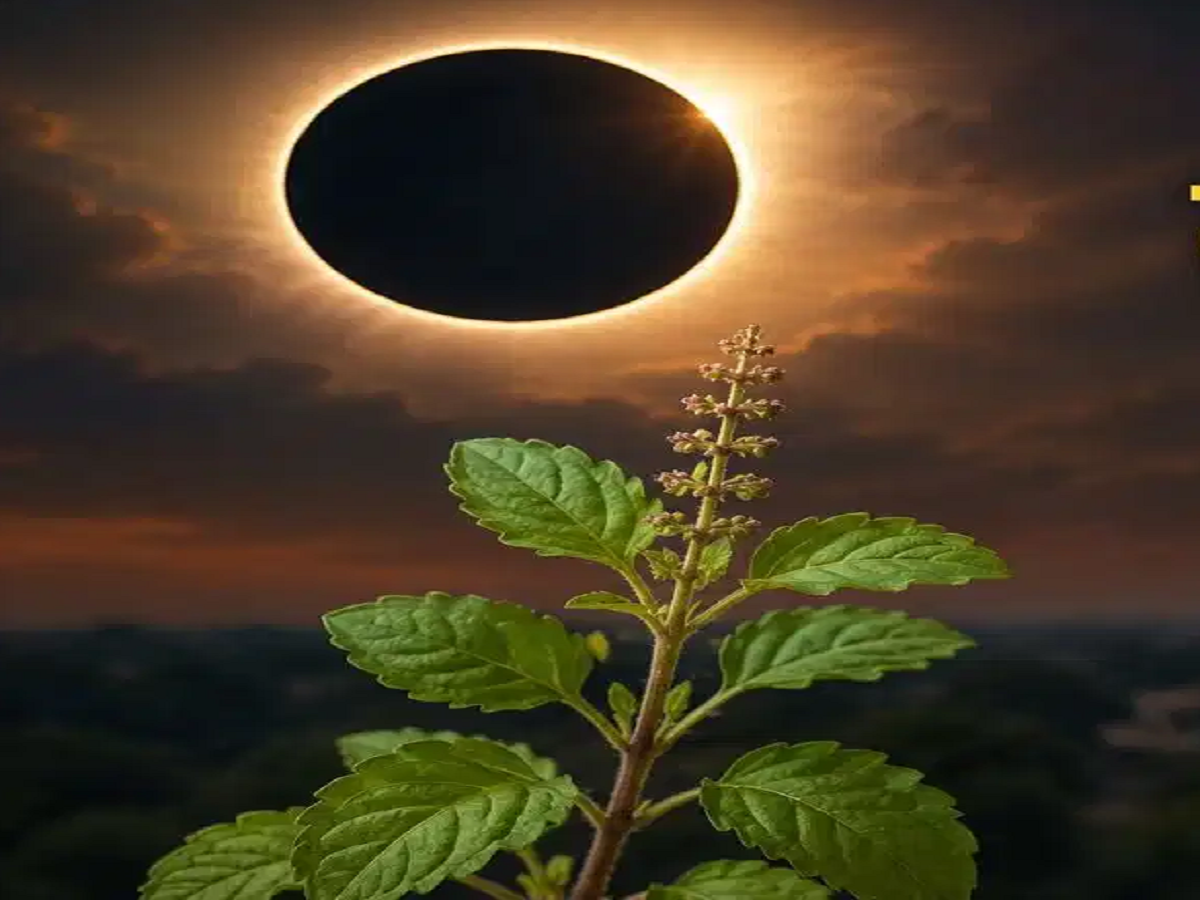
Solar Eclipse 2026: Solar eclipses are surrounded by many traditional beliefs in India. One such practice involves adding Tulsi, or holy basil, to food and drinks during an eclipse. According to popular belief, Tulsi helps protect food from the supposed negative effects of an eclipse. However, there is no scientific evidence linking solar eclipses with harmful effects on food or proving that Tulsi can neutralize them.
The second solar eclipse of 2026 is taking place on August 12. It will begin at 9:04 pm and end at 1:24 am, lasting around 4 hours and 20 minutes. The eclipse will not be visible from India. It can be observed from parts of South Africa, Tanzania, Zimbabwe, Zambia, Mauritius, Antarctica, and parts of Argentina and Chile.
Why Is Tulsi Added to Food During an Eclipse?
Tulsi holds an important place in Indian traditions and is often considered a sacred plant. During an eclipse, some families traditionally add Tulsi leaves to food and water. The belief is that Tulsi can help protect food from the effects associated with the eclipse.
There is, however, no established scientific connection between solar eclipses and food becoming harmful, nor is there scientific evidence that Tulsi can cancel any such effects. The practice is primarily rooted in cultural and religious traditions.
Tulsi Can Be a Healthy Addition to Your Diet
Beyond its religious significance, Tulsi has also been valued in Ayurveda and studied for its various plant compounds. It contains polyphenols and other phytochemicals that contribute to its antioxidant properties.
Rich in Antioxidants
Tulsi contains plant compounds such as polyphenols that have antioxidant activity. Antioxidants help protect cells from oxidative stress caused by free radicals.
May Support Immune Health
Tulsi contains several bioactive compounds that may support the body's normal immune functions. It is commonly consumed as Tulsi tea or infused water.
May Help With Stress
Tulsi is traditionally considered an adaptogenic herb. Some research suggests that it may have a role in helping the body respond to stress, although more research is needed to establish its effects in humans.
May Support Healthy Blood Sugar Levels
Some studies have found that Tulsi may influence blood sugar levels. However, consuming Tulsi should not be considered a substitute for diabetes medication or medical treatment.
May Have Anti-Inflammatory Properties
Certain phytochemicals present in Tulsi have demonstrated anti-inflammatory activity. Including Tulsi as part of a balanced diet may therefore provide beneficial plant compounds.
May Aid Digestion
Tulsi has traditionally been used for minor digestive complaints such as gas and indigestion. Its leaves are commonly consumed in herbal preparations and teas.
Tradition and Science Are Different
Adding Tulsi to food during an eclipse is a long-standing cultural practice, but its supposed ability to protect food from an eclipse has not been scientifically established. At the same time, Tulsi itself contains several beneficial plant compounds and can be included in a balanced diet in appropriate amounts.
So, while the eclipse-related belief belongs to tradition, the nutritional and potential health properties of Tulsi are a separate matter.