BUSINESS
New Government Scheme Will Turn Waste Into Clean Fuel: What GOBARdhan Means for Rural India
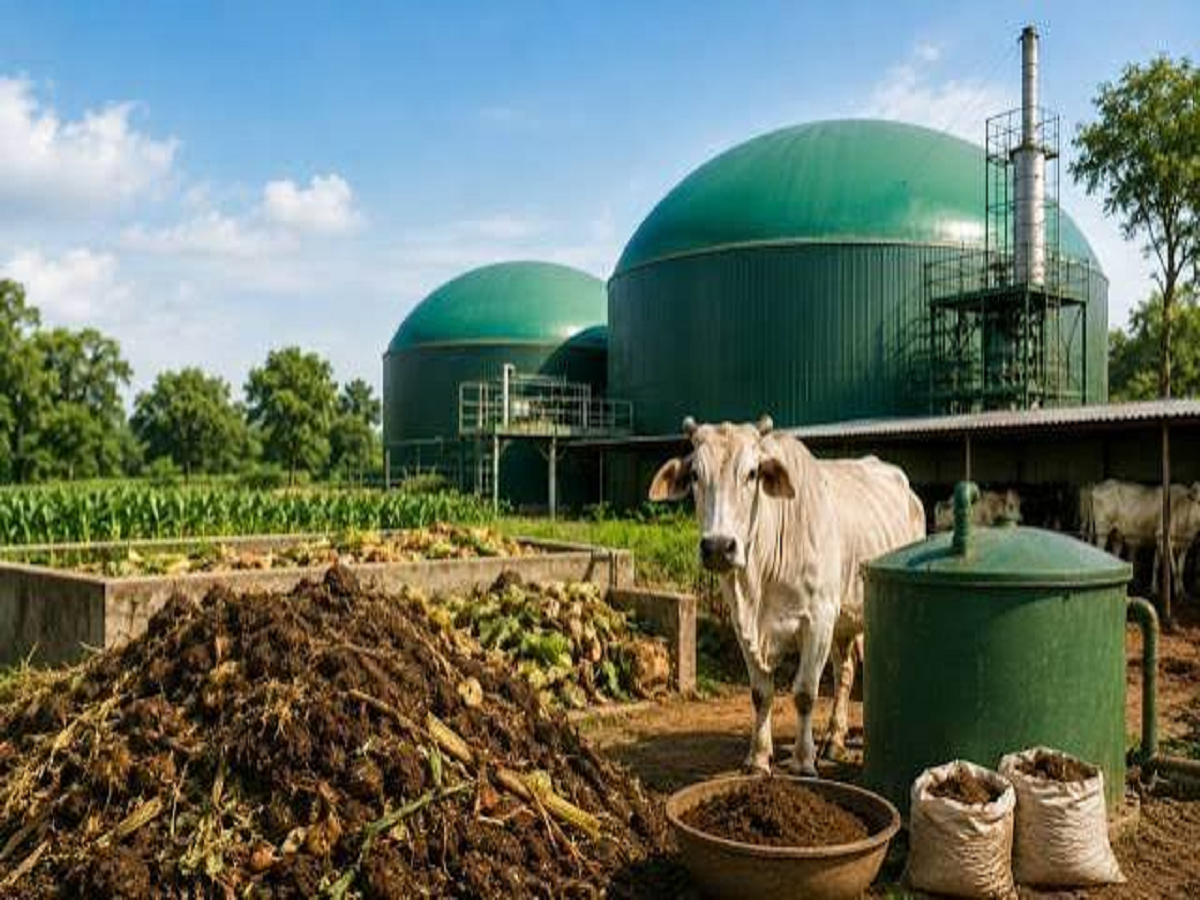
The government has announced a major push to convert organic waste into useful energy. The newly approved GOBARdhan National Circular Bioenergy Scheme is aimed at making compressed biogas (CBG) an important part of India's future energy mix while also improving waste management.
The scheme will run from FY 2026-27 to FY 2035-36 and has a total outlay of ₹23,731 crore.
What Is the GOBARdhan Scheme?
GOBARdhan stands for Galvanizing Organic Bio-Agro Resources Dhan.
The initiative focuses on converting cattle dung, agricultural waste, food waste and other organic material into useful products such as compressed biogas and organic manure.
Instead of allowing large quantities of organic waste to accumulate or be burned, the government wants to create a system where this waste can become a source of energy and additional economic value.
How Can This Help Farmers?
One of the biggest potential benefits is that agricultural and animal waste can become a source of additional income.
Farmers and rural communities can potentially supply organic waste to biogas and CBG plants. The process can also produce bio-manure that can be used in agriculture.
This creates a circular model:
Agricultural waste → Biogas/CBG → Energy + Organic manure
The government says the programme is intended to support rural livelihoods while promoting cleaner energy.
What Is Compressed Biogas?
Compressed biogas is produced by processing organic waste through anaerobic digestion.
After purification and compression, the resulting gas can be used as a fuel.
CBG can be used in applications where compressed natural gas is currently used, subject to the required infrastructure and quality standards.
This could help reduce dependence on conventional fossil fuels and increase the use of domestically produced renewable gas.
Will This Reduce LPG Prices?
Consumers should not assume that the new scheme will immediately reduce LPG cylinder prices.
The programme is primarily aimed at developing the country's bioenergy ecosystem and increasing the availability of CBG.
However, if domestic renewable gas production expands significantly over time, it could contribute to India's broader effort to diversify its energy sources and reduce dependence on imported fuels.
What Happens to the Waste After Gas Production?
The process doesn't simply turn waste into gas and leave nothing behind.
Organic material remaining after anaerobic digestion can be processed into bio-manure. This can potentially provide farmers with an additional source of agricultural input while also reducing the amount of organic waste requiring disposal.
Why Is the Government Promoting This Now?
India is simultaneously trying to address three major challenges:
- Increasing energy demand
- Managing agricultural and municipal organic waste
- Reducing dependence on fossil fuels
The GOBARdhan initiative attempts to address all three through a single circular-economy approach.
The government has described compressed biogas as a major pillar of India's future energy mix.
Could This Create New Jobs?
The expansion of CBG plants could create opportunities across several stages of the supply chain.
These could include:
- Collection of agricultural waste
- Transportation of organic material
- Operation of biogas plants
- Processing and purification
- Production of organic manure
- Maintenance and supporting services
The benefits could be particularly relevant in rural areas where agricultural and cattle waste is readily available.
What Does It Mean for Ordinary Households?
For most households, there will not be an immediate change in their monthly electricity or LPG bill because of this announcement.
The impact is more likely to develop gradually as new plants are established and CBG becomes more widely available.
In the longer term, the programme could contribute to cleaner fuel options, better waste management and greater use of domestically produced renewable energy.
The Bottom Line
The government's latest GOBARdhan push is not simply a waste-management programme. It is an attempt to turn organic waste into an economic resource.
With a ₹23,731 crore outlay and implementation planned through 2035-36, the initiative could become an important part of India's efforts to develop cleaner fuels, support rural economies and diversify its energy mix.