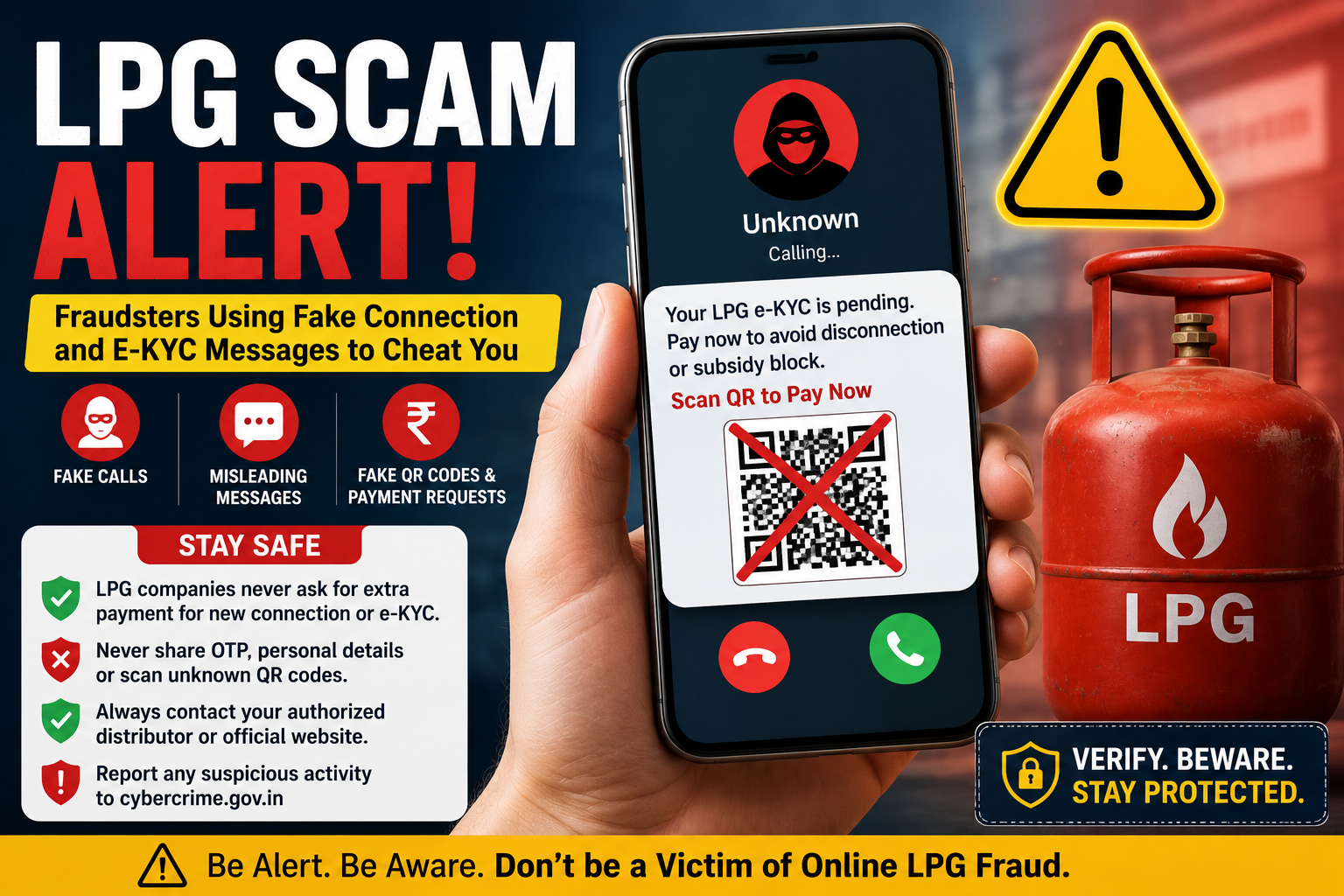
LPG Scam Alert: Gas consumers are being warned about a fresh wave of online fraud involving fake LPG connection offers, e-KYC updates, and subsidy activation messages. Fraudsters are impersonating gas agency representatives and tricking customers into making payments through fraudulent QR codes.
With LPG-related services and e-KYC requirements in focus, authorities are urging consumers to remain cautious and verify every request before sharing personal information or making any payment.
Fake LPG Calls and Messages on the Rise
Scammers are reportedly contacting consumers through phone calls, SMS, and WhatsApp messages while pretending to represent LPG distributors or customer service executives.
They falsely claim that customers need to pay additional charges for services such as:
-
New LPG gas connection
-
e-KYC verification
-
Subsidy activation
-
Account verification
-
Document updates
Victims are then asked to scan a QR code or transfer money immediately to complete the process.
Once the payment is made, the fraudsters disappear without providing any service.
How the Scam Works
Cybercriminals create a sense of urgency by claiming that:
-
Your LPG connection may be cancelled.
-
Your subsidy could stop.
-
Your e-KYC is incomplete.
-
Immediate payment is required to avoid service disruption.
They then send fake payment links or QR codes through messaging apps and persuade customers to complete the transaction instantly.
Authorities advise consumers never to make payments based solely on unsolicited calls or messages.
How to Identify a Fake QR Code
Before scanning any QR code or clicking on a payment link, carefully verify its source.
Consumers should:
-
Check whether the website belongs to the official LPG provider.
-
Avoid QR codes received through unknown WhatsApp numbers or SMS.
-
Never trust payment requests sent by unofficial accounts.
-
Confirm payment instructions directly with the authorized gas agency.
If anything appears suspicious, do not proceed with the transaction.
Who Is Most at Risk?
Fraudsters often target:
-
Customers applying for a new LPG connection.
-
People completing e-KYC for the first time.
-
Consumers expecting subsidy benefits.
-
Senior citizens and first-time online users.
These groups are more likely to trust callers claiming to represent official gas agencies.
Safety Tips to Avoid LPG Scams
To protect yourself from fraud:
-
Make payments only through official LPG websites or mobile applications.
-
Never scan QR codes sent by unknown callers.
-
Do not share OTPs, banking details, or personal documents over the phone.
-
Verify every communication by contacting your authorized LPG distributor directly.
-
Ignore calls demanding urgent payments for connection approval or subsidy activation.
What to Do If You Receive a Suspicious Call
If someone claims to be from a gas agency and asks for money:
-
End the call immediately.
-
Do not scan any QR code or click on unknown links.
-
Contact your LPG distributor using official customer care numbers.
-
Report suspected fraud to the national cybercrime helpline or the cybercrime reporting portal.
Bottom Line
As digital payment fraud continues to evolve, LPG consumers should remain vigilant against fake calls, fraudulent QR codes, and misleading e-KYC messages. Genuine gas agencies do not ask customers to make payments through unofficial WhatsApp messages or unknown QR codes. Verifying requests before making any transaction can help prevent financial losses and protect personal information.