LIFESTYLE
Nirjala Ekadashi 2026 Vrat Katha: Read the Complete Sacred Story Behind the Most Powerful Ekadashi Fast
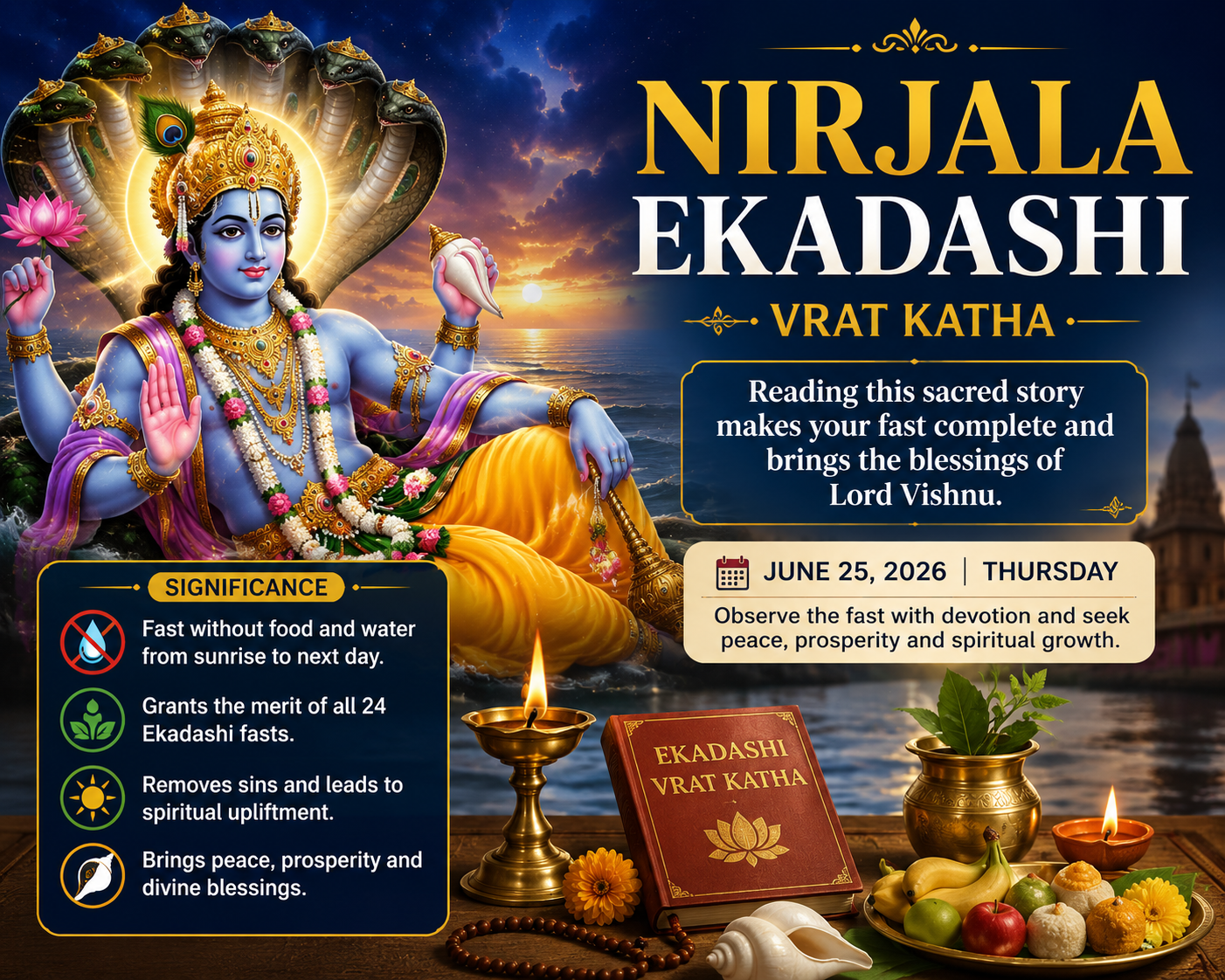
Nirjala Ekadashi 2026: Nirjala Ekadashi will be observed on Thursday, June 25, 2026. Considered one of the most significant Ekadashi fasts dedicated to Lord Vishnu, devotees observe this vrat without consuming food or water. According to Hindu beliefs, reading or listening to the Nirjala Ekadashi Vrat Katha is an essential part of the observance, as the fast is considered incomplete without it.
Nirjala Ekadashi 2026: Date and Timings
-
Ekadashi Tithi Begins: June 24, 2026 – 6:12 PM
-
Ekadashi Tithi Ends: June 25, 2026 – 8:09 PM
-
Parana (Breaking the Fast): June 26, 2026 – 5:25 AM to 8:13 AM
-
Dwadashi Ends: June 26, 2026 – 10:22 PM
Why Nirjala Ekadashi Is Special
Nirjala Ekadashi falls during the Shukla Paksha of the Jyeshtha month and is regarded as the most rewarding among all 24 Ekadashi fasts observed throughout the year. Unlike other Ekadashi vrats, devotees abstain from both food and water from sunrise until the following day's prescribed Parana time.
According to Hindu scriptures, observing this fast with devotion is believed to bring spiritual growth, prosperity, forgiveness of sins, and the blessings of Lord Vishnu.
The Sacred Nirjala Ekadashi Vrat Katha
The story begins with King Yudhishthira asking Lord Krishna about the importance of the Ekadashi observed during the bright fortnight of Jyeshtha. Lord Krishna requested Sage Ved Vyasa to explain its significance.
Ved Vyasa told the Pandavas that observing every Ekadashi fast brings immense spiritual merit. However, Bhima, known for his enormous appetite, admitted that he found it impossible to fast twice every month because of his intense hunger.
Bhima requested Ved Vyasa to suggest a single fast that could provide the same spiritual rewards as observing all Ekadashis throughout the year.
The sage advised him to observe Nirjala Ekadashi, a fast without consuming food or even water, except for a small amount used for ritual purification (Achaman). He explained that anyone who sincerely observes this vrat receives the accumulated merit of all Ekadashi fasts.
The Blessings of the Fast
Ved Vyasa further explained that Lord Vishnu Himself declared that devotees who faithfully observe Nirjala Ekadashi are freed from sins and ultimately attain His divine abode.
It is believed that those who keep this fast with devotion are protected by Vishnu's divine attendants at the end of life instead of facing the messengers of Yama. The scriptures also describe the vrat as a path toward liberation, peace, and eternal blessings.
Rituals Recommended on Nirjala Ekadashi
Devotees traditionally perform the following rituals:
-
Wake up early and take a holy bath.
-
Worship Lord Vishnu with flowers, incense, lamps, sandalwood, and sacred offerings.
-
Observe a strict fast without food or water.
-
Chant Vishnu mantras and recite or listen to the Nirjala Ekadashi Vrat Katha.
-
Spend time in prayer, meditation, and devotional singing.
-
Stay awake during the night in remembrance of Lord Vishnu, if possible.
Charity and Donations
Religious texts place special importance on charity during Nirjala Ekadashi. Devotees are encouraged to donate:
-
Water-filled pots
-
Clothes
-
Food grains
-
Umbrellas
-
Footwear
-
Bedding
-
Cow donation (where traditionally applicable)
-
Dakshina and sweets to deserving Brahmins
Acts of charity performed on this day are believed to bring long-lasting spiritual rewards.
Parana on Dwadashi
The fast should be broken only during the prescribed Parana time on Dwadashi after offering prayers to Lord Vishnu. Many devotees also feed Brahmins or needy people before taking their own meal, following traditional customs.
Spiritual Significance
According to Hindu beliefs, Nirjala Ekadashi is especially beneficial for those who are unable to observe every Ekadashi throughout the year. Scriptures state that sincere observance of this single vrat can bestow the spiritual benefits equivalent to all annual Ekadashi fasts.
Devotees believe that the vrat helps purify the mind, strengthens devotion, removes obstacles, and brings peace, prosperity, and divine grace.
Disclaimer: This article is based on traditional Hindu scriptures, religious beliefs, and cultural practices. Religious customs may vary across regions and communities. Readers are advised to follow local traditions or seek guidance from knowledgeable religious scholars where appropriate.