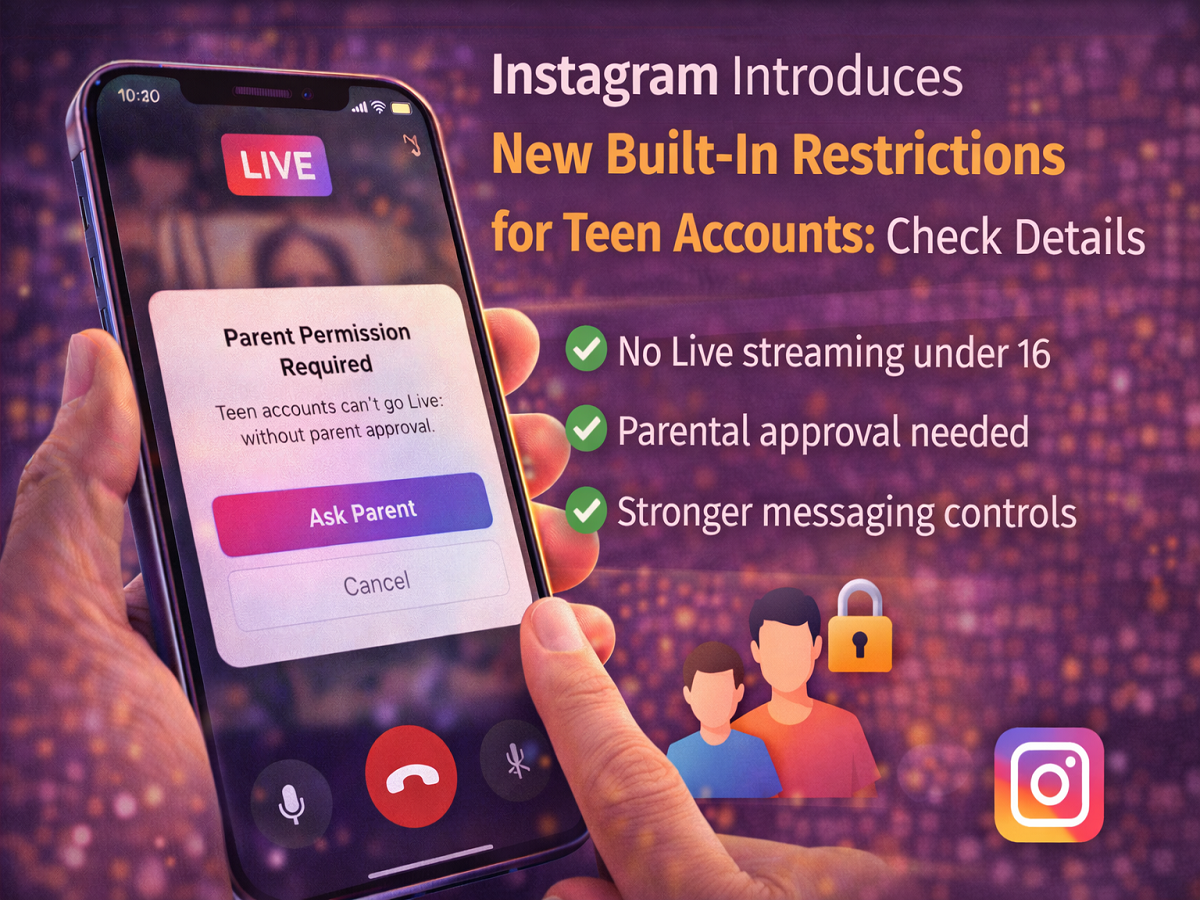
Meta has introduced a fresh set of safety-focused updates for Instagram, specifically targeting younger users. The company’s latest move brings stricter built-in protections for teen accounts, aiming to create a safer and more controlled online environment. Under the new policy, users below the age of 16 will no longer be able to go live on Instagram without explicit parental consent.
This update is part of Meta’s broader effort to strengthen digital safety for teenagers as concerns around online exposure and privacy continue to grow globally.
What Are Instagram Teen Accounts?
Instagram Teen Accounts are specially designed profiles for users aged between 13 and 15. These accounts come with default safety settings that limit unwanted interactions and exposure to inappropriate content.
Unlike regular accounts, teen profiles are automatically placed under stricter controls. These restrictions are designed to ensure that young users have a safer experience while using the platform.
According to Meta, the majority of teenagers are already staying within these safety settings. The company revealed that around 97% of users aged 13 to 15 have not changed these protections, indicating strong adoption of the safety-first approach.
Key Update: Live Streaming Now Requires Parental Permission
One of the most significant changes in this update is related to Instagram Live. Teenagers under 16 will now need approval from a parent or guardian before they can start a live broadcast.
This move is aimed at reducing risks such as exposure to strangers, inappropriate interactions, or misuse of live content. Since live streaming is real-time and less controllable, Meta is adding this extra layer of protection to ensure minors are not put in vulnerable situations.
Stronger Control Over Direct Messages (DMs)
Another major addition is enhanced protection against unwanted images in direct messages. Teens will not be able to disable this safety feature unless they receive permission from their parents.
This built-in restriction is designed to protect young users from harmful or inappropriate content that may be shared privately. By default, Instagram will filter and limit such content, giving parents more control over their child’s digital interactions.
Automatic Safety Settings You Can’t Easily Change
Meta has emphasized that these protections are not optional by default. Teen accounts are automatically assigned these safety settings, and users under 16 cannot relax them without parental approval.
This ensures that young users cannot unknowingly expose themselves to risks by changing settings. It also encourages parents to stay involved in their child’s online activity.
Expansion Beyond Instagram
Meta is not limiting these changes to Instagram alone. The company has also announced plans to roll out similar teen protection features on Facebook and Messenger.
These updates will include:
- Restrictions on who can contact teens
- Limits on exposure to sensitive or inappropriate content
- Tools to help manage screen time and online behavior
Initially, these features will be introduced in countries like the United States, United Kingdom, Australia, and Canada. Meta plans to expand them to other regions in the near future.
Why This Update Matters
With the increasing use of social media among teenagers, online safety has become a major concern for both parents and policymakers. Features like live streaming and direct messaging, while useful, can sometimes expose young users to risks.
Meta’s latest update reflects a growing trend among tech companies to prioritize user safety, especially for minors. By combining automation with parental involvement, the company aims to strike a balance between freedom and protection.
Final Thoughts
The introduction of stricter rules for Instagram Teen Accounts marks a significant step toward safer social media usage for young users. From restricting live streaming to enhancing message safety, these updates focus on minimizing risks without compromising the overall experience.
As these features roll out globally, they are expected to set a new benchmark for how platforms handle teen safety in the digital age.