LIFESTYLE
India Gets Once-Weekly Insulin Injection: What Diabetes Patients Should Know Before Switching
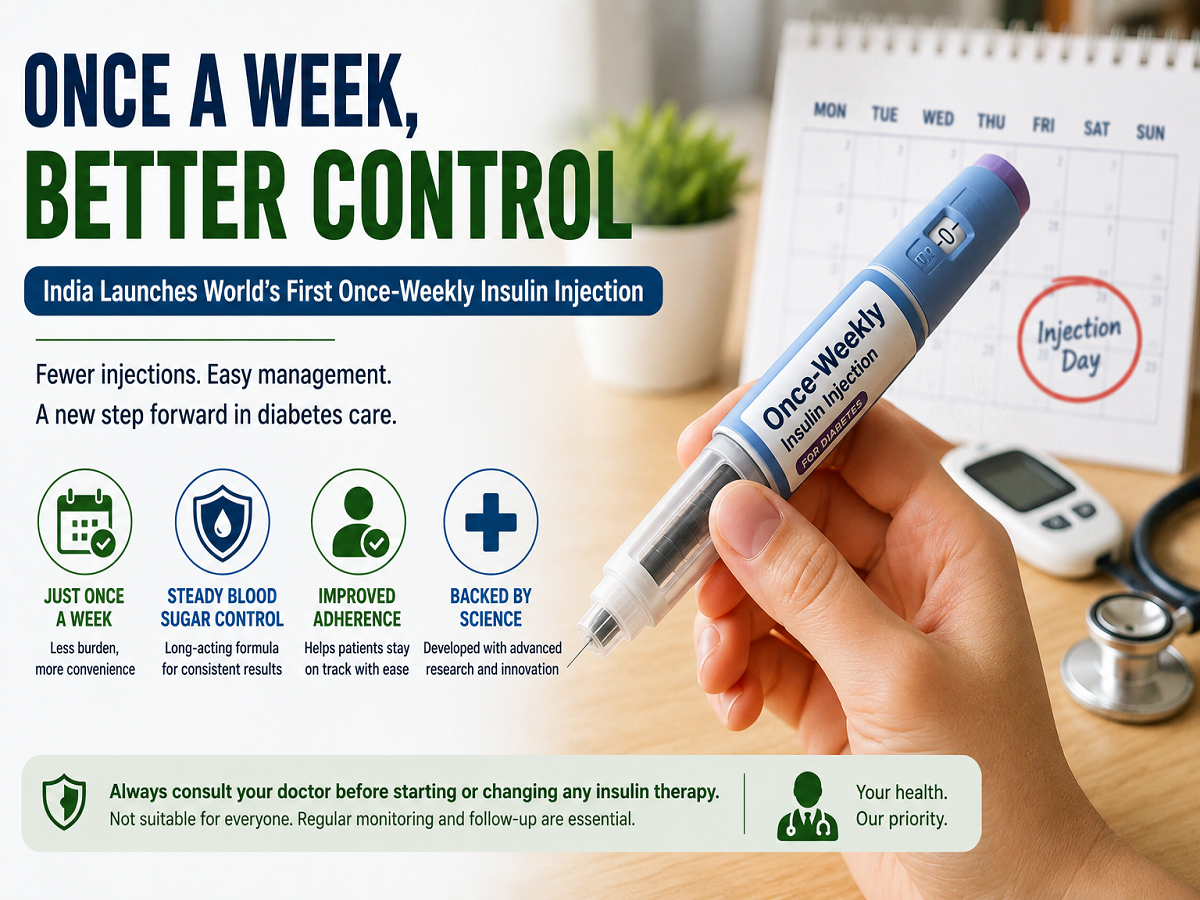
People living with diabetes in India may soon have access to a more convenient treatment option with the launch of a once-weekly insulin injection. The new therapy has the potential to reduce the burden of daily insulin injections for eligible patients by providing long-acting blood sugar control with just one dose each week.
Healthcare experts believe this advancement could improve treatment adherence for many individuals who require basal insulin therapy. However, they also stress that the once-weekly insulin is not suitable for everyone, and patients should never change their insulin regimen without consulting their healthcare provider.
Here's what you need to know about the newly introduced once-weekly insulin and the important precautions to consider before switching.
What Is Once-Weekly Insulin?
The newly launched treatment is a long-acting basal insulin designed to provide blood glucose control for approximately one week after a single injection.
Unlike traditional basal insulin, which is often administered once every day, this formulation is intended to maintain a steady insulin effect over several days. The goal is to simplify diabetes management by reducing the number of injections required each week.
For many patients, fewer injections may make it easier to follow their prescribed treatment plan consistently.
Who May Benefit From This Treatment?
Once-weekly insulin may be considered for adults who require long-term basal insulin therapy, particularly those who find it difficult to maintain a daily injection schedule.
Patients who frequently miss doses or struggle with the inconvenience of daily injections may potentially benefit from a simplified dosing schedule. However, eligibility depends on several medical factors, including:
-
Type of diabetes
-
Current blood sugar control
-
Existing insulin regimen
-
Overall health condition
-
Other medical illnesses
-
Individual treatment goals
Only a qualified healthcare professional can determine whether this therapy is appropriate for a particular patient.
Seven Important Things to Know Before Switching
1. Never Change Your Insulin Without Medical Advice
Patients already using insulin should not stop, replace, or adjust their medication on their own.
Any change in insulin therapy should always be made under medical supervision after evaluating blood glucose patterns and overall health.
2. It May Not Be Suitable for Every Patient
Diabetes treatment is highly individualized.
Doctors consider several factors—including age, kidney function, lifestyle, medical history, and glucose control—before recommending any insulin regimen. As a result, not every patient will be an appropriate candidate for once-weekly insulin.
3. Frequent Blood Sugar Monitoring Is Essential Initially
When starting a new insulin therapy, regular blood glucose monitoring becomes especially important.
During the first few weeks, doctors may closely review glucose readings and adjust the dosage if necessary to achieve safe and effective blood sugar control.
4. Follow a Fixed Weekly Schedule
Since the injection is administered only once every seven days, choosing a consistent day each week is important.
Maintaining the same schedule helps reduce the risk of missed doses and supports stable diabetes management.
5. Healthy Lifestyle Habits Remain Essential
Even with a more convenient insulin schedule, medication alone cannot effectively manage diabetes.
Patients should continue following:
-
A balanced diet
-
Regular physical activity
-
Adequate sleep
-
Weight management
-
Routine medical check-ups
These lifestyle measures remain fundamental parts of diabetes care.
6. Watch for Possible Side Effects
Like other insulin therapies, once-weekly insulin may cause side effects in some individuals.
Patients should seek medical advice if they experience symptoms such as:
-
Low blood sugar (hypoglycemia)
-
Excessive sweating
-
Dizziness
-
Allergic reactions
-
Unusual weakness
-
Any unexpected symptoms after the injection
Early reporting allows healthcare providers to make timely adjustments if needed.
7. Continue Regular Follow-Up Visits
Routine medical appointments remain important even after switching to a new insulin therapy.
Periodic consultations help doctors evaluate treatment effectiveness, review blood sugar trends, monitor potential side effects, and make dosage adjustments when required.
Will Once-Weekly Insulin Replace Daily Insulin?
Medical experts emphasize that once-weekly insulin is not expected to replace daily insulin for every patient.
Some individuals may benefit significantly from the new therapy, while others may continue achieving better glucose control with existing daily insulin regimens. Treatment decisions should always be based on clinical evaluation rather than convenience alone.
A Promising Step in Diabetes Care
The introduction of once-weekly insulin represents an important development in diabetes management and may offer greater convenience for many eligible patients. By reducing injection frequency, the treatment has the potential to improve adherence and simplify long-term insulin therapy.
However, successful diabetes management still depends on a comprehensive approach that includes proper medication, healthy eating habits, regular exercise, routine blood sugar monitoring, and ongoing medical supervision.
Disclaimer: This article is intended for informational purposes only and should not be considered medical advice. Patients should consult their physician or diabetes specialist before starting, stopping, or changing any insulin therapy or other diabetes medication.