BUSINESS
Government Scheme Helps Tribal Families Earn More From Forest Produce: How PM Janjatiya Vikas Mission Works
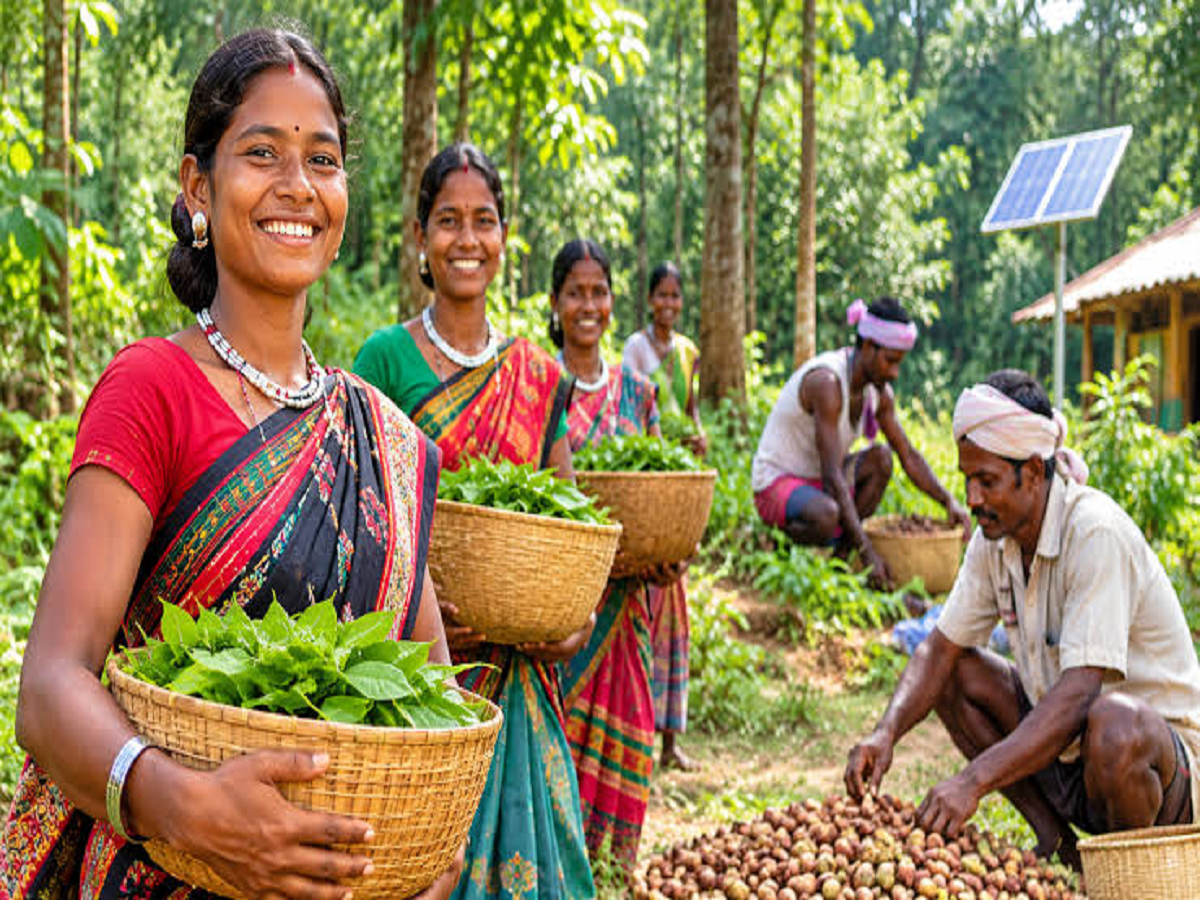
For millions of tribal families in India, forests are not just a source of natural resources but also an important source of livelihood. Products such as honey, bamboo, tamarind, mahua flowers, tendu leaves and medicinal herbs contribute significantly to household incomes. However, many forest gatherers have traditionally been forced to sell these products to middlemen at low prices.
To address this problem, the Central Government is implementing the Pradhan Mantri Janjatiya Vikas Mission (PMJVM), which aims to help tribal communities earn better returns through processing, packaging and direct market access.
In an update released on November 14, 2026, the Press Information Bureau highlighted the mission's progress and its role in strengthening India's tribal forest economy. As of March 2026, 4,172 Van Dhan Vikas Kendras had been sanctioned, covering approximately 12.48 lakh beneficiaries.
Here is how the scheme works, what benefits it offers and how tribal communities can participate.
What Is the Pradhan Mantri Janjatiya Vikas Mission?
The Pradhan Mantri Janjatiya Vikas Mission was launched in 2021–22 to improve the livelihoods of tribal communities by developing a sustainable business ecosystem around Minor Forest Produce (MFP).
Minor Forest Produce includes non-timber products collected from forests, such as:
-
Wild honey
-
Bamboo
-
Mahua flowers
-
Tamarind
-
Tendu leaves
-
Lac
-
Medicinal plants and herbs
-
Nuts, seeds and other forest products
According to the government, around 20% to 40% of the annual income of many tribal families comes from Minor Forest Produce.
The mission aims to help these communities move beyond selling raw forest products by providing training, processing facilities, financial support and access to wider markets.
What Are Van Dhan Vikas Kendras?
Van Dhan Vikas Kendras (VDVKs) are at the centre of the scheme.
These centres bring tribal forest gatherers together through self-help groups (SHGs), helping them collectively process and market forest products.
Under the model, around 15 self-help groups, comprising approximately 300 tribal members, are organised into one Van Dhan Vikas Kendra. At least 60% of its members must belong to Scheduled Tribe communities.
Instead of selling raw honey, bamboo or forest fruits individually, members can process these materials into finished products, improve their packaging and sell them at better prices.
As of July 31, 2026, the government had sanctioned 4,172 Van Dhan Vikas Kendras, of which 2,911 were functional. These centres had reported sales of approximately ₹168 crore.
What Financial and Other Benefits Does the Scheme Offer?
The PMJVM provides several forms of support to tribal communities and self-help groups.
1. Minimum Support Price for Forest Produce
One of the most important features is the Minimum Support Price (MSP) mechanism for Minor Forest Produce.
The government has notified MSP for 87 categories of forest produce. This provides a price-support mechanism and helps protect tribal gatherers from distress sales when market prices are unfavourable.
Some examples of notified prices include:
| Forest produce | MSP per kg |
|---|---|
| Raw cashew | ₹450 |
| Cashew nut | ₹800 |
| Wild honey | ₹225 |
| Jackfruit seed | ₹45 |
| Bamboo brooms | ₹60 |
| Jamun dried seeds | ₹42 |
These are selected examples of government-notified prices. Actual procurement depends on the applicable guidelines and arrangements in the state.
2. Processing Equipment and Infrastructure
Self-help groups receive support to establish processing facilities based on locally available forest products.
The equipment may include:
-
Cutting and sieving tools
-
Dryers
-
Decorticators
-
Packaging equipment
-
Other primary processing machinery
Facilities can be established in beneficiary homes or suitable government and Gram Panchayat buildings.
3. Training and Skill Development
The scheme also provides training in scientific harvesting, sustainable collection, processing and value addition.
The objective is to help tribal communities improve product quality, reduce wastage and develop products that can compete in larger markets.
4. Working Capital and Market Access
Self-help groups can be connected with banks, financial institutions and the National Scheduled Tribes Finance and Development Corporation for working-capital support.
The mission also helps tribal producers access markets through exhibitions, tribal fairs, retail outlets and e-commerce platforms.
How Can Tribal Communities Participate in the Scheme?
The scheme primarily operates through community-based institutions and Van Dhan Vikas Kendras rather than a direct individual cash-benefit application.
Interested tribal forest gatherers and self-help groups can follow these steps:
-
Contact the local Tribal Welfare Department or District Tribal Development Office.
-
Enquire about existing Van Dhan Vikas Kendras in the district.
-
Approach the relevant tribal cooperative, forest development corporation or state implementing agency.
-
Ask about forming or joining an eligible self-help group.
-
Participate in the assessment of locally available forest produce and the proposed processing activities.
-
Complete the membership and documentation requirements specified by the implementing agency.
The availability of new centres, equipment and financial assistance depends on state-level implementation and approval under the scheme.
How Does the Scheme Help Tribal Women?
An important aspect of PMJVM is its focus on women's economic participation.
Women are closely involved in collecting, processing and selling many types of forest produce. By organising them into self-help groups, the scheme gives them an opportunity to participate in collective businesses rather than depending entirely on seasonal collection activities.
For example, a Van Dhan Vikas Kendra in Leparada district of Arunachal Pradesh has around 300 women SHG members and farmers. The group processes locally available products into items such as king chilli pickle, bamboo shoot pickle, turmeric powder, ginger powder and fruit-based products.
According to the government, the centre has generated sales worth approximately ₹11 lakh since 2022–23.
This model allows women to participate in production, branding and business ownership while creating additional income opportunities.
What Is the Difference Between PMJVM and the Forest Rights Act?
The two initiatives serve different but complementary purposes.
The Forest Rights Act, 2006, recognises the rights of eligible forest-dwelling Scheduled Tribes and other traditional forest dwellers over forest resources, including the right to collect and sell Minor Forest Produce.
The Pradhan Mantri Janjatiya Vikas Mission focuses on improving the economic value of those products through processing, training, infrastructure, procurement and market access.
In simple terms, the Forest Rights Act recognises important forest-related rights, while PMJVM aims to help communities build stronger livelihoods around forest produce.
Why Is the Pradhan Mantri Janjatiya Vikas Mission Important?
The mission addresses a major challenge faced by forest-dependent communities: earning a fair return for the products they collect.
By combining Minimum Support Price procurement with processing facilities, training and market connections, the scheme aims to reduce dependence on intermediaries and create opportunities for community-owned businesses.
With thousands of Van Dhan Vikas Kendras sanctioned across the country, PMJVM is an important government initiative for strengthening tribal livelihoods, supporting women-led enterprises and developing a more sustainable forest-based economy.