BUSINESS
Government Revises Disability Pension Rules Under New Social Security Scheme: Eligibility Expanded to Children and More Beneficiaries
The Central Government has announced important changes to its social assistance programme, bringing relief to eligible elderly people, widows, persons with disabilities and economically vulnerable families. In October 2026, the Union Cabinet approved the continuation of the National Social Assistance Programme (NSAP) for another five years, from 2026–27 to 2030–31, with a total allocation of ₹53,428 crore.
The programme has also been renamed the Pradhan Mantri Samajik Sahayata Yojana. Among its most significant changes is the expansion of disability pension eligibility, which could allow many more people to receive monthly financial assistance.
Here is what beneficiaries should know about the revised scheme, its benefits and eligibility requirements.
What Is the Pradhan Mantri Samajik Sahayata Yojana?
The Pradhan Mantri Samajik Sahayata Yojana is the revised version of the National Social Assistance Programme. It provides financial support to vulnerable sections of society, including senior citizens, widows, persons with disabilities and families facing financial hardship after the death of a primary breadwinner.
The scheme operates through four major components:
-
Pradhan Mantri Vridhavastha Pension Yojana – for eligible senior citizens.
-
Pradhan Mantri Vidhawa Pension Yojana – for eligible widows.
-
Pradhan Mantri Divyangjan Pension Yojana – for eligible persons with disabilities.
-
Pradhan Mantri Parivar Labh Yojana – for eligible families under the family benefit programme.
The government has continued the old-age pension, widow pension and family benefit components in their existing form while revising the disability pension rules.
Major Change: Disability Pension Eligibility Expanded
One of the biggest changes concerns the eligibility criteria for disability pension.
Earlier, applicants generally needed to have at least 80% disability and be 18 years or older to qualify under the central disability pension scheme.
Under the revised rules, the minimum disability threshold has been reduced to 40%, in line with the benchmark disability definition under the Rights of Persons with Disabilities Act, 2016. The minimum age requirement has also been removed, extending eligibility from birth.
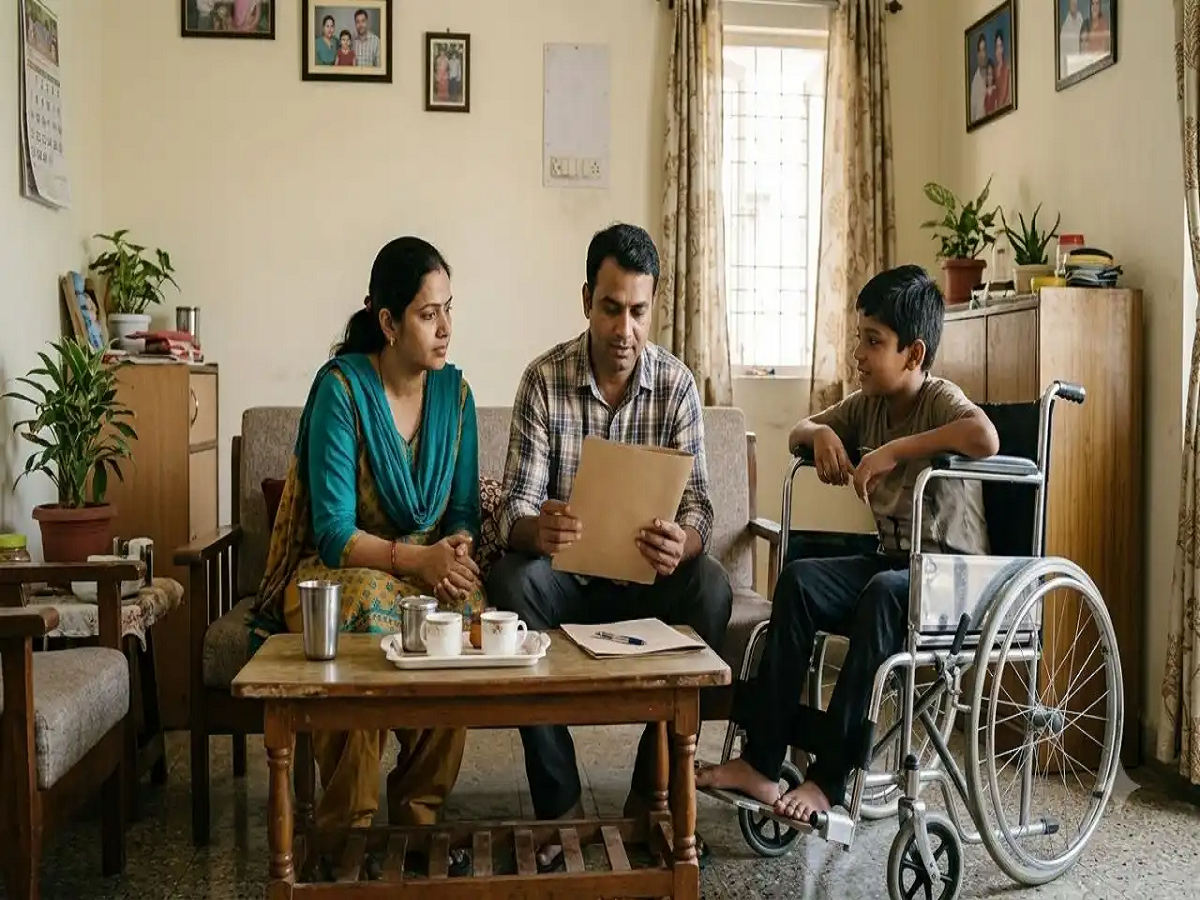
This means eligible children with benchmark disabilities can also be considered for financial assistance, subject to the scheme's other conditions.
The government has also increased the number of beneficiaries covered under the disability pension component from approximately 8.33 lakh to 27.48 lakh.
How Much Pension Will Beneficiaries Receive?
The revised central assistance under the disability pension component is:
| Beneficiary age | Monthly central assistance |
|---|---|
| Below 80 years | ₹375 |
| 80 years and above | ₹625 |
These are the central government's contribution amounts. State governments and Union Territories may provide additional financial assistance, so the total pension received can vary depending on where the beneficiary lives.
The old-age and widow pension components will continue under their existing central assistance arrangements.
Who Can Apply for the Disability Pension?
The revised disability pension is intended for eligible persons from households classified as below the poverty line.
The key requirements include:
-
The applicant must have a certified benchmark disability of at least 40%.
-
There is no minimum age requirement under the revised criteria.
-
The applicant's household must meet the prescribed below-poverty-line condition.
-
A valid disability certificate issued by the competent certifying authority is required.
The revised criteria are particularly important for people whose disability percentage falls between 40% and 79%, as well as eligible children who were previously excluded by the minimum age requirement.
How to Apply for the Scheme?
Eligible applicants should approach their respective State or Union Territory welfare department to understand the application process.
The usual process involves:
-
Obtaining a valid disability certificate from the authorised medical or certifying authority.
-
Checking whether the household meets the prescribed below-poverty-line criteria.
-
Contacting the local welfare office, Gram Panchayat or relevant municipal authority.
-
Submitting the prescribed application form and supporting documents.
-
Completing the required verification process for approval and pension disbursement.
Pension payments are generally made through Direct Benefit Transfer (DBT), helping beneficiaries receive financial assistance directly into their bank accounts.
The government has stated that revised operational guidelines covering eligibility, beneficiary numbers and assistance rates will be issued within three months of the October 2026 approval.
Why Is This Government Decision Important?
The expansion of disability pension eligibility could bring a significant number of previously excluded people into the social security system.
Reducing the disability threshold from 80% to 40% makes the scheme accessible to a wider group, while removing the minimum age requirement recognises that eligible children with disabilities may also need financial support.
With a five-year allocation of ₹53,428 crore, the continuation of the Pradhan Mantri Samajik Sahayata Yojana is an important step in extending financial assistance to vulnerable households.
Eligible families should keep their disability certificates and other supporting documents ready and check with their local welfare authorities for the latest application guidelines.