NATIONAL
Government Eyes ₹50,000 Crore Highway Monetisation Boost, Big Push for Private Investment in Roads
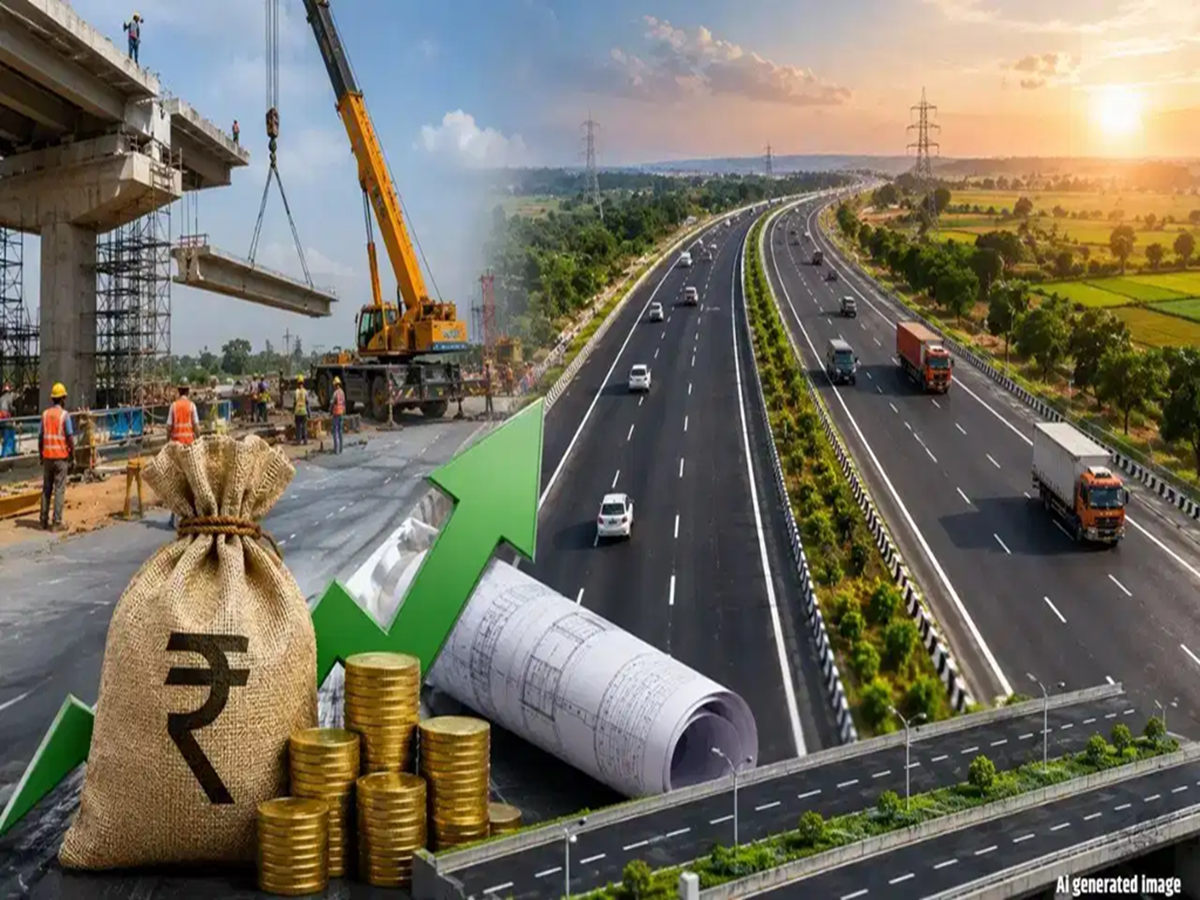
The central government is preparing a major overhaul of its highway monetisation strategy, with plans that could generate more than ₹50,000 crore in FY2026-27. The Ministry of Road Transport and Highways is considering including private investments made through the Build-Operate-Transfer (BoT) model in its monetisation calculations, potentially adding ₹15,000–20,000 crore to its existing target.
If implemented, the move would significantly strengthen the government's infrastructure financing efforts while reducing its dependence on budgetary support.
Highway Monetisation Target May Get a Big Upgrade
The ministry currently aims to raise around ₹35,000 crore through highway monetisation in FY27. However, by counting private capital invested in BoT projects, the total monetisation value could exceed ₹50,000 crore.
The proposal aligns with the government's National Monetisation Pipeline (NMP) 2.0, which estimates a monetisation potential of ₹16.72 lakh crore over five years up to FY2030.
What Is Changing?
Until now, highway monetisation mainly involved:
-
Toll-Operate-Transfer (ToT) projects
-
Infrastructure Investment Trusts (InvITs)
-
Leasing existing road assets to private players
Under the new approach, investments made by private companies in constructing new highways under the BoT model may also be counted as monetisation proceeds.
Officials believe this reflects the economic value created when private capital reduces the government's funding burden.
Massive Road Development Plan for FY27
The ministry plans to award around 10,000 kilometres of national highway projects during FY27.
Key highlights include:
-
Total project value estimated at nearly ₹2 lakh crore
-
Around 25% of projects likely to be awarded through the BoT (Toll) model
-
Private investment worth ₹15,000–20,000 crore expected during the year
The actual monetisation value will depend on how quickly investments are made during the construction phase.
Why the Government Is Reviving the BoT Model
The renewed focus on BoT projects comes as policymakers seek to:
-
Increase private sector participation in infrastructure
-
Reduce government capital expenditure
-
Attract long-term domestic and global investors
-
Share traffic and revenue risks with private developers
India's national highway network now spans more than 1.46 lakh kilometres, making it one of the largest road networks in the world.
Challenges Remain
While BoT projects offer financial advantages for the government, they have historically faced challenges.
Earlier, aggressive bidding, lower-than-expected traffic volumes, and funding constraints reduced investor interest. As a result, the model lost popularity and was replaced by EPC and Hybrid Annuity Model (HAM) projects.
To address these concerns, the government has introduced changes in concession agreements aimed at:
-
Better risk sharing
-
Improved project bankability
-
Enhanced investor confidence
Experts See Policy Shift
Infrastructure experts view the inclusion of BoT investments in monetisation calculations as a significant policy change.
They believe it could:
-
Encourage greater private participation
-
Improve infrastructure funding efficiency
-
Help achieve ambitious highway expansion targets without increasing fiscal pressure
At the same time, analysts note that BoT projects continue to carry higher traffic and revenue risks compared to other infrastructure models.
Key Takeaway
The government's new highway monetisation strategy could unlock over ₹50,000 crore in FY27 by treating private investment in road projects as part of its monetisation framework. With a massive road construction pipeline and a renewed push for the BoT model, India is looking to accelerate infrastructure growth while reducing the financial burden on public funds.