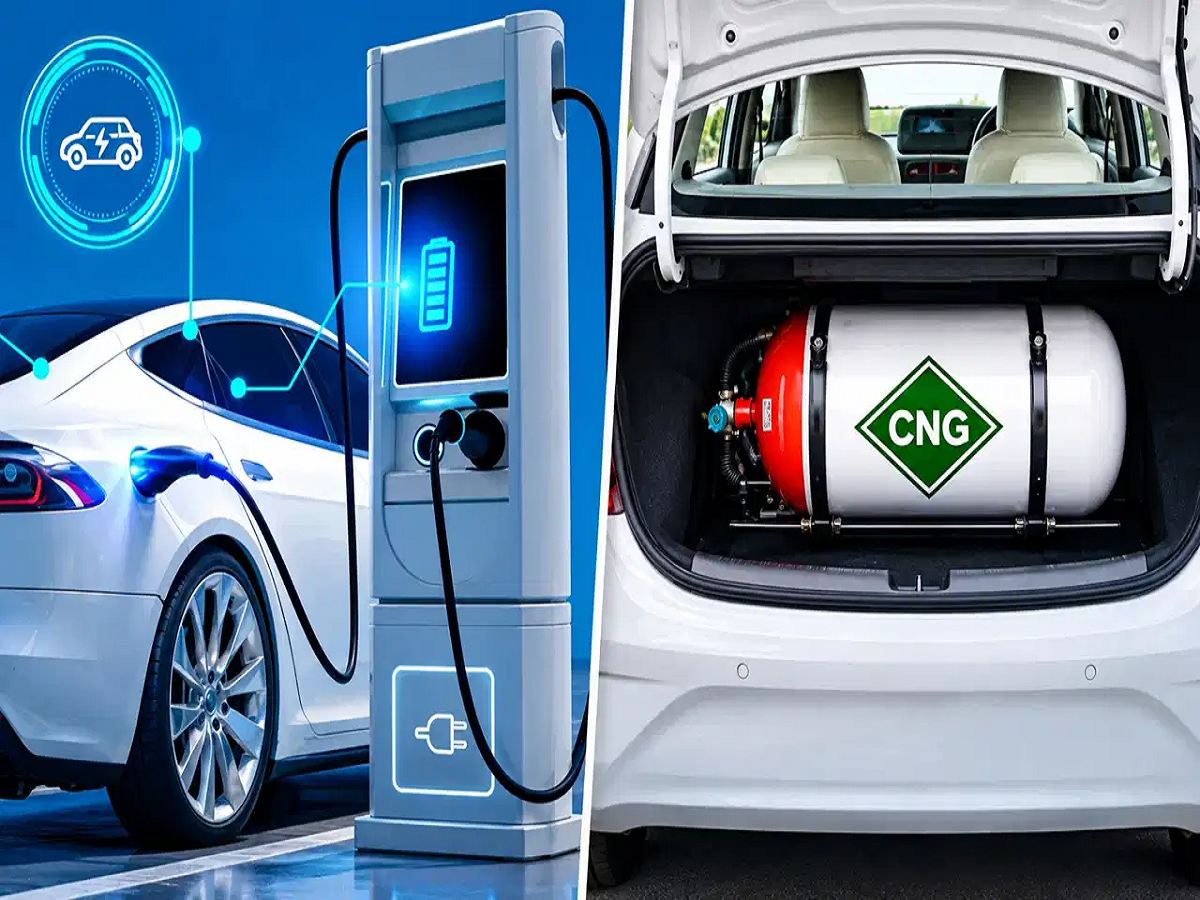
As India looks for ways to reduce air pollution and dependence on conventional fuels, both electric vehicles and CNG-powered cars have gained significant attention. EVs are generally considered the cleaner option because they produce no tailpipe emissions, while CNG vehicles still burn a fossil fuel.
But is an electric car automatically better for the environment when emissions associated with producing its electricity are also taken into account?
A study by The Energy and Resources Institute (TERI) adds an important dimension to this debate. According to the findings cited in the report, under India's existing electricity-generation mix, CNG vehicles can perform favourably against electric vehicles on certain environmental measures when emissions are assessed beyond the vehicle's exhaust.
The comparison highlights an important point: determining how environmentally friendly a vehicle is requires looking beyond what comes out of its tailpipe.
What Is a Well-to-Wheel Analysis?
The study uses a concept known as well-to-wheel analysis.
Instead of measuring only the pollution produced while a vehicle is being driven, this approach considers emissions associated with producing and delivering the energy required to operate it.
For a CNG vehicle, this can include processes associated with producing, processing and supplying natural gas, followed by emissions generated when the fuel is burned in the engine.
For an EV, the vehicle itself produces no exhaust emissions. However, electricity must first be generated and delivered through the grid before reaching the battery.
If that electricity comes from a fossil-fuel-intensive power system, emissions occur away from the vehicle rather than disappearing entirely.
This distinction is central to understanding the TERI comparison.
EVs Have Zero Tailpipe Emissions, But Electricity Still Matters
One of the strongest advantages of an electric car is straightforward: it has no conventional exhaust pipe emitting pollutants while being driven.
This can be particularly beneficial in densely populated cities because EVs can help reduce local roadside exhaust pollution.
However, zero tailpipe emissions and zero overall emissions are not the same thing.
The environmental impact associated with charging an EV depends partly on how electricity is generated. India's power system has been adding renewable capacity rapidly, but coal remains an important source of electricity.
If an EV is charged primarily with electricity generated from fossil fuels, its indirect greenhouse-gas footprint will be higher than if the same vehicle is charged using solar, wind or other low-carbon electricity.
Therefore, an EV's environmental performance can change considerably depending on the electricity mix.
Why Did CNG Perform Well in the Comparison?
CNG, or compressed natural gas, is still a fossil fuel and produces carbon dioxide when burned.
However, the TERI analysis cited in the report suggests that CNG can compare favourably under certain current Indian conditions when the full energy pathway is considered.
Researchers did not simply compare an EV with a CNG car while both were driving. They examined emissions associated with producing and supplying the energy needed to operate each type of vehicle.
For an EV, that includes electricity generation. For a CNG vehicle, it includes the natural-gas supply chain and combustion in the vehicle.
Under the assumptions and electricity mix used in the study, CNG reportedly showed a lower environmental impact on certain measures.
However, this finding should not be interpreted as proof that every CNG vehicle is environmentally cleaner than every EV in India. Results depend on factors including vehicle efficiency, electricity source, driving patterns, fuel supply and which pollutants or environmental indicators are being compared.
EV Batteries Add Another Environmental Consideration
Electric vehicles also require substantially larger batteries than conventional petrol or CNG cars.
Producing these batteries requires raw materials such as lithium, nickel, graphite and, in some battery chemistries, cobalt.
Mining, processing and transporting these materials consume energy and can create environmental impacts. Battery manufacturing itself also requires considerable electricity.
This means an EV can have a larger environmental footprint during its manufacturing stage than a comparable conventional vehicle, depending on battery size, chemistry, production location and energy sources used by the factory.
But manufacturing is only one part of a vehicle's lifetime footprint.
An EV can potentially compensate for some of its higher production emissions during years of driving, particularly when it replaces a relatively inefficient fossil-fuel vehicle and is charged using increasingly low-carbon electricity.
Battery Recycling Will Become Increasingly Important
What happens to EV batteries after their automotive life is another important consideration.
As millions of electric vehicles eventually reach the end of their useful lives, India will need effective systems for collecting, reusing and recycling batteries.
Recycling can recover valuable materials and reduce the need for some new mining, while improper disposal could create environmental risks.
This is why battery recycling and second