In a massive push toward alternative energy and sustainable mobility, Maruti Suzuki has officially unveiled India's first mass-market flex-fuel passenger car. This landmark introduction is poised to shake up the Indian energy sector, drastically lowering carbon emissions and reducing the nation's heavy financial dependence on imported crude oil.
The high-profile unveiling was led by Maruti Suzuki MD and CEO Hisashi Takeuchi, alongside Union Road and Transport Minister Nitin Gadkari and Petroleum Minister Hardeep Singh Puri.
The Power of the New WagonR "BioFlex"
Maruti Suzuki already commands over 50% of the clean energy market share in India (largely driven by its extensive CNG lineup), and the introduction of the WagonR BioFlex opens a brand-new frontier.
While brands like Toyota have showcased flex-fuel hybrids, and companies like TVS and Hero MotoCorp have pioneered flex-fuel two-wheelers, Maruti Suzuki takes the crown for introducing this mass-market technology to Indian passenger cars. The move beautifully aligns with the Indian government's aggressive campaign to accelerate ethanol-blended fuels across the country.
What Changes Under the Hood?
Because ethanol is more corrosive and absorbs moisture much faster than standard petrol, running a car on high-ethanol blends requires meticulous engineering. Maruti Suzuki has completely overhauled the vehicle's internal infrastructure:
-
Upgraded Core Components: The fuel system incorporates heavily modified, corrosion-resistant fuel lines, fuel injectors, and resilient engine valves.
-
Smart Sensing Technology: The car is equipped with advanced ethanol sensors that detect fuel composition in real-time, allowing the engine to seamlessly recalibrate its performance based on the specific fuel blend.
-
Future-Ready Mechanics: The powertrain is specifically optimized to run on E85 fuel (an aggressive blend of 85% ethanol and 15% petrol) all the way up to E100 (pure ethanol), making it highly adaptive to upcoming government fuel policies.
Stock Aesthetics: Familiar on the Outside
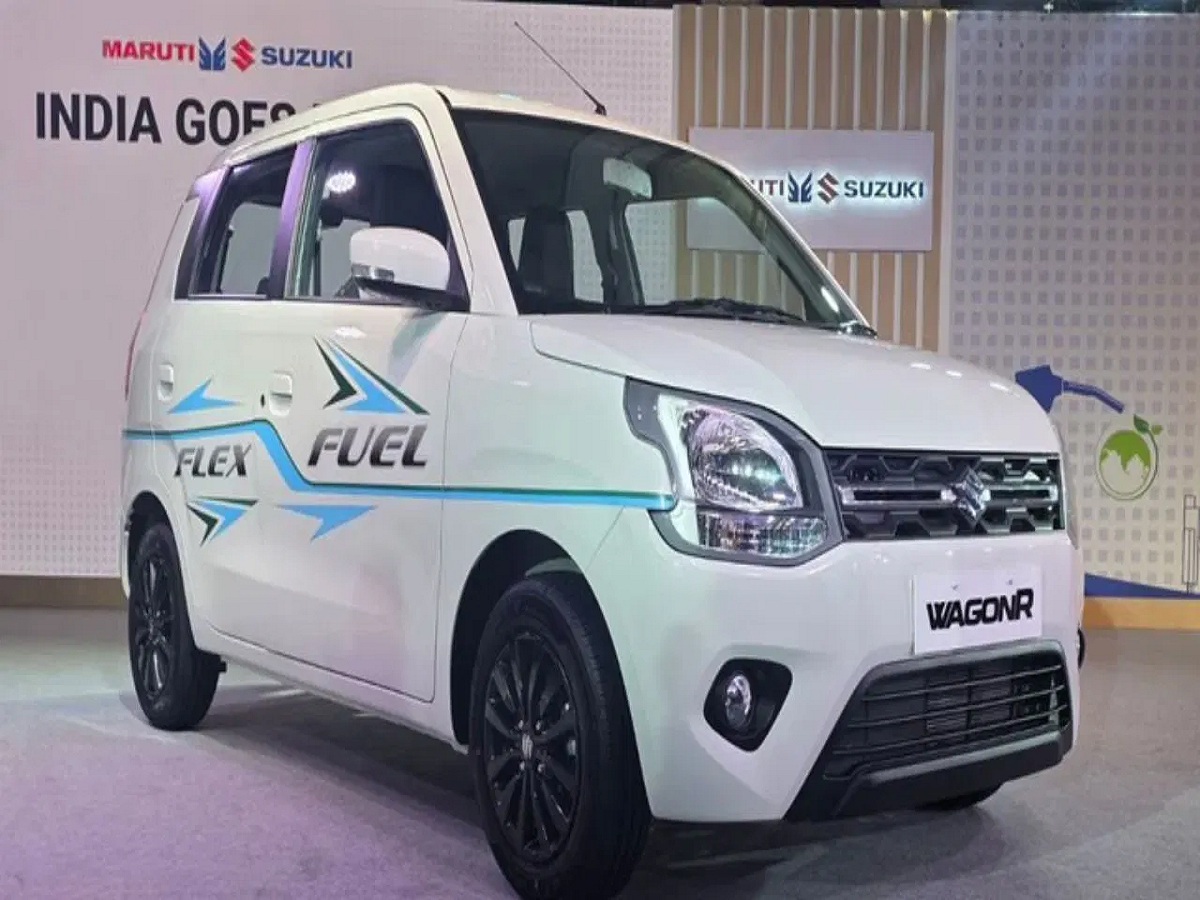
If you expect a radically futuristic design, you might be surprised. Visually, the WagonR BioFlex looks exactly like the highly popular, standard "tall-boy" model ruling Indian roads today.
Maruti Suzuki has purposely left the award-winning interior and exterior silhouettes unchanged, opting to differentiate the vehicle solely through styling details:
-
Rear Badging: The traditional variant badge is replaced by a distinct, chrome-finished "BioFlex" insignia.
-
Body Aesthetics: The sides of the car feature sleek, eco-themed graphics and body stickers highlighting its green identity.
Quick Fast-Facts: Standard Petrol vs. WagonR BioFlex
| Feature | Standard Petrol WagonR | New WagonR BioFlex |
| Fuel Compatibility | Up to E20 (20% Ethanol) | E20 all the way up to E100 (Pure Ethanol) |
| Engine Modifications | Standard aluminum/steel internals | Corrosion-resistant fuel lines & smart ethanol sensors |
| Exterior Design | Standard factory look | Identical look + exclusive "BioFlex" badges & graphics |
| Environmental Impact | Standard tailpipe emissions | Drastically lower carbon footprint and reduced smog |
The Big Picture: By empowering everyday passenger vehicles to run on fuels derived directly from domestic agriculture (like sugarcane and surplus food grains), the WagonR BioFlex is more than just a new car variant—it transforms Indian farmers into nationwide energy providers.