Over the years, the Aadhaar card has become one of the most important identity documents in India. It is linked to almost every essential service—from bank accounts, pensions, and insurance policies to government subsidies, mobile numbers, and welfare schemes. Because Aadhaar is deeply integrated into daily life, it remains active even after a person passes away unless the family takes steps to deactivate it.
This is why deactivating an Aadhaar card after death is not just a formality, but a crucial responsibility.
UIDAI’s Effort to Clean the Aadhaar Database
To maintain the integrity and security of the Aadhaar ecosystem, the Unique Identification Authority of India (UIDAI) has already deactivated more than 2.5 crore Aadhaar numbers belonging to deceased individuals. This large-scale exercise is aimed at preventing misuse, eliminating duplicate identities, and ensuring that government benefits reach only genuine beneficiaries.
According to officials, keeping Aadhaar records updated is essential to protect public funds and preserve trust in India’s digital infrastructure.
Why Aadhaar Deactivation Is So Important
If an Aadhaar number remains active after a person’s death, it can become vulnerable to misuse. Fraudsters may attempt to use the identity to illegally claim pensions, subsidies, scholarships, or other government benefits. In some cases, Aadhaar details can even be exploited for opening fake accounts or carrying out financial fraud.
By deactivating Aadhaar promptly, families help ensure that benefits meant for living beneficiaries are not siphoned off. This step also protects the deceased person’s identity from being misused and prevents unnecessary legal or financial complications in the future.
Simple Online Process to Report a Death
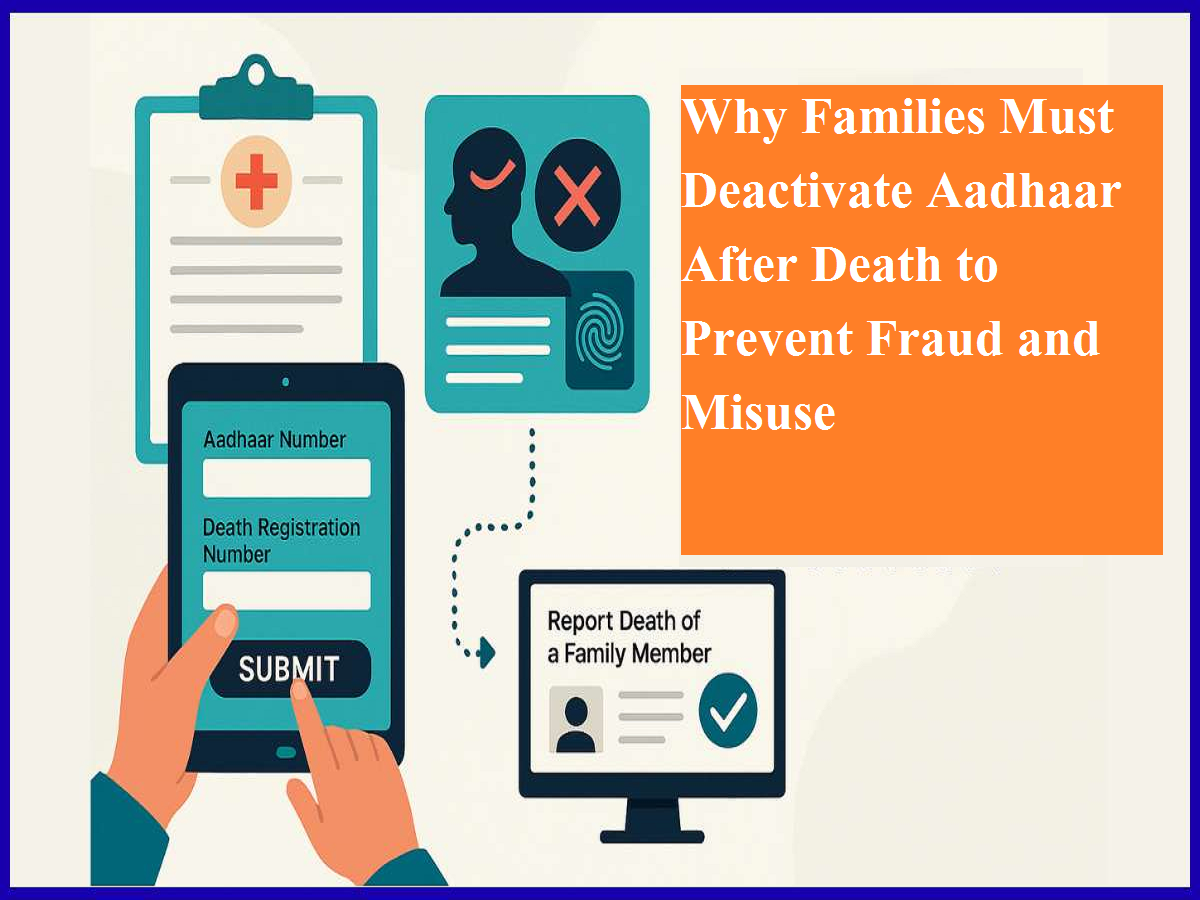
Understanding that families go through emotional stress after losing a loved one, UIDAI has made the Aadhaar deactivation process simple and fully digital. Through the myAadhaar portal, a family member can report the death using the “Reporting of Death of a Family Member” option.
The process requires the reporter to verify their own identity and submit basic details of the deceased, including Aadhaar number, name, date of birth, and death registration number. Once the information is verified, UIDAI deactivates the Aadhaar number.
This online facility eliminates the need for repeated visits to government offices, making the process quicker and more compassionate.
Additional Measures to Strengthen Aadhaar Security
Along with Aadhaar deactivation, UIDAI has introduced multiple safeguards to prevent identity fraud. Features such as biometric locking allow individuals to secure their fingerprint and iris data. Face authentication and liveness detection technologies further reduce the chances of fake or duplicate identities.
Most importantly, UIDAI maintains strict controls to ensure that core biometric data is never shared, reinforcing privacy and data security.
A Small Step With Big Impact
Deactivating Aadhaar after the death of a family member may seem like a minor administrative task, but its impact is significant. It protects identities, prevents misuse of public resources, and strengthens confidence in India’s digital governance framework.
By taking timely action, families not only safeguard themselves from potential fraud but also contribute to keeping the Aadhaar system transparent, secure, and trustworthy.