TECH
Why Does Your Phone Still Know Where You Are When GPS Is Off? The Technology Behind Location Tracking
Many smartphone users assume that turning off GPS means their phone can no longer determine where they are.
That's not entirely true.
GPS is only one method used to estimate a device's location. Modern smartphones can combine information from mobile networks, Wi-Fi connections, Bluetooth signals and device sensors to work out where you are.
In some situations, your phone can even estimate your location surprisingly accurately without relying primarily on GPS.
GPS is only one piece of the puzzle
GPS determines location by receiving signals from satellites.
But satellite signals aren't always reliable.
Inside buildings, underground, between tall buildings or in areas with poor visibility of the sky, GPS performance can deteriorate.
That's why smartphones use multiple technologies to improve location accuracy.
Your mobile network can estimate your location
Your phone is constantly communicating with nearby cellular towers.
A network can use information about which towers your device is connected to and other network measurements to estimate its general location.
The accuracy can vary significantly.
In a densely populated city with many towers, the estimate can be more precise. In rural areas with fewer towers, the possible location range can be much larger.
Wi-Fi can be surprisingly powerful
One of the most useful location technologies is Wi-Fi positioning.
Your phone can detect nearby Wi-Fi networks and compare their identifiers with location information available through location databases.
You don't necessarily have to connect to the Wi-Fi network for your phone to detect its presence.
Because Wi-Fi networks are often concentrated in specific buildings or streets, they can sometimes help determine a location more accurately than cellular towers alone.
Bluetooth can provide even more precision
Bluetooth signals can also contribute to location systems.
Bluetooth beacons and nearby devices can help determine whether a phone is close to a particular location.
This technology can be useful in places such as shopping centres, airports, museums and large buildings.
However, Bluetooth-based positioning depends on the infrastructure available in the area.
Your phone also has sensors
Location isn't only about radio signals.
Smartphones contain sensors such as accelerometers, gyroscopes and compasses.
These sensors can help determine whether you're walking, travelling in a vehicle, turning or remaining stationary.
The phone can combine this information with other location signals to improve its estimate.
For example, if a location signal temporarily disappears while you're inside a building, movement sensors can help estimate how you've moved since the last reliable position.
Does turning off GPS stop apps from tracking you?
Not necessarily.
This depends on the operating system, app permissions and the specific location services being used.
If an app has permission to access your location, it may use available location technologies permitted by the device rather than relying exclusively on satellite GPS.
That's why the important setting isn't simply whether GPS is switched on.
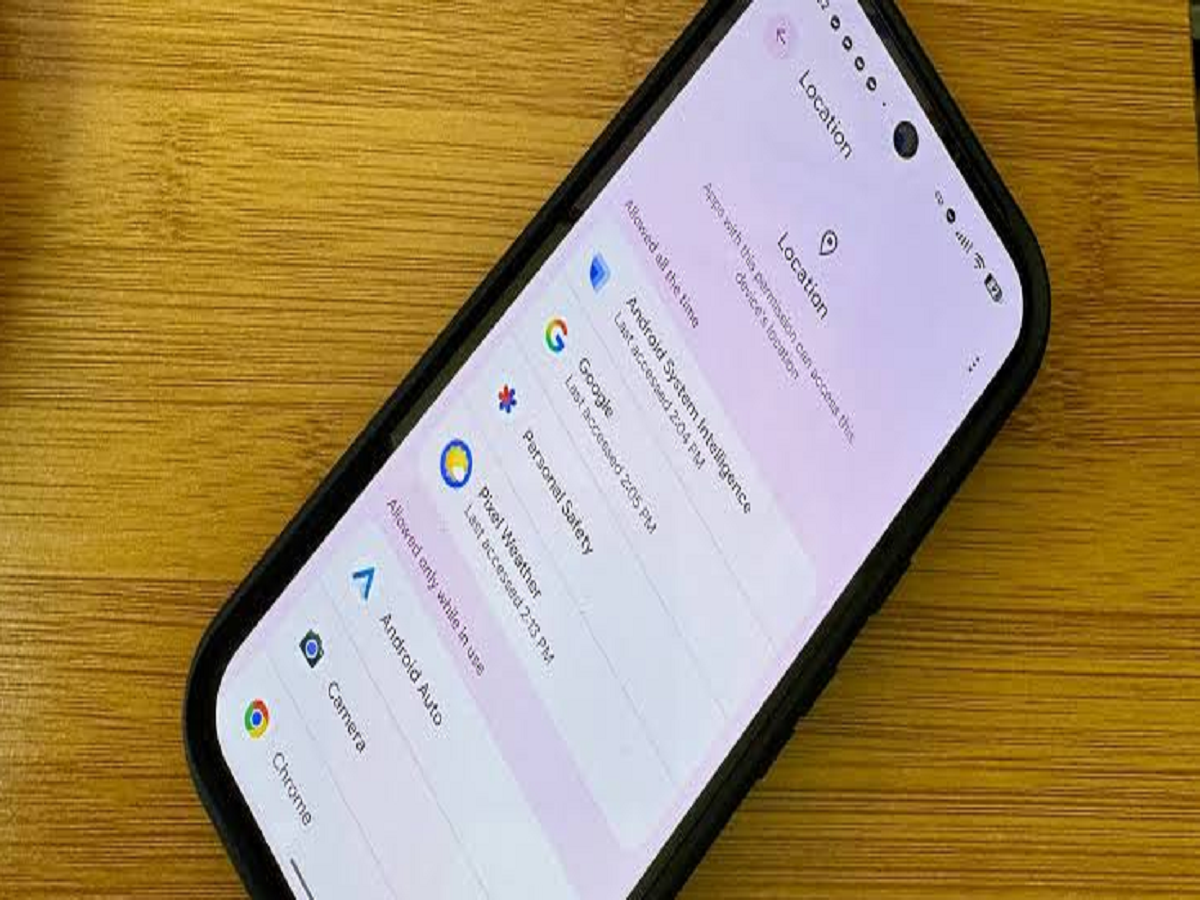
You should also review which apps have location permission and whether they can access your location all the time or only while you are using the app.
You can control location permissions
Both major smartphone operating systems provide tools that allow users to review location access.
If an app doesn't need your location to perform its main function, you can consider denying permission or limiting access.
You can also review which apps have access to precise location information.
This is especially important for apps that you rarely use.
Why smartphones use so many technologies
Using multiple sources allows phones to balance accuracy, speed and battery consumption.
GPS can provide highly useful positioning outdoors, while Wi-Fi and cellular networks can help when satellite signals are weak.
Sensors can fill in some gaps by tracking movement.
The result is a location system that is considerably more sophisticated than simply asking satellites where your phone is.
The important privacy lesson
The key takeaway is simple: "GPS off" and "location completely unavailable" are not necessarily the same thing.
If privacy is important to you, don't stop at the GPS setting.
Check your phone's location permissions, review which apps can access your location and pay attention to whether an app has permission to use precise location.
Your smartphone isn't using just one technology to understand where it is.
It's combining several invisible signals and sensors to build a surprisingly detailed picture of its surroundings — often without you noticing any of it.