LIFESTYLE
When will the first solar eclipse of the year occur? Will it be visible in India? Learn the timing
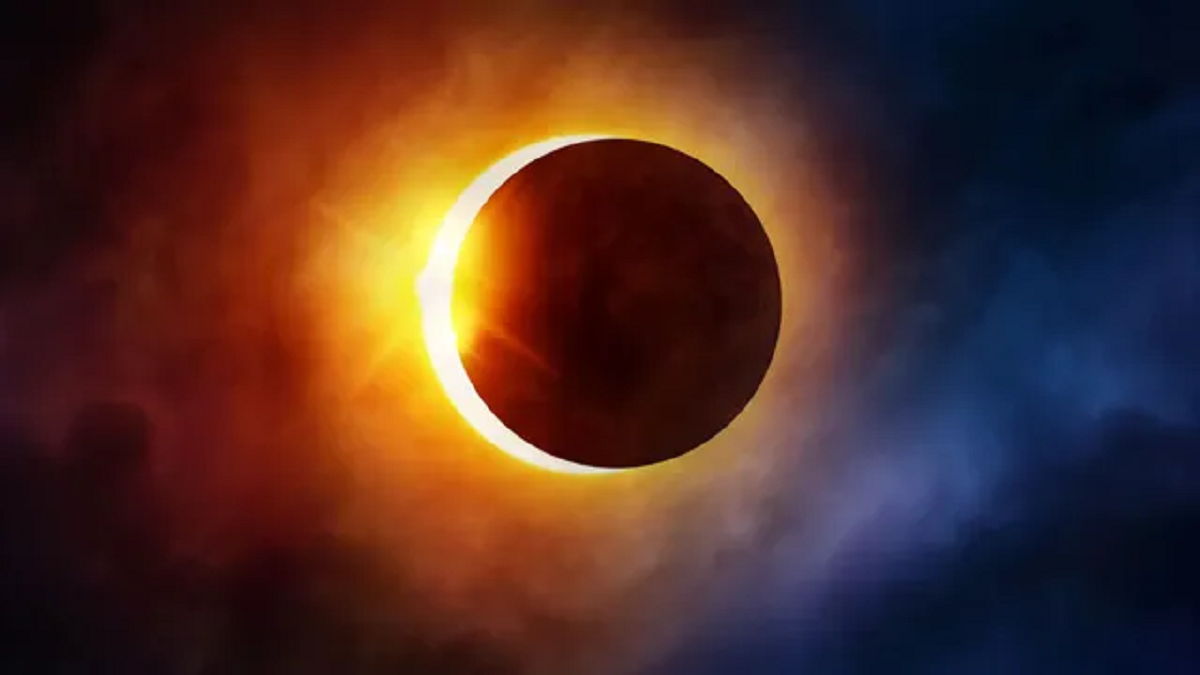
A 'Ring of Fire' annular solar eclipse will occur on February 17, 2026. Because the Moon is farther from Earth, it will not completely cover the Sun, creating a ring-of-fire appearance ...read more
This month, the sky is set to witness an exciting celestial spectacle. An annular solar eclipse, also known as a "ring of fire," will occur on February 17, 2026. This is a special eclipse where the Moon passes between the Sun and Earth, but because the Moon is farthest from Earth at that time, it does not completely cover the Sun.
Then, a dazzling ring of fire forms around the sun, resembling a ball of fire with a black sphere in the center. According to NASA, this phenomenon will be spectacular but visible only in a very limited area. This eclipse will not be visible worldwide, nor will it be visible in India.
'There are no arrangements for tourists'
This annular solar eclipse will not be visible at all in India. The eclipse will be visible primarily in remote areas of Antarctica as a "ring of fire." A partial eclipse may be visible in parts of Southern Africa and South America, but most parts of the Northern Hemisphere, including India, will remain unaffected.
Eclipse meteorologist Jay Anderson wrote on his website that few people will be able to see it in the annular zone. Access is very difficult, and there are only two inhabited locations, with no tourist facilities.
When and how long will the eclipse last?
The eclipse will begin on February 17. According to NASA and other sources, the eclipse will begin at 07:01 UTC (around 12:31 PM Indian time). Maximum eclipse will occur around 12:13 PM UTC.
Where will the eclipse be visible?
The annular phase (ring of fire) will only be visible in Antarctica, especially around research stations like Concordia and Mirny. These locations are extremely remote and cold, making them difficult to reach.
A partial eclipse will be visible in southern African countries such as South Africa, Tanzania, Zambia, and Zimbabwe. In South America, a partial eclipse will also be visible in southern parts of Argentina and Chile. It may also be visible in some coastal areas, but access is difficult for the public.
PC:Jagran