TECH
Tata Electronics Exports Nearly ₹1 Lakh Crore Worth of iPhones, Yet Reports ₹1,611 Crore Loss: What Went Wrong?
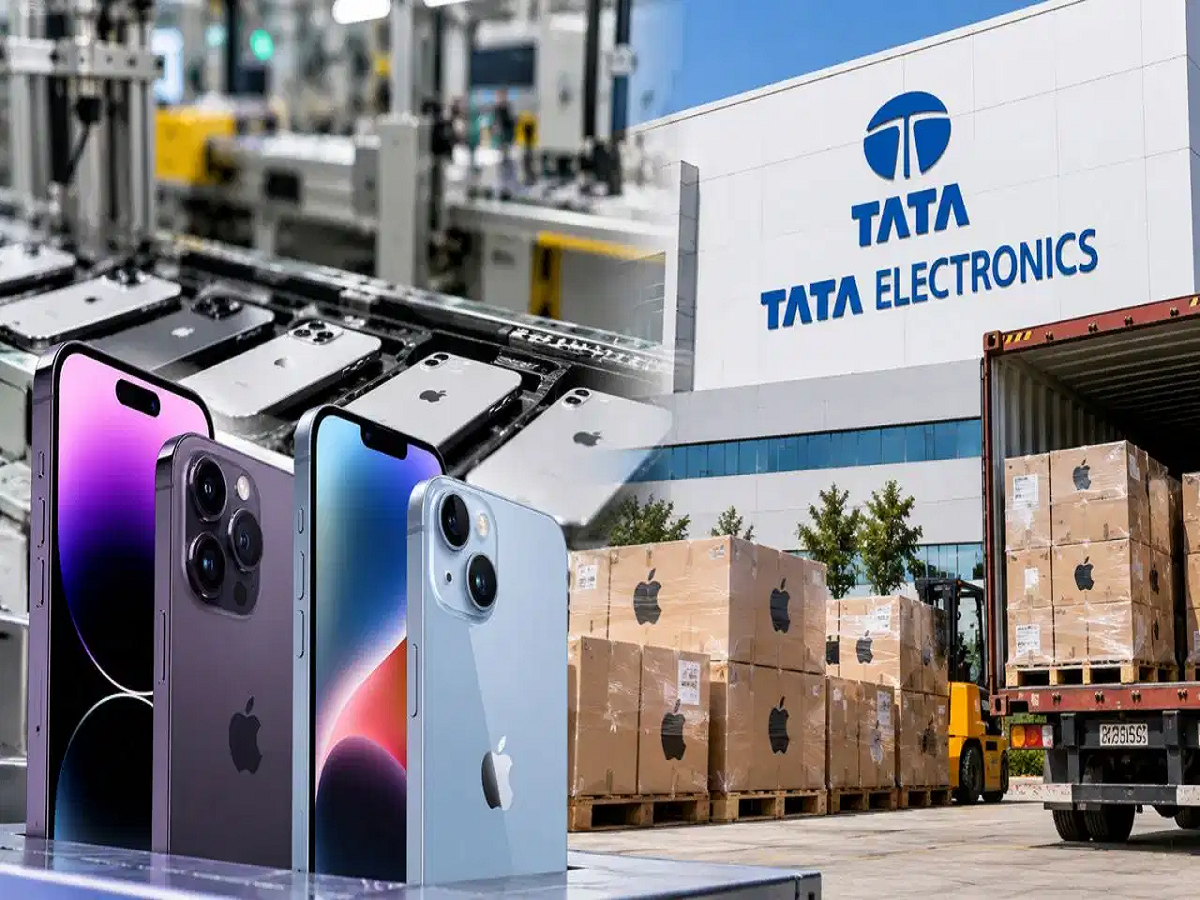
India is rapidly emerging as a major manufacturing destination for Apple, with Tata Electronics playing an increasingly important role in the global iPhone supply chain. The company's manufacturing operations have recorded substantial export revenue, reflecting Apple's efforts to diversify production beyond China.
However, despite this impressive export performance, Tata Electronics reported a net loss of ₹1,611 crore in FY26, compared with a loss of just ₹69 crore in the previous financial year. This raises an important question: how can a company exporting products worth nearly ₹1 lakh crore still lose money?
The answer lies in the difference between revenue and profit, the cost of imported components, manufacturing expenses and the challenges of expanding a complex electronics manufacturing business.
1. iPhone Exports Cross ₹99,000 Crore
According to the reported company filings, three Tata-linked manufacturing entities collectively recorded iPhone exports worth ₹99,128 crore in FY26.
Their export destinations included:
-
Taiwan: ₹47,930 crore
-
United States: ₹38,508 crore
-
Ireland: ₹11,980 crore
Together, these figures highlight the growing importance of Indian manufacturing facilities in Apple's international supply chain.
The three entities include Tata Electronics, Tata Electronics System Solutions, which acquired Wistron's Indian operations, and Tata Electronics Products and Solutions, associated with the Pegatron manufacturing business.
Their combined exports increased from ₹76,953 crore in FY25 to ₹99,128 crore in FY26. However, direct year-on-year comparisons require caution because one entity reportedly had a 15-month reporting period in FY25 rather than the usual 12 months.
2. Revenue Doubled, but Why Did Losses Increase?
Tata Electronics' reported operating revenue rose 96% to ₹1,29,902 crore in FY26. Despite this increase, its net loss reached ₹1,611 crore.
The key point is that revenue represents the value of goods and services sold, not the amount a company earns as profit.
An electronics manufacturer must pay for components, assembly, labour, factory operations, logistics, quality control, depreciation and other expenses. If these costs exceed the revenue earned after accounting for all expenses, the business reports a loss.
The reported loss of ₹1,611 crore is approximately 1.24% of operating revenue. This illustrates how a business can operate at an enormous scale while still recording a relatively small negative net ' FY26 loss would need to be confirmed through its financial statements.
As production volumes grow, manufacturers may benefit from economies of scale, provided that higher output is accompanied by effective cost control and sufficient demand.
5. Did Rupee Depreciation Increase Export Revenue?
The rupee reportedly depreciated from approximately ₹85.60 to ₹94.80 per US dollar during the period discussed in the report.
When a company earns revenue in foreign currency, a weaker rupee can increase the rupee value of those earnings when converted into domestic currency.
However, the same currency movement can also increase the rupee cost of imported components and other overseas payments.
For an electronics manufacturer that both exports finished devices and imports substantial inputs, the overall effect depends on its foreign-currency earnings, expenses, hedging arrangements and payment timings.
Therefore, rupee depreciation may have contributed to higher reported export values, but it does not necessarily translate into higher profits.
6. Apple India Is Profitable, So Why Is Tata Electronics Losing Money?
The reported figures also highlight a difference between Apple's Indian sales business and Tata's manufacturing operations.
Apple India reported revenue of ₹1,03,853 crore and net profit of ₹5,311 crore in FY26, according to the supplied report. Tata Electronics, by contrast, operates primarily in manufacturing and assembly.
These businesses perform different functions and have different cost structures.
Apple India's revenue can include sales of products and related services, while Tata Electronics earns manufacturing revenue for producing goods for customers. Their 's rise as an iPhone manufacturing hub is significant, but the next challenge is to capture more value from the supply chain. Producing and exporting more devices is an important first step; building a consistently profitable, locally integrated manufacturing ecosystem is the more demanding goal.