BUSINESS
Aadhaar OTP Alert: Do not share your Aadhaar OTP with anyone, a small mistake can cause huge loss
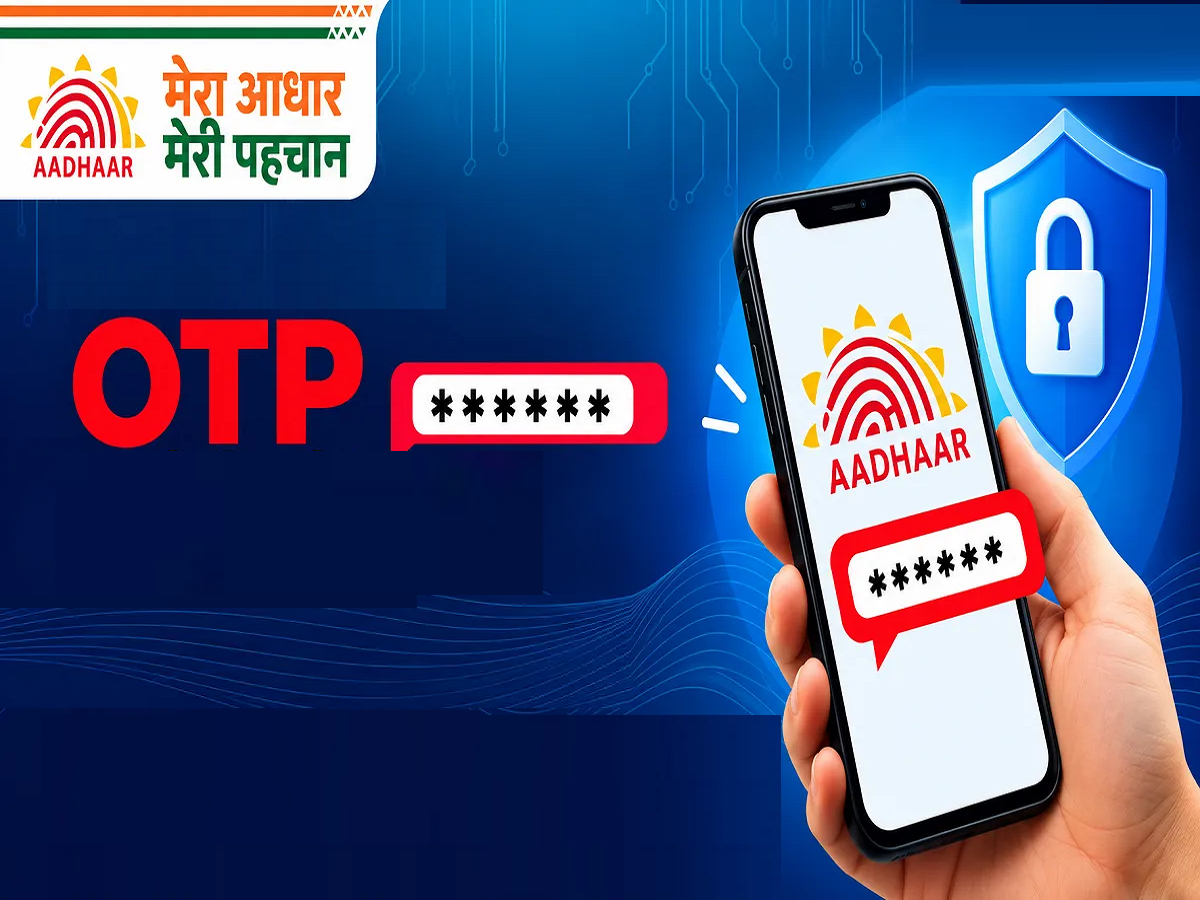
Aadhaar Card Safety Tips 2026: In today's digital era, Aadhaar card has become an important identity document for Indian citizens.
Aadhaar Card Safety Tips 2026: In today's digital age, the Aadhaar card has become a vital identification document for Indian citizens. Aadhaar is used for banking services, government schemes, mobile SIM cards, identity verification, and many online services. However, protecting Aadhaar-related information is equally important.
The Unique Identification Authority of India (UIDAI) has issued an important cybersecurity message to Aadhaar users. According to it, the one-time password (OTP) linked to Aadhaar is completely confidential and should not be shared with anyone.
Cybercriminals often try to obtain OTPs from people by posing as bank officials, government employees, or customer service representatives. In such situations, even the slightest carelessness can threaten the security of personal information and digital identities.
What is Aadhaar OTP and why is it used?
Aadhaar OTP is a temporary verification code used to verify identity in Aadhaar-based online services.
When a person uses an Aadhaar-related service that requires OTP authentication, a code may be sent to his/her registered mobile number.
With the help of this code, the consent or identity of the person is verified in the related process.
Aadhaar OTP can be used for various services, including Aadhaar-based identity verification, certain digital document services and other authorised processes.
However, not every Aadhaar service requires an OTP. The verification process depends on the service and its rules.
What advice has UIDAI given to Aadhaar users?
The message from UIDAI is clear that Aadhaar OTP is a personal security code.
It should not be shared with any unknown person, calling agent or person claiming to be a government official.
If someone asks for Aadhaar OTP through phone, SMS, WhatsApp or social media, one should be cautious.
Cybercriminals often pressure people into making hasty decisions. They may claim that Aadhaar will be blocked, a bank account will be deactivated, or government scheme benefits will be stopped.
Instead of immediately trusting such messages, one should confirm the information from the official website or helpline of the concerned organization.
What harm can be caused by sharing Aadhaar OTP?
Aadhaar OTP is an important part of identity verification in any authorization process.
If this code reaches the wrong person, he may try to misuse it in any ongoing Aadhaar based process.
For example, if a person has already entered another person's Aadhaar details in a service and then fraudulently obtains his/her OTP, there may be a risk of unauthorized verification in some circumstances.
However, simply knowing the Aadhaar OTP does not automatically withdraw money from a person's bank account. The risk of financial fraud depends on what other information the criminal has and the security measures implemented in the service.
Therefore, it is very important to maintain the confidentiality of OTP.
In what ways can cyber criminals ask for Aadhaar OTP?
Cyber fraudsters can adopt different methods to mislead people.
Sometimes they introduce themselves as bank employees, and sometimes they contact as Aadhaar updating officers.
In some cases, users may be asked to enter information in the name of Aadhaar verification through fake SMS or website.
Such messages may create pressure to take immediate action.
For example, a person may be told that his Aadhaar verification is incomplete and he needs to provide the OTP immediately.
On receiving such requests, no information should be shared without verifying the identity of the person concerned and the authenticity of the message.
Follow these 7 important steps to keep your Aadhaar card safe
Some precautions while using Aadhaar-related online services can enhance the security of your digital identity.
- Always keep OTP confidential: Do not share your Aadhaar related OTP with anyone over phone, message or social media.
- Beware of fake calls: Verify the identity of the person claiming to be a UIDAI or bank official.
- Use the official website: Use uidai.gov.in or the official myAadhaar portal for Aadhaar related services.
- Do not open suspicious links: Avoid clicking on unknown links in the name of Aadhaar update or verification.
- Use Masked Aadhaar: Wherever acceptable, masked Aadhaar can be used instead of displaying the full Aadhaar number.
- Check Authentication History: Check Aadhaar authentication records through the facility available on myAadhaar.
- Do not download unknown apps: Enter Aadhaar related information only on trusted and official digital platforms.
What to do if Aadhaar OTP comes without asking?
If you suddenly receive an Aadhaar OTP on your mobile number, even though you have not activated any Aadhaar-based service, you should be cautious instead of ignoring it.
First of all, do not share the OTP with anyone and do not click on any suspicious link.
After this, the available authentication history can be checked by visiting the official myAadhaar portal.
Keep in mind that receiving an OTP without requesting it doesn't automatically mean your Aadhaar has been hacked. It could also indicate someone entered the wrong Aadhaar number or a suspicious verification attempt.
If you suspect any unauthorized activity, it is advisable to contact UIDAI.
Aadhaar biometric locking facility also available
UIDAI also allows Aadhaar users to lock and unlock biometrics.
Through this, fingerprint, iris and face biometric authentication linked to Aadhaar can be temporarily restricted.
This feature can be useful for those who want to reduce the risk of misuse of their Aadhaar biometric data.
However, biometric locking and OTP authentication are separate security mechanisms. Therefore, it is important to maintain the confidentiality of the OTP even after biometric locking.
Where to lodge an Aadhaar related complaint?
If a person suspects any suspicious activity related to Aadhaar or misuse of OTP, he/she can use the official support services of UIDAI.
For Aadhaar related assistance, UIDAI helpline 1947 can be contacted.
Apart from this, information is also available on the official website www.uidai.gov.in .
If a person has been subjected to online financial fraud, he/she can contact the National Cyber Crime Helpline 1930 or lodge a complaint at cybercrime.gov.in .
Why is it important to be aware of digital security?
The importance of protecting personal information is constantly increasing with the expansion of digital services.
Aadhaar-based services simplify many important processes, but caution is required while using them.
Before sharing any OTP, it is important to understand for which process it has been sent.
If someone asks for OTP without any clear reason or pressurizes you to provide the information immediately, that request should not be accepted.
Conclusion: UIDAI advises Aadhaar users to maintain the confidentiality of their OTP. The Aadhaar OTP is an important security code that should not be shared with unauthorized individuals. The risk of Aadhaar-related fraud can be reduced by being cautious of suspicious calls, fraudulent messages, and unknown websites.
Note: This article is based on UIDAI's Aadhaar OTP security awareness message. For any Aadhaar-related services or complaints, please use the official UIDAI platform.