NATIONAL
Sukhoi from Russia, Rafale from France... but why has India never bought fighter jets from the US? Here's the real reason
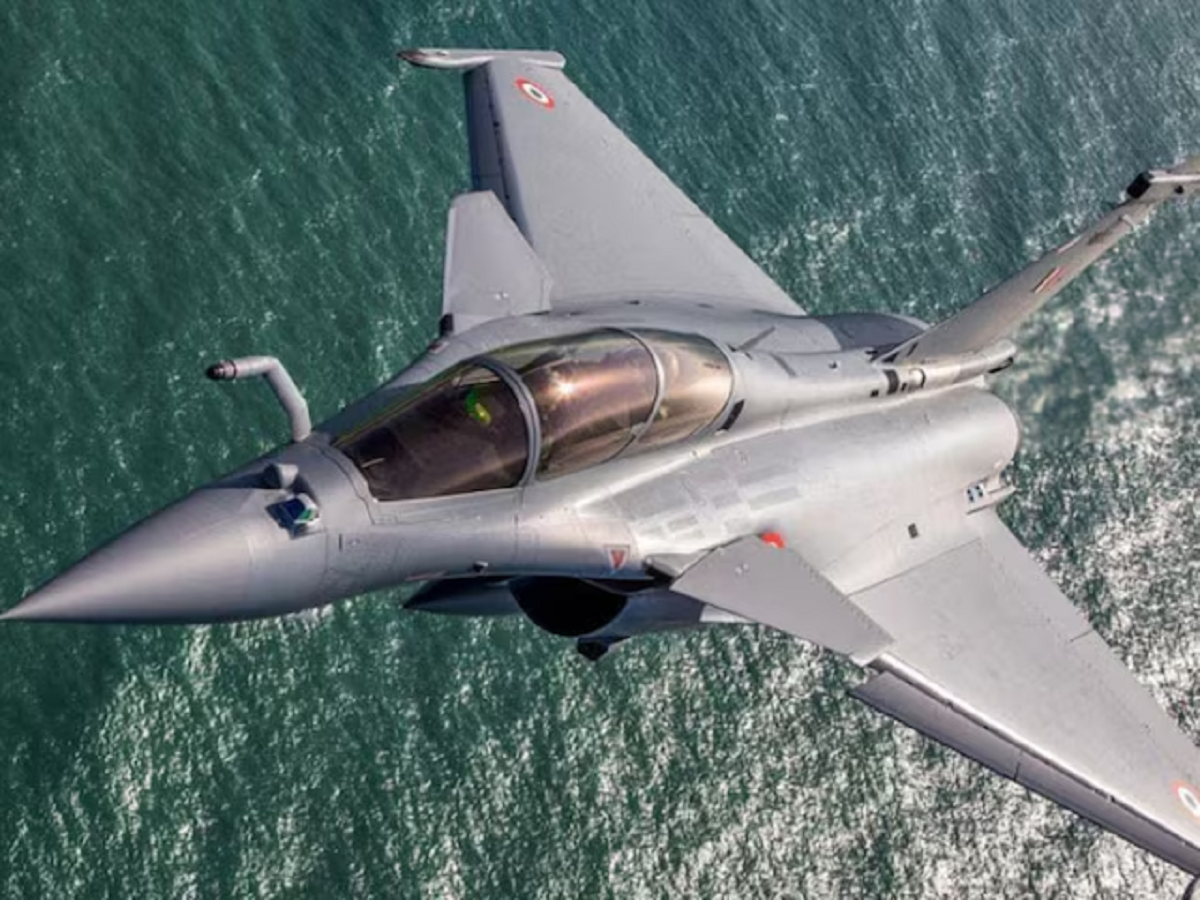
India on US Fighter Jet: The Middle East is engulfed in the flames of war. The US and Israel are bombing Iran. Amid its ongoing military operation against Iran, the US is deploying a large number of fighter jets to the Middle East. Meanwhile, a separate strategic debate has resurfaced in India: why, despite expanding defense ties with Washington, New Delhi has consistently avoided purchasing American fighter jets.
Be it Rafale or Sukhoi… India has a stockpile of fighter jets. Some are from France, some from Russia. But have you noticed that we don't have a single American fighter jet? Yes, India purchases fighter jets from Russia and France, but not from the US. India has purchased Apache helicopters and P-8I reconnaissance aircraft from the US, but has not yet purchased a single American fighter jet. Even though relations between India and the US have been good, both countries are also expanding their defense ties. Now the question is: why has New Delhi consistently avoided purchasing American fighter jets despite expanding defense ties with Washington? The reason has now been revealed.
A detailed analysis by NDTV states that several aircraft currently operating in Iran have been offered to India multiple times over the past two decades. These include the F/A-18 Super Hornet, F-15E Strike Eagle, F-16 Fighting Falcon, F-22 Raptor, F-35 Lightning II, and B-2 stealth bomber. However, India rejected offers for all of these fighter aircraft, while purchasing several other US military platforms.
The real reason has come to light
Related newsHow to become a millionaire by saving just Rs 2000 every month?Crude oil to reach $100/barrel? How much will a liter of petrol cost in India?Rubika Liyaquat Show: Iran, Israel, and India… who is with them, who is alone? Colonel Danveer reveals the truth.Stock market participants' fortunes reversed in 20 minutes, leaving gold and silver holders in deep sorrow.
The report stated that the current US military deployment in the region includes carrier-borne F/A-18 Super Hornets, F-15E Strike Eagles operating from Gulf bases, F-16s conducting sustained air defense patrols, F-22 stealth fighters deployed from Israel, B-2 stealth bombers flying long-range strike missions, and F-35 stealth fighters operating against layered air defense systems. This deployment of platforms is one of the largest groups of US combat airpower in recent decades.
What did India buy from America?
However, it is also a fact that India's defense purchases from the United States, excluding fighter jets, are increasing. Despite the decline in American fighter jets, India has significantly increased its defense purchases from the United States over the past ten years. India has purchased several major American platforms, including:
- C-17 Globemaster Strategic Transport Aircraft
- C-130J Super Hercules Tactical Transport Aircraft
- P-8I Poseidon Maritime Surveillance Aircraft
- AH-64 Apache Attack Helicopter
- CH-47 Chinook heavy-lift helicopter
India's disdain for American fighter jets
India is also expected to induct MQ-9B Predator drones for surveillance and strike roles. These purchases are part of multi-billion dollar defense procurement, making the United States one of India's largest arms suppliers in recent years. However, fighter aircraft remains a major category where India has consistently avoided American platforms.
Historical roots of India's fighter jet procurement strategy:
According to Media, India's hesitation to rely on American fighter aircraft stems from its Cold War history. At that time, the US supplied several frontline aircraft to India's main regional adversary, Pakistan, such as the F-86 Sabre, F-104 Starfighter, F-86D, A-37, and later the F-16 Fighting Falcon. Pakistan operated these aircraft in conflicts with India.
Because of this, India made various changes to its fighter procurement, moving away from American systems and building its air force around aircraft from other sources. NDTV reported that over the decades, the Indian Air Force has incorporated platforms like the MiG-21, MiG-23, MiG-29, and Su-30MKI, as well as Western aircraft like the Jaguar, Mirage 2000, and Hawker Hunter. The Su-30MKI remains the backbone of India's fighter fleet even today.
1998 nuclear tests and US ban
Another major factor shaping India's strategic thinking was the US response to India's nuclear test in May 1998. Following the nuclear test, the Clinton administration imposed sanctions and restricted technology transfers to India. This incident further increased concerns about India's dependence on foreign suppliers for essential defense capabilities in its strategic systems.
Although relations between New Delhi and Washington improved significantly in subsequent decades, the legacy of that period remains a part of India's defence planning thinking.
Concerns about operational dependency
- NDEV reported that Indian defense planners have long viewed fighter aircraft differently from other military platforms. Unlike transport aircraft or helicopters, fighter jets are the core of a country's air combat capability.
- Buying such a platform from a foreign supplier can create dependencies in areas such as spare parts supply, software updates and export approvals.
- India has also seen instances where access to spare parts or upgrades for US-origin equipment has become a subject of political tension.
- The report cites previous episodes where Pakistan's F-16 fleet faced restrictions on spare parts and where Turkey faced pressure related to defense cooperation with the United States.
America offers fighter aircraft to India
The US has repeatedly offered fighter aircraft to India in major defense tenders. During India's multi-role fighter aircraft competition in the 2000s, the US offered the F-16 and F/A-18 Super Hornet.
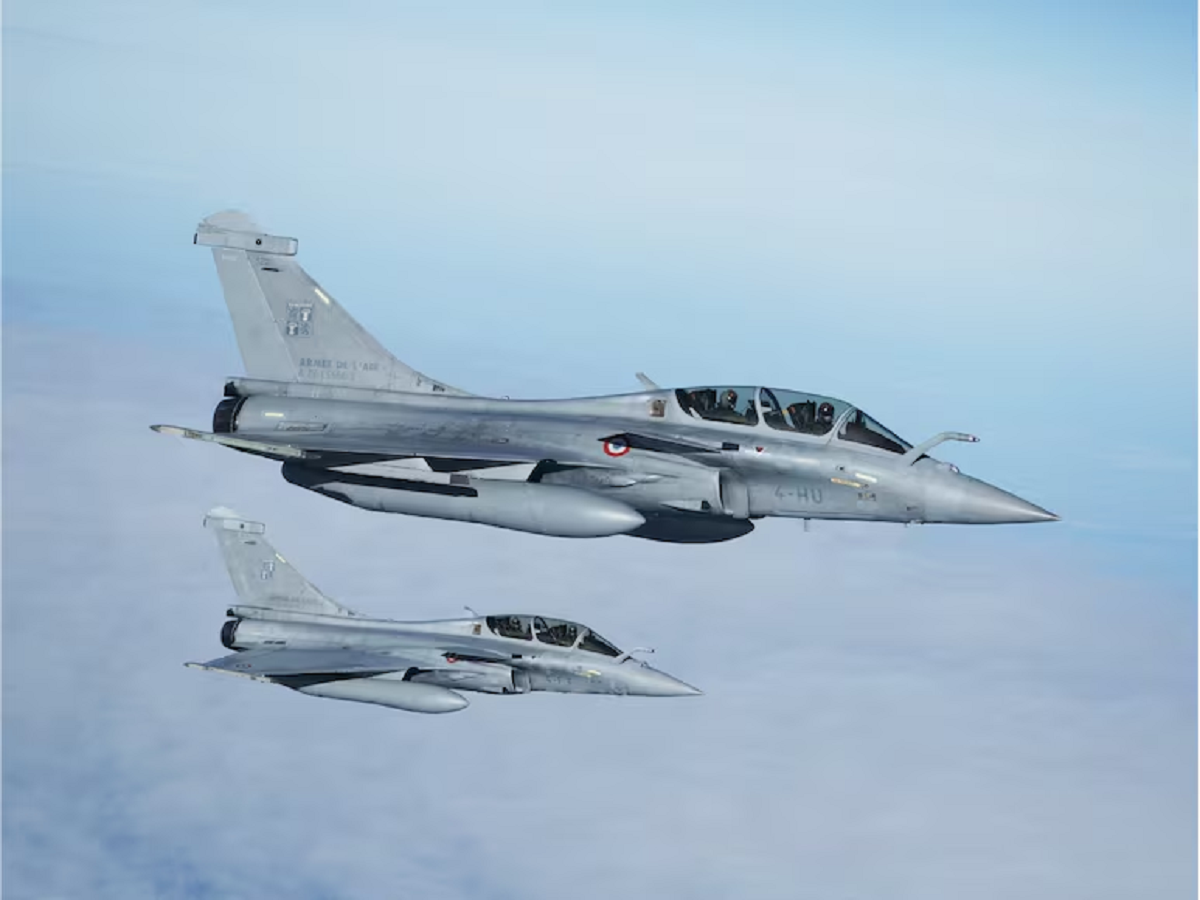
India has purchased Rafale from France.
In subsequent years, the US proposed an advanced variant of the F-16, the F-21, specifically for India. More recently, Washington also offered the F-15EX Eagle II, an upgraded version of the F-15 air superiority fighter. India did not take any further action on these proposals.
Selection of Rafale and evaluation of the naval fighter
India ultimately selected the Dassault Rafale from France for its medium multirole fighter needs. The Indian Navy also evaluated the F/A-18 Super Hornet for aircraft carrier operations. However, the Indian Air Force's purchase of the Rafale impacted the larger fighter procurement process.
Balakot Air Combat Episode
The report also mentions the air battle that followed India's airstrike on a terrorist camp in Balakot, Pakistan, in February 2019. During the ensuing air combat, Pakistan deployed F-16 fighters, while India deployed aircraft including the MiG-21 Bison. This incident became part of a larger strategic discussion about fighter acquisition.
Thoughts on the emerging stealth fighter
The US has also indicated its openness to providing India with the F-35 stealth fighter. However, India has not formally discussed this offer. Recent reports indicate that the Indian Air Force is considering the Russian Su-57 stealth fighter as a possible option, although no final decision has been made yet.
A long-standing buying pattern
India's defense purchases from the United States have steadily increased over the past decade, particularly in transport aircraft, helicopters, and maritime surveillance platforms. However, successive Indian governments have maintained a consistent approach to fighter aircraft procurement. India has primarily purchased fighters from Russia, France, and domestic programs, including the Tejas light combat aircraft.
PC:News18