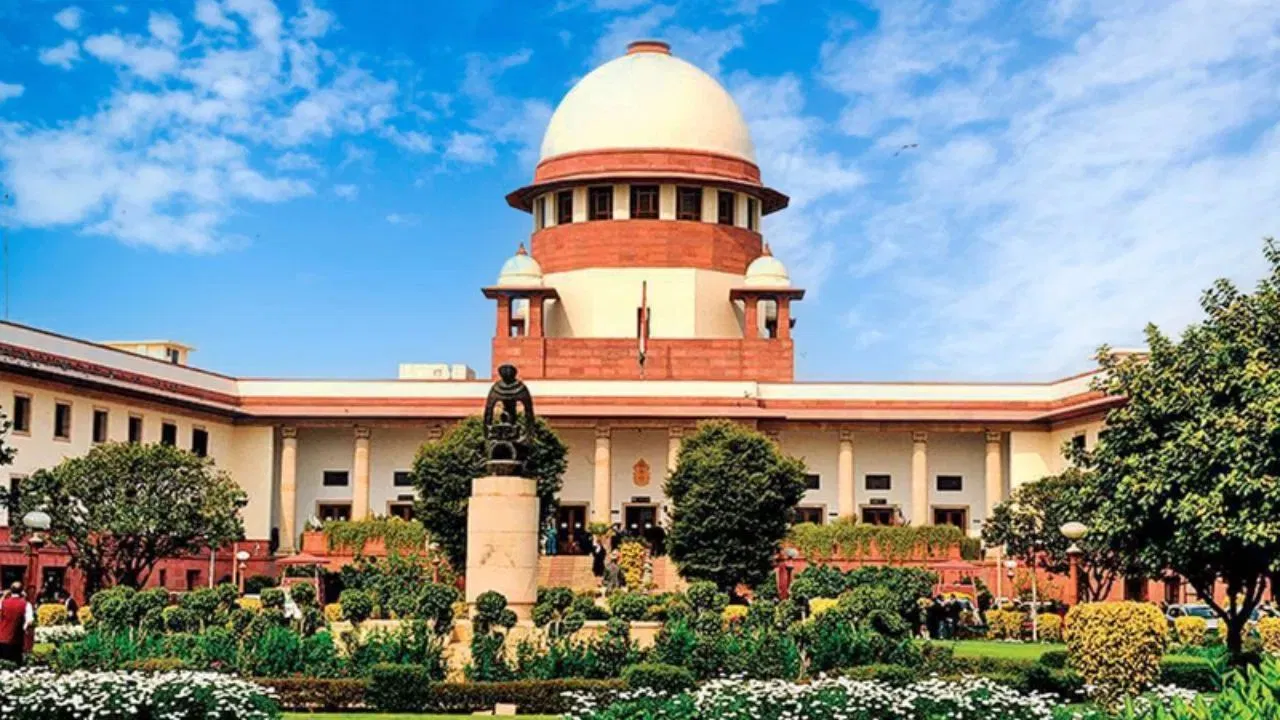
In a significant ruling, the Supreme Court of India has directed the Jammu and Kashmir government to pay Rs 50 lakh in compensation to Constable Khurshid Ahmad Chauhan, who was allegedly tortured in police custody. The court also transferred the investigation to the Central Bureau of Investigation (CBI) and ordered the agency to identify and prosecute those responsible.
Background of the Case
The alleged custodial torture took place on February 17, 2023, when Chauhan, a police constable, was summoned by the Deputy Superintendent of Police in Kupwara to appear in connection with a drug-related investigation. Upon reaching the Senior Superintendent of Police's office, he was illegally detained and brutally tortured.
Chauhan was later found unconscious and admitted to a hospital with severe, life-threatening injuries.
Wife’s Plea Ignored, FIR Filed Against Constable
-
Chauhan’s wife had reportedly requested senior officers to take action and register a case regarding the custodial torture.
-
Instead of acting on her complaint, an FIR was lodged against Chauhan himself, further complicating the matter.
-
This led to a legal battle, with no relief from the Jammu and Kashmir High Court, which:
-
Assigned the investigation to the same officer who initially summoned Chauhan.
-
Refused to quash the FIR filed against the constable.
-
Supreme Court Intervention
Unhappy with the High Court’s decision, Chauhan approached the Supreme Court, seeking:
-
CBI probe into the custodial torture.
-
Quashing of the FIR against him.
-
Compensation for the physical and mental trauma he endured.
The bench of Justices Vikram Nath and Sandeep Mehta ruled in Chauhan’s favor, observing:
-
He suffered "life-threatening injuries" while in the custody of fellow police officials.
-
The J&K government must pay Rs 50 lakh as compensation.
-
The CBI must take over the case, investigate independently, and arrest the guilty officers.
Rejection of J&K Administration’s Argument
The Union Territory argued that Chauhan had inflicted injuries upon himself, attempting suicide to escape questioning in the drug case.
However, the Supreme Court firmly dismissed this claim, citing lack of evidence and calling the explanation implausible and insensitive in the face of clear custodial abuse.
What This Verdict Signifies
This judgment sets an important precedent:
-
Reinforces the principle of accountability in custodial cases, even when the victim is a fellow police officer.
-
Sends a strong message against institutional bias and cover-ups.
-
Upholds the citizen’s right to justice and bodily integrity, even within law enforcement ranks.