India is expanding its renewable energy ambitions with the approval of the Pradhan Mantri Surya Sarovar Yojana (PM-SSY), a new initiative designed to develop floating solar power projects across the country.
Approved by the Union Government on July 31, 2026, the scheme has an outlay of ₹5,070 crore and aims to develop 5,000 megawatts (MW) of floating solar capacity, supported by energy storage systems. The initiative is intended to make better use of reservoirs and suitable water bodies while strengthening India's clean energy infrastructure. <Cite refs={["turn725085news2"]}/>
1. What Is the PM Surya Sarovar Yojana?
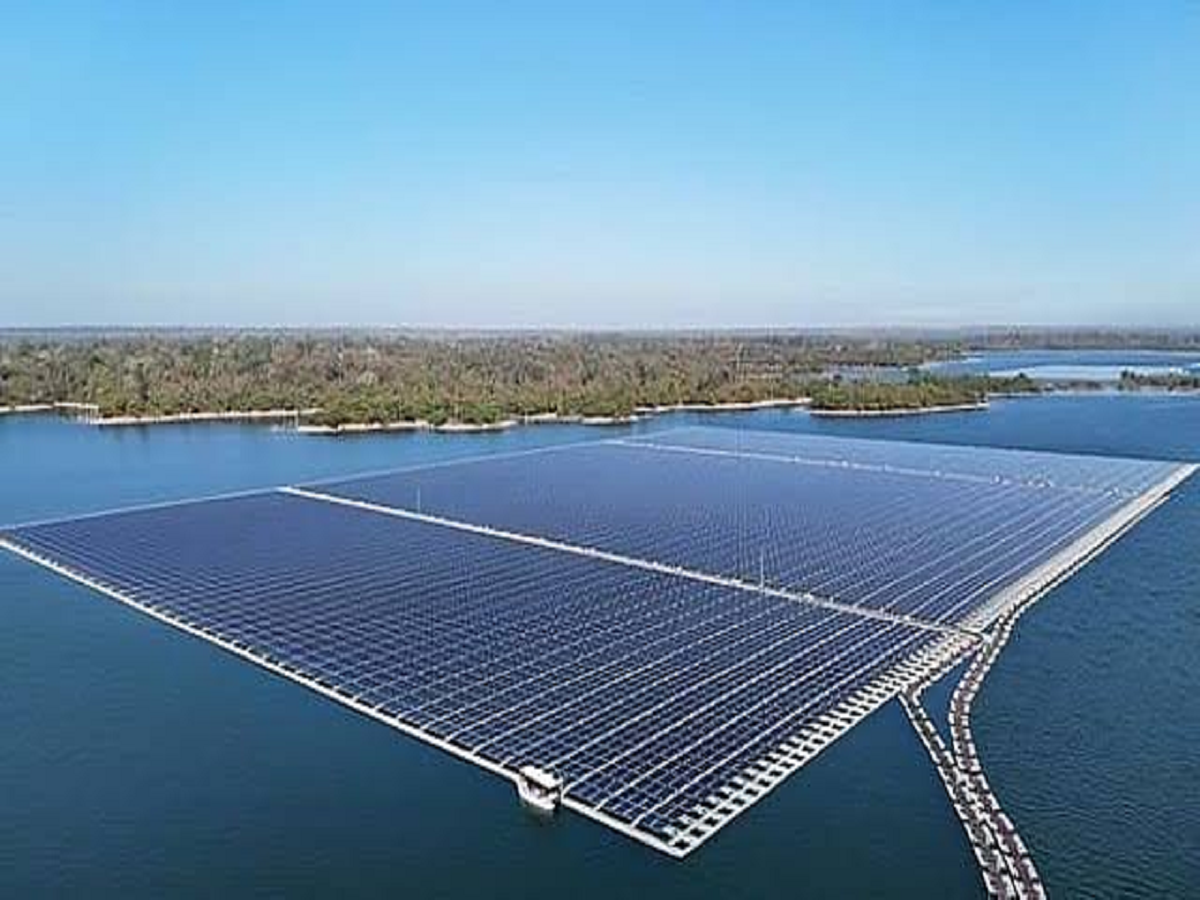
The PM Surya Sarovar Yojana focuses on installing solar panels on suitable water surfaces rather than relying entirely on land-based solar parks.
Floating solar photovoltaic systems generate electricity from solar panels mounted on floating structures. These installations can use reservoirs and industrial ponds, helping reduce the need to acquire additional land for large solar projects.
The scheme aims to establish 5,000 MW of floating solar capacity between financial years 2026–27 and 2030–31. <Cite refs={["turn725085news2"]}/>
2. Why Is the Government Investing in Floating Solar Power?
Traditional solar parks require substantial areas of land. Floating solar projects offer another option by using suitable existing water bodies.
The initiative is expected to provide several benefits:
-
Better utilisation of suitable reservoirs and industrial ponds.
-
Additional renewable electricity generation.
-
Reduced pressure on land resources.
-
Greater flexibility in managing electricity demand through energy storage.
-
Opportunities for domestic manufacturing and employment.
The government has also highlighted the potential of floating solar to support India's broader clean energy transition.
3. How Much Energy Storage Will Be Added?
The scheme includes energy storage systems alongside floating solar projects.
According to the government announcement, the plan includes a minimum storage duration of two hours, with an aggregate storage capacity of 10,000 megawatt-hours (MWh).
Energy storage can help retain electricity generated during sunny periods and make it available when demand rises or solar generation falls. This can improve the usefulness of renewable electricity within the power system. <Cite refs={["turn725085news2"]}/>
4. Will the Scheme Create Jobs?
The government estimates that the initiative could generate approximately 16,000–17,000 full-time-equivalent jobs.
Employment opportunities may arise across project development, engineering, construction, equipment manufacturing, installation and maintenance.
The scheme is also expected to encourage domestic manufacturing of solar modules, floating structures and energy storage systems, potentially creating opportunities for businesses in the renewable energy supply chain. <Cite refs={["turn725085news2"]}/>
5. Which States Can Benefit?
All states and Union Territories are eligible to benefit from the scheme, according to the government announcement.
However, the location of individual projects will depend on the availability of suitable water bodies, technical assessments, project proposals and implementation arrangements.
The scheme does not mean that every reservoir will receive a floating solar installation or that households will automatically receive solar panels under this programme.
6. Does This Scheme Provide Free Solar Panels to Households?
No. The PM Surya Sarovar Yojana is focused on floating solar power projects and associated energy storage systems. It is not the same as the PM Surya Ghar: Muft Bijli Yojana, which supports eligible households in adopting rooftop solar systems.
People interested in rooftop solar should check the separate PM Surya Ghar programme and its eligibility requirements through the official portal: https://pmsuryaghar.gov.in.
Conclusion
The PM Surya Sarovar Yojana represents a new step in India's effort to expand renewable electricity generation. With ₹5,070 crore in approved funding and a target of 5,000 MW of floating solar capacity, the initiative aims to combine solar power generation with energy storage while making productive use of suitable water bodies.
Its impact will depend on project execution, technical feasibility and the development of supporting infrastructure. For households, the key distinction is that this scheme focuses on large floating solar projects, while rooftop solar assistance is available through a separate government programme.