BUSINESS
PAN Card Rules 2026: PAN is required for these 5 financial transactions; providing the wrong number could result in a fine of ₹10,000
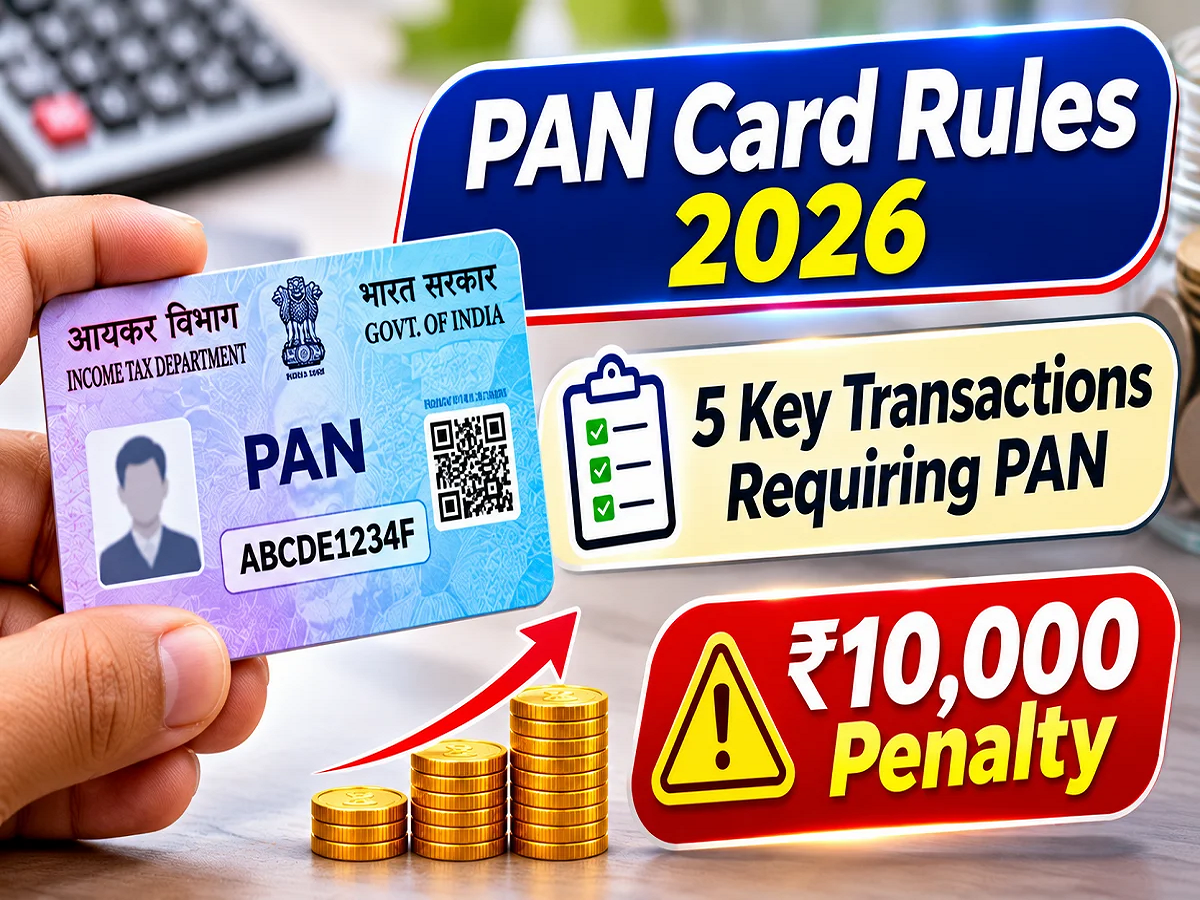
PAN Card Rules 2026: The PAN card isn't just a document used to file income tax returns, it also plays an important role in banking, investments, and major financial transactions. If you're planning to purchase property, invest in the stock market, deposit a large sum of money in a bank, or purchase a vehicle, it's important to understand the rules related to the PAN card.
The Income Tax Department maintains records of various financial transactions of taxpayers through PAN numbers. Providing a PAN number is mandatory for many specified transactions. Under the Income Tax Act, a penalty of up to ₹10,000 can be imposed for providing an incorrect PAN number or that of another person. However, this penalty is not automatically imposed for every minor typo.
Let us know in which financial activities PAN is necessary and what problems can arise due to giving wrong information.
Why is PAN card so important?
PAN i.e. Permanent Account Number is a 10 letter and digit unique identification number issued by the Income Tax Department.
It is used to link an individual's or entity's tax records and identified financial activities.
When a person makes a major transaction related to banking, investment or property, he may be asked for PAN details as per the applicable rules.
This helps the Income Tax Department to match financial information received from various sources.
PAN card may be necessary for these 5 major financial tasks
1. Buying and selling of house, land or shop
If you are planning to buy or sell a house, land, flat or commercial property, it is important to understand the rules related to PAN.
As per Income Tax rules, it is mandatory to provide PAN or alternative document in eligible cases in case of purchase or sale of immovable property worth more than the prescribed limit.
PAN details may also be asked for in the registry and other related documents in the purchase and sale of property.
This helps link property transaction records with tax information.
2. Buying goods or services for a large amount
If a person is purchasing an expensive item or service, it may be necessary to provide PAN details depending on the transaction amount.
Income Tax rules have PAN related provisions for certain transactions exceeding ₹2 lakh.
For example, relevant rules may apply to the purchase of expensive jewellery, electronic goods or other items.
However, rules regarding cash payments, PAN and reporting may vary for different transactions.
3. Transactions in shares of unlisted companies
Apart from the companies listed on the stock market, there are also companies whose shares are not listed on any recognized stock exchange.
These are called unlisted companies.
Buying or selling shares of these companies may require providing PAN details depending on the nature of the transaction and applicable rules.
Investors should check the relevant documentation, tax responsibilities and reporting rules before purchasing shares.
4. On purchasing a car or other motor vehicle
PAN card may also be required while purchasing a vehicle.
There are special provisions for the purchase of motor vehicles under the Income Tax Act. PAN rules apply depending on the category of vehicle and the nature of the transaction.
Therefore, before purchasing a new car or other vehicle, it would be useful to get information about the necessary documents from the dealer.
5. Demat account and stock market investment
If you want to start investing in the stock market, PAN is an important document for opening a demat account.
Demat account is used to hold shares and other eligible securities in electronic form.
Investors have to complete the KYC process, which requires PAN related information.
PAN and KYC related rules may also apply while investing in mutual funds.
What is the penalty for providing wrong PAN number?
Under Section 272B of the Income Tax Act, a penalty of ₹10,000 can be imposed for violating the prescribed legal provisions relating to PAN.
These may include providing incorrect PAN number in certain circumstances or not providing PAN details when required.
However, the penalty is decided based on the relevant legal provisions and circumstances of the case.
Therefore, it is important to double-check the PAN number while entering it in any banking, investment or tax document.
Wrong PAN number can also cause problems in TDS credit
Mistakes in PAN number not only lead to the risk of penalty but can also create problems in the tax records.
For example, if TDS has been deducted from a person's income but the PAN is wrongly entered in the relevant records, his tax credit will not be correctly matched.
In this situation, there may be a difference between the TDS credit available and the actual deduction while filing the income tax return.
In case of such a problem, the records may have to be corrected from the concerned employer, bank or TDS deducting agency.
Therefore, taxpayers should check their Form 26AS and Annual Information Statement (AIS) from time to time.
How does the Income Tax Department investigate financial transactions?
The Income Tax Department receives transaction information from banks, financial institutions and other reporting entities through various channels.
These include reporting instruments such as TDS, TCS and Statement of Financial Transactions (SFT).
Details of these information may also appear in the taxpayer's Annual Information Statement (AIS).
If a significant discrepancy is noticed between a person's declared income and their financial transactions, the department may seek clarification. However, simply spending a large sum of money does not necessarily mean a tax violation has occurred.
Important precautions related to PAN card
Taxpayers should take special care of certain things while carrying out financial transactions.
- Enter correct PAN number in bank, investment and tax documents.
- Check the linking status of PAN and Aadhaar, if linking is mandatory.
- Reconcile the financial information filed in your AIS and Form 26AS from time to time.
- If the name or other details in the PAN are incorrect, get them corrected through the official channel.
- Avoid sharing PAN number with any unknown person or on suspicious website.
Important clarification: Not all transactions have the same limit
The original report stated a limit of ₹20 lakh for property and ₹5 lakh for vehicles. However, the Income Tax Department's published Rule 114B requires a PAN for immovable property exceeding ₹10 lakh and for registered motor vehicles other than two-wheelers, regardless of the value. The proposed and applicable provisions may differ from the new rules of 2026. Therefore, please confirm the applicable rules on that date before proceeding with the transaction.
Conclusion
A PAN card is an important document for tax and financial transactions in India. It may be required for purchasing property, vehicles, investments, and other specified major transactions. Providing an incorrect PAN number or failing to provide the required information can result in legal action and penalties.
Therefore, before any important financial activity, it is important to understand the rules related to PAN and enter correct information in your documents.
Official Reference: Income Tax Department, Government of India — Published information related to Rule 114B and Section 272B.
Disclaimer: This article is for general information purposes only. PAN-related limits and regulations may change over time. Please confirm applicable official regulations before engaging in any major financial transactions.