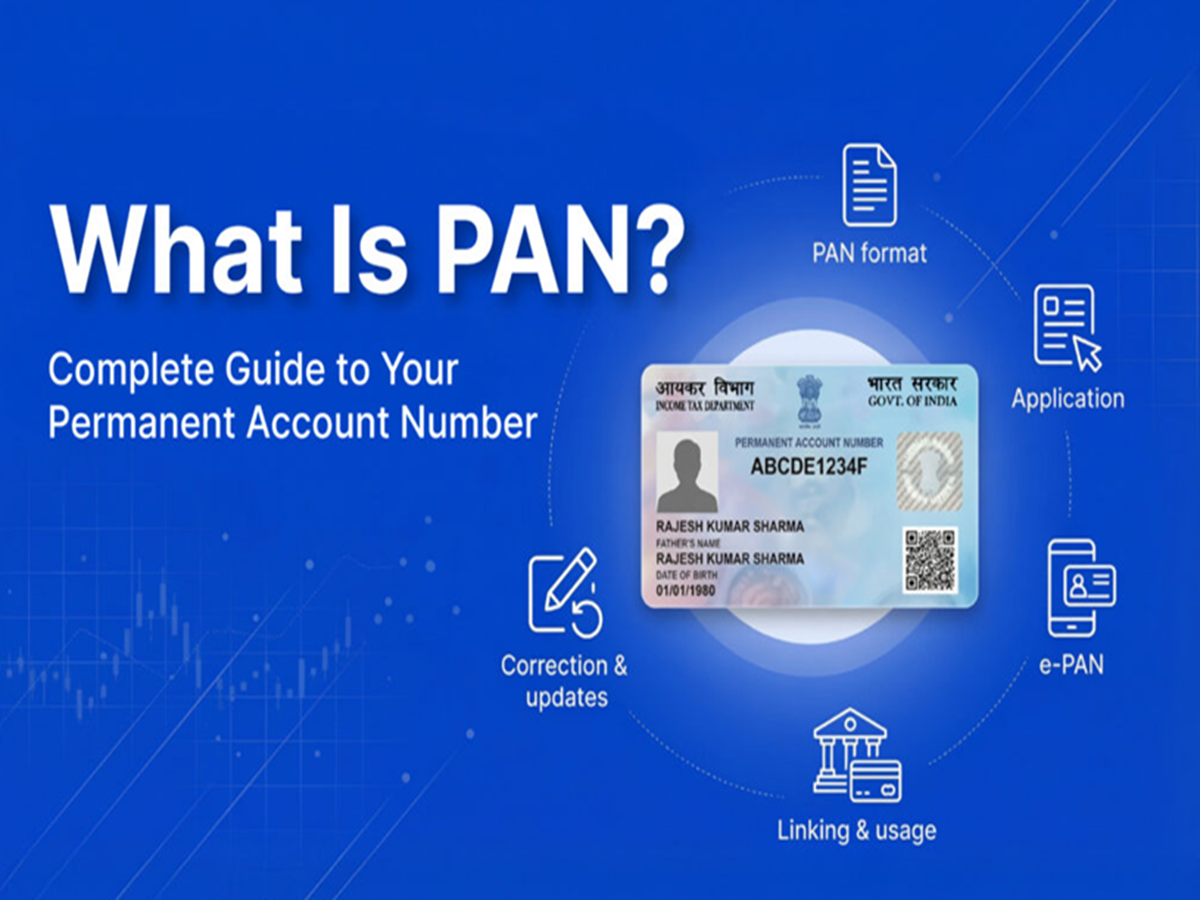
The Permanent Account Number (PAN) is one of the most important identity documents for financial transactions in India. Whether you file income tax returns, open a bank account, invest in mutual funds, or apply for a loan, a PAN card is essential. With the government's focus on digital services, taxpayers should also understand the latest updates related to PAN and how to keep their details up to date.
Here are eight important things every PAN card holder should know.
1. PAN Is Mandatory for Many Financial Transactions
A PAN card is required for several important activities, including:
-
Filing Income Tax Returns (ITR)
-
Opening a bank account
-
Investing in shares and mutual funds
-
Buying or selling certain high-value assets
-
Applying for credit cards and loans
Keeping your PAN details accurate helps avoid delays in financial transactions.
2. Link Your PAN with Aadhaar
The government has made PAN-Aadhaar linking mandatory in many cases under the Income-tax Act. If your PAN is not linked where required, you may face restrictions while filing your income tax return or carrying out certain financial transactions.
Before filing your ITR, check whether your PAN and Aadhaar are linked.
3. Update Incorrect Details Immediately
If your PAN card has incorrect information such as:
-
Name
-
Date of birth
-
Father's name
-
Photograph
-
Signature
you should apply for a correction as soon as possible. Incorrect details can create problems during KYC verification and banking transactions.
4. Keep Your Mobile Number and Email Updated
Many PAN-related services, including verification and status updates, rely on OTP authentication.
Always ensure that your registered mobile number and email address are active so you don't miss important notifications.
5. e-PAN Is Equally Useful
Apart from the physical card, taxpayers can also use an e-PAN, which is digitally issued and can be stored on a smartphone or laptop.
The digital version is accepted for most KYC and verification purposes, making it convenient when you don't have your physical PAN card with you.
6. Never Share Your PAN Publicly
Your PAN contains sensitive personal information.
Avoid:
-
Posting it on social media.
-
Sharing it with unknown individuals.
-
Uploading unmasked copies unless required by a trusted institution.
Only provide your PAN when requested by authorised organisations for legitimate purposes.
7. Complete KYC Regularly
Banks, mutual funds, insurance companies, and stock brokers may ask you to complete or update your Know Your Customer (KYC) details periodically.
Ensure that your PAN details match your Aadhaar and other official documents to avoid delays.
8. Beware of PAN Card Scams
Cybercriminals often send fake emails or SMS messages claiming that your PAN has been suspended or needs urgent verification.
Always remember:
-
Do not click on suspicious links.
-
Never share OTPs or passwords.
-
Verify any request through official government portals or your financial institution.
Common Mistakes to Avoid
Many people unknowingly create problems by:
-
Keeping incorrect personal details on their PAN.
-
Ignoring PAN-Aadhaar linking requirements.
-
Sharing PAN copies without masking unnecessary information.
-
Falling for fake PAN update messages.
Avoiding these mistakes can help protect both your finances and your identity.
Final Thoughts
Your PAN card is much more than just a tax document—it's an important financial identity proof. Keeping your PAN details updated, completing KYC on time, protecting your personal information, and staying alert to fraud can help you avoid unnecessary complications. A few minutes spent reviewing your PAN information today can save you significant time and hassle in the future.