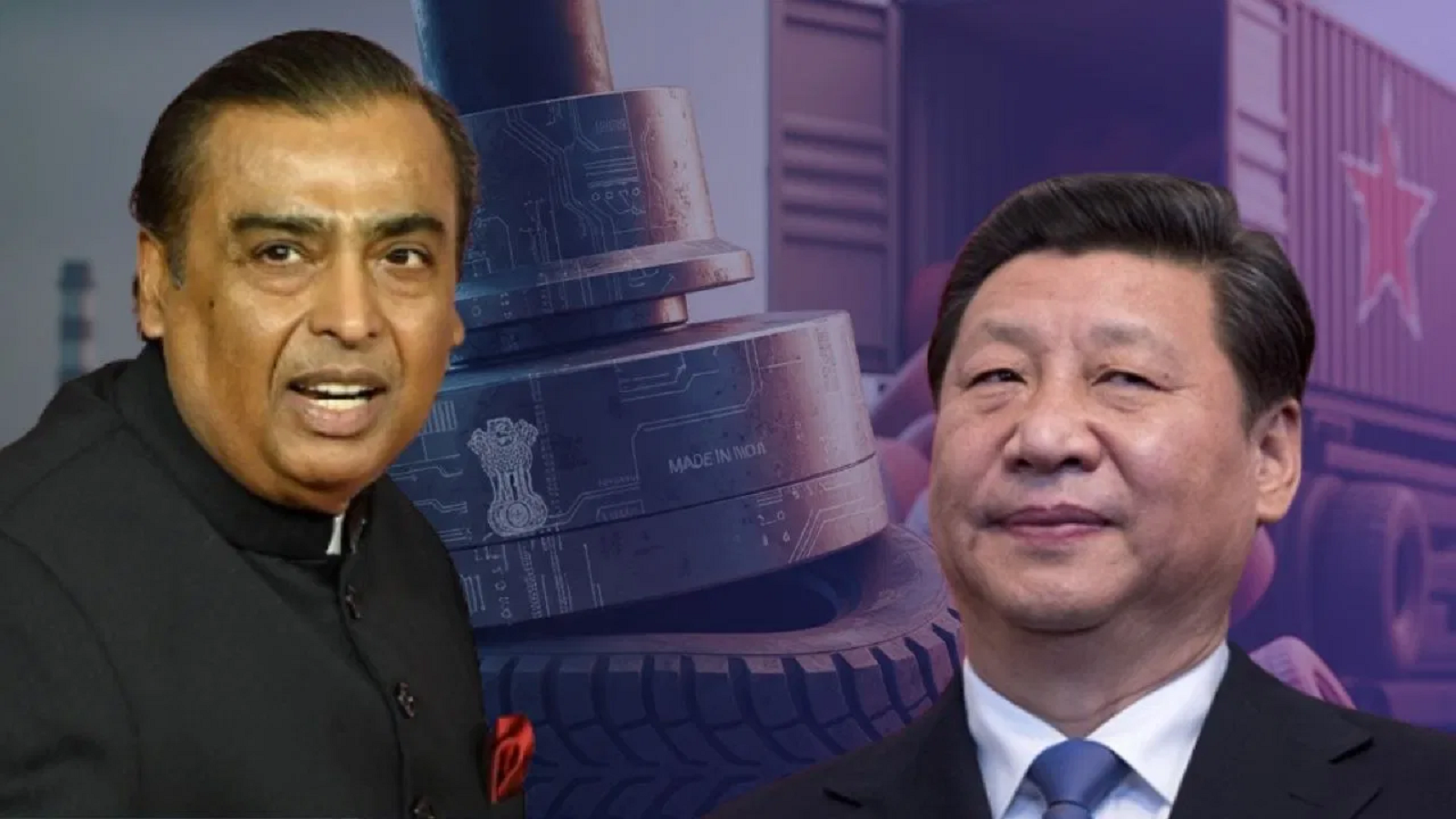
The controversy around the dumping of Chinese goods in India has resurfaced once again. “Dumping” means when a country exports goods at prices lower than their normal value or production cost, in order to hurt local manufacturers in the importing country. This time, the issue involves the rubber industry, and the complaint has come from a company associated with Mukesh Ambani.
Taking the matter seriously, the Indian government has initiated an official investigation. The Directorate General of Trade Remedies (DGTR), which functions under the Ministry of Commerce, has begun a probe into the import of a specific type of rubber from China.
Why was this investigation launched?
The probe follows a formal complaint filed by Reliance Sibur Elastomers, a joint venture between Reliance Industries Limited (RIL) and Russia’s Sibur, with Reliance holding the majority stake. RIL’s chairman is Mukesh Ambani.
According to the complaint, China has been exporting Halo Isobutene and Isoprene Rubber to India at unfairly low prices, undercutting domestic producers. The company claims that this dumping practice is harming the Indian rubber industry, making it difficult for local manufacturers to compete. To protect the domestic industry, Reliance Sibur Elastomers has urged the government to impose anti-dumping duties on these imports.
Why is this rubber so important?
The rubber in question is not ordinary—it is widely used in the automobile industry. It’s a crucial material for making tires, tubes, and various other automotive parts used in cars, motorcycles, trucks, and buses.
If Chinese manufacturers sell these products in India at extremely low prices, domestic producers will struggle to survive. This could lead to reduced production, lower profits, and job losses across the auto and rubber sectors. Hence, this issue extends beyond corporate competition—it could affect India’s entire supply chain and employment ecosystem.
Who will make the final call?
The DGTR’s role is to investigate whether the allegations of dumping are valid and whether Indian manufacturers have suffered real losses as a result. If the investigation confirms both, the DGTR can recommend an anti-dumping duty.