BUSINESS
Jal Jeevan Mission 2.0 Gets ₹6,154 Crore Boost: What the New Water Push Means for Rural Households
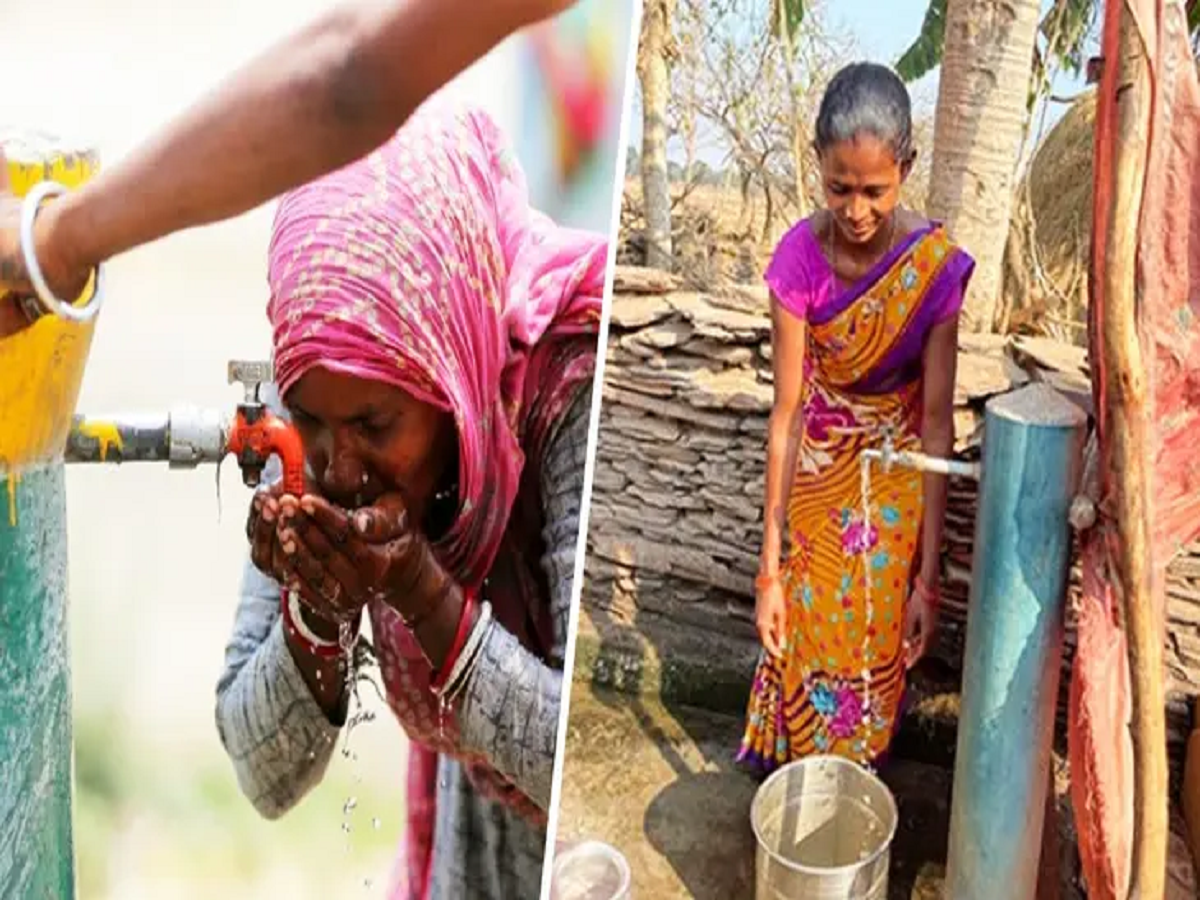
Access to reliable tap water is set to receive another major push as the government continues implementing Jal Jeevan Mission 2.0 across rural India. The Centre has released a total of ₹6,154.96 crore to states during the 2026-27 financial year to maintain momentum in rural drinking-water projects.
The development is important for millions of rural households because the upgraded mission focuses not just on installing taps, but on ensuring that water supply remains reliable, adequate and safe over the long term.
What Is Jal Jeevan Mission 2.0?
Jal Jeevan Mission 2.0 is the extended version of the government's rural tap-water programme. The Union Cabinet approved the extension until December 2028, with a total outlay of ₹8.69 lakh crore, including ₹3.59 lakh crore in central assistance.
The objective is to ensure that rural households have access to adequate quantities of safe drinking water through functional household tap connections.
Centre Releases More Than ₹6,000 Crore
During FY 2026-27, the Centre has released ₹5,289.09 crore as its central share to 10 states, while another ₹865.87 crore has been released through the SNA SPARSH system across 13 states.
The money is intended to support the continued implementation and maintenance of rural drinking-water infrastructure.
Rural Tap Water Coverage Has Increased Sharply
When the Jal Jeevan Mission began in August 2019, only 16.71% of rural households had functional household tap connections.
According to government data, that figure has now increased to 82.09%, with around 15.89 crore rural households connected to functional household tap-water systems.
The government is now focusing increasingly on maintaining these connections and ensuring that water actually reaches homes consistently.
It's Not Just About Installing a Tap
A tap connection alone does not guarantee a reliable water supply. Jal Jeevan Mission 2.0 therefore places greater emphasis on the sustainability of rural water infrastructure.
The mission aims to provide water that is available regularly, in adequate quantities and meets prescribed quality standards.
This means states and local authorities will have to focus on maintaining pipelines, water sources, treatment systems and other infrastructure after installation.
What Does This Mean for Rural Families?
For households that already have a functional connection, the emphasis on sustainability could mean greater attention to maintaining the water supply system.
For families that have not yet received a functional tap connection, continued investment under JJM 2.0 could help extend coverage to more villages and households.
The government is also encouraging community participation so that local communities can play a role in maintaining and monitoring water-supply systems.
Rajasthan Also Receives Central Funding
The latest fund release includes ₹537.72 crore for Rajasthan as reimbursement of the central share during FY 2026-27.
Other states receiving funding include Uttar Pradesh, Odisha, Karnataka, Chhattisgarh, Andhra Pradesh, Madhya Pradesh, Tamil Nadu, Maharashtra and Kerala.
Why the Scheme Matters
Reliable household water access can reduce the time families spend collecting water and can also support better hygiene and sanitation practices.
The government's next challenge is ensuring that newly created infrastructure remains functional for years to come. That is why JJM 2.0 places considerable emphasis on long-term sustainability rather than simply increasing the number of connections.
What Should Beneficiaries Do?
If your household has a tap connection but water is not being supplied regularly, the issue can be raised with the relevant local water-supply authority or Gram Panchayat.
Households should also report damaged pipelines, leakage or prolonged disruption rather than allowing problems to remain unresolved.
With the mission extended until December 2028, the government now has a longer window to improve both coverage and reliability of rural drinking-water services.
The focus is gradually shifting from "Is there a tap in the house?" to "Does the tap provide safe and reliable water?"—a change that could make the next phase of Jal Jeevan Mission particularly important for rural families.