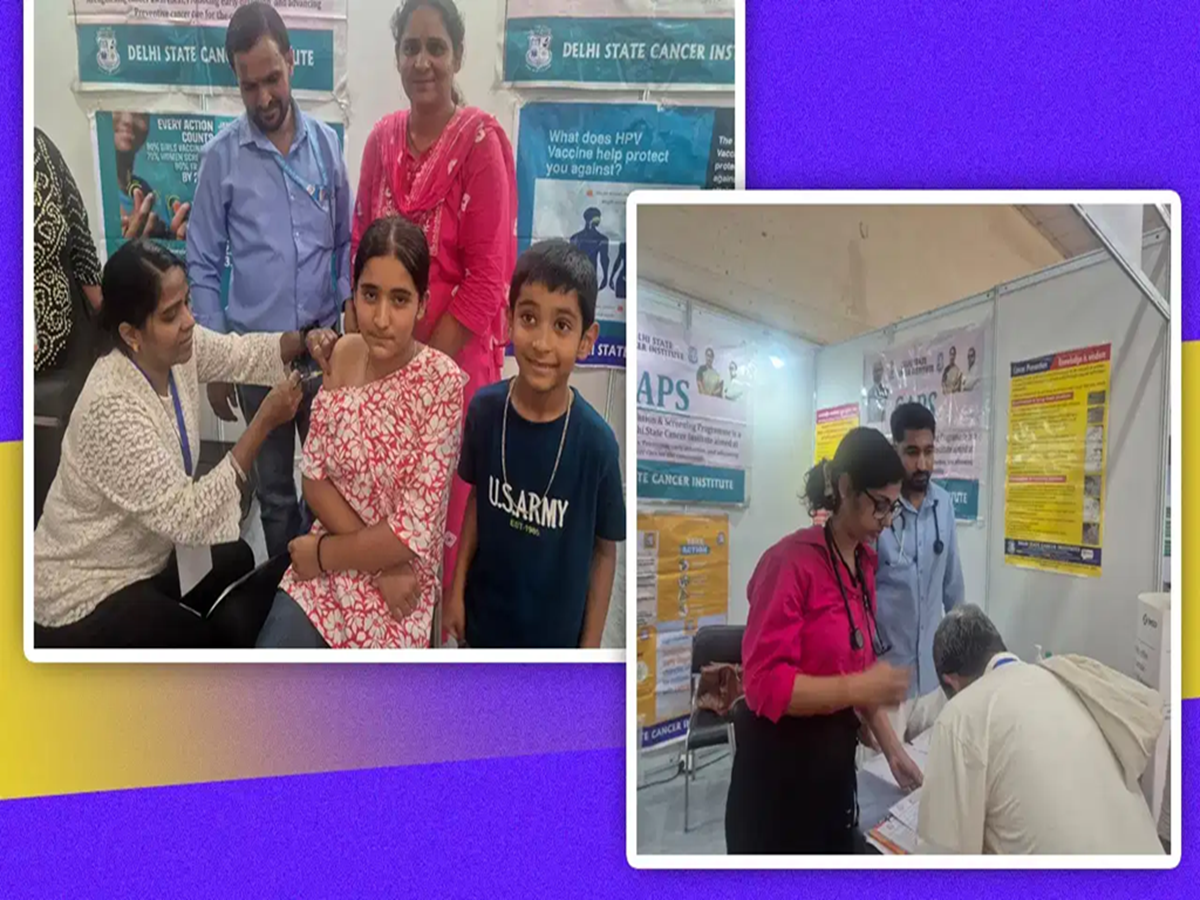
To promote cancer awareness and early detection, the Delhi State Cancer Institute organized a three-day Cancer Awareness, Prevention, and Screening (CAPS) program at Bharat Mandapam from July 25 to 27, 2026. The initiative focused on educating people about cancer prevention, encouraging regular screening, and providing free preventive healthcare services.
Visitors at the event were offered free screenings for oral, breast, cervical, and prostate cancers. The program also included expert consultations, breast self-examination training, cancer awareness sessions, and guidance on preventing Human Papillomavirus (HPV) infection.
Free HPV Vaccination for Girls
One of the major highlights of the event was the free HPV vaccination drive for girls between the ages of 9 and 15 years. Around 200 vaccine doses were administered on a first-come, first-served basis. Health experts also educated visitors about HPV-DNA self-testing and the importance of early detection in preventing cervical cancer.
The event witnessed strong public participation, with many people receiving valuable information on cancer prevention, healthy lifestyle habits, and the benefits of regular screening.
What Is the HPV Vaccine?
The Human Papillomavirus (HPV) vaccine protects against infection caused by HPV, a common virus that spreads primarily through skin-to-skin and sexual contact. Certain high-risk types of HPV are responsible for most cases of cervical cancer.
HPV infection can also increase the risk of several other cancers, including:
-
Throat cancer
-
Penile cancer
-
Vaginal cancer
-
Vulvar cancer
-
Anal cancer
The vaccine trains the body's immune system to recognize and fight the virus before it causes infection, significantly reducing the risk of HPV-related cancers later in life.
Why Is the Vaccine Recommended Between 9 and 15 Years?
Health experts recommend HPV vaccination before exposure to the virus because the immune response is strongest at a younger age. Vaccinating children between 9 and 15 years provides long-lasting protection and is considered the most effective way to prevent HPV-related cancers in adulthood.
Experts Stress the Importance of Prevention
Dr. Savita Arora, Director of the Delhi State Cancer Institute, emphasized that cancer is one of the diseases where prevention and early detection can save countless lives. She said the institute aims not only to treat cancer but also to spread awareness so that preventive healthcare reaches every section of society.
Dr. Pragya Shukla, Head of the Department of Clinical Oncology, highlighted that regular cancer screening greatly improves the chances of successful treatment by detecting the disease at an early stage. She also encouraged parents to ensure eligible girls receive the HPV vaccine, describing it as a safe and highly effective way to prevent cervical cancer.
The Bottom Line
The HPV vaccine is one of the most effective tools available to prevent cervical cancer and several other HPV-related cancers. Combined with regular screening, awareness, and healthy lifestyle choices, vaccination can play a vital role in reducing the burden of cancer and protecting future generations.