AUTO
How Does Wireless Charging in Your Car Actually Work? The Technology Behind Cable-Free Charging
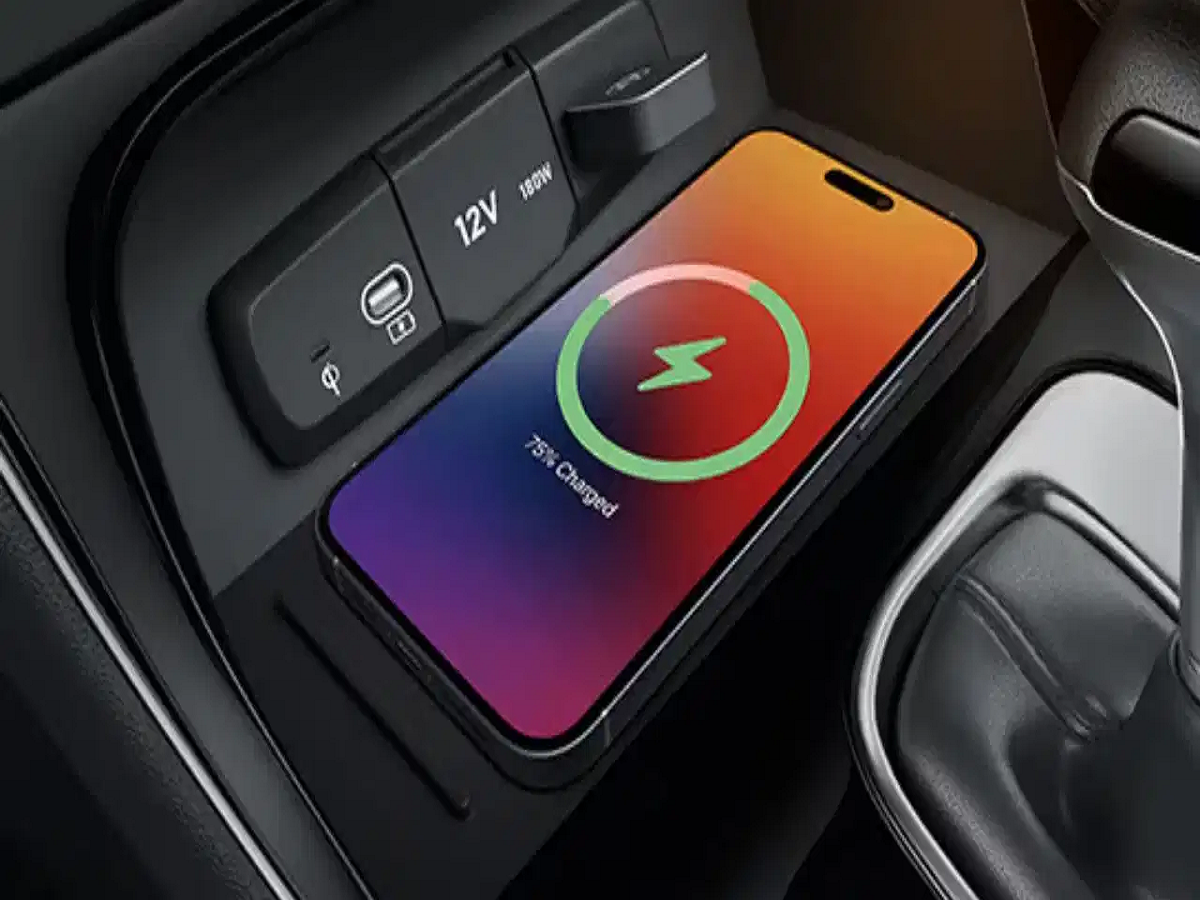
Many modern cars now come with built-in wireless charging pads that allow you to charge a compatible smartphone without plugging in a cable. You simply place the phone on the designated charging area and the battery starts receiving power.
But how does electricity travel from the charging pad to your phone without a physical connection? The answer lies in electromagnetic induction.
What Is Wireless Charging?
Wireless charging allows compatible devices to receive electrical energy without a traditional charging cable.
Most automotive wireless charging systems use the Qi standard. Both the charging pad and compatible smartphone contain specially designed copper coils.
When the phone is placed on the charging pad, these coils work together to transfer energy over a short distance.
How Does the Charging Pad Transfer Power?
The process begins inside the car's charging pad.
When the wireless charger is activated, an alternating electrical current flows through the coil inside the pad. This produces a rapidly changing magnetic field around the coil.
A compatible smartphone contains another coil on its back. When the phone is positioned correctly over the charging pad, the changing magnetic field induces an electrical current in the phone's coil.
The phone's charging circuitry then converts and regulates this energy so that it can safely be used to charge the battery.
In simple terms:
Charging pad → changing magnetic field → phone's internal coil → charging circuitry → battery
Why Does Phone Placement Matter?
Wireless charging works best when the two coils are properly aligned.
If your phone is placed too far from the ideal charging position, the coils may not line up correctly. This can reduce charging efficiency, slow down charging or cause more energy to be lost as heat.
That's why many cars have a specific marked area where you are supposed to place your phone.
Some newer charging systems are designed to be more tolerant of small movements, but keeping the phone properly positioned still helps improve charging performance.
Can Every Smartphone Use Car Wireless Charging?
No. The phone must have the necessary wireless charging hardware.
Many modern smartphones support wireless charging, but some models do not. Simply placing a phone without wireless charging capability on a charging pad will not charge its battery.
Charging speed can also vary. The maximum charging power supported by the car's charging pad and the phone's own charging system determines how quickly the battery charges.
Why Can Wireless Charging Make the Phone Warm?
Wireless charging is not 100% efficient, so some energy is inevitably lost as heat during the transfer process.
Heat can also increase if the phone and charging pad are poorly aligned or if the phone is already warm because of high temperatures, navigation, gaming or direct sunlight.
Modern charging systems can reduce charging power when temperatures become too high. Nevertheless, placing a phone on a wireless charging pad in an extremely hot car can affect charging performance.
Is Wireless Charging Safe?
Wireless charging systems from reputable manufacturers are designed with safety mechanisms to regulate power and manage temperature.
The phone and charging system communicate to determine how much power should be supplied, helping prevent unnecessary energy transfer.
However, users should avoid covering the phone with objects while it is charging and should be cautious about excessive heat inside a parked car.
Why Do Cars Offer Wireless Charging?
The biggest advantage is convenience. You don't need to search for a charging cable every time your phone's battery is low.
For drivers who regularly use their phone for navigation, music or hands-free connectivity, a wireless charging pad can keep the device charged while reducing cable clutter inside the cabin.
So, although it may look like the phone is receiving electricity out of nowhere, wireless charging relies on a well-established principle: a changing magnetic field transfers energy between two coils, allowing your phone to charge without a physical wire connecting it to the car.