AUTO
No Steering Wheel, No Pedals! Tesla Is Developing a Family Car That Will Drive Completely on Its Own
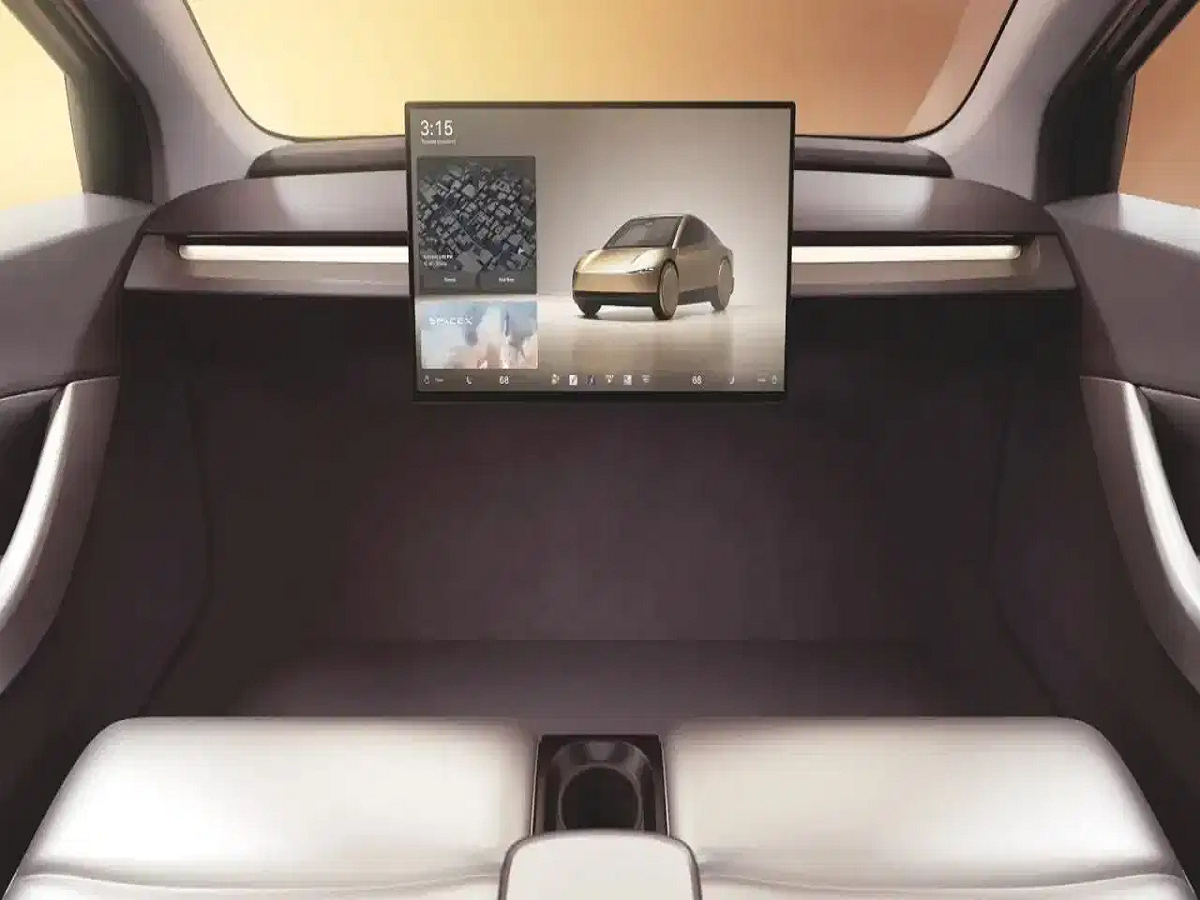
Imagine travelling in a car without touching the steering wheel, accelerator or brake pedal. Tesla is working towards making this a reality. The electric vehicle manufacturer is reportedly developing a fully autonomous family car that will not require any human intervention while driving. Tesla CEO Elon Musk has hinted at a driverless version of the Model Y and Model YL, which could initially become part of the company's Robotaxi network before potentially reaching private buyers.
How will Tesla's new driverless car work?
Elon Musk discussed the company's plans during a conversation at the New York Times' annual DealBook Summit. However, he did not reveal the expected launch date, production timeline or pricing of the proposed vehicle.
At present, Tesla operates its Robotaxi service using existing Model Y vehicles equipped with steering wheels, pedals and the company's Full Self-Driving (FSD) technology. The proposed version would take autonomous driving a step further by removing conventional driving controls altogether.
Tesla has already showcased its vision for such mobility through the Cybercab, unveiled in October 2024. The two-seat vehicle does not feature a steering wheel or pedals and is designed to operate without a driver. However, its limited seating capacity makes it less practical for families travelling together.
A fully autonomous version of the Model Y could address this limitation by combining driverless technology with the convenience of a family-sized electric vehicle.
A possible six- or seven-seater autonomous car
Seating capacity could be one of the biggest advantages of Tesla's proposed vehicle. The standard Model Y offers seating for five passengers, while the larger Model YL can accommodate six.
Musk has also discussed the possibility of developing a six- or seven-seater vehicle, suggesting that Tesla could explore an even larger family-oriented model.
The company's plans for the Model YL have also evolved. After introducing the extended version in China, Musk initially indicated that it would not be launched in the US. However, his position changed later, leaving room for further expansion of the model's availability.
Tesla has also announced plans to make the Cybercab available to private customers. However, ownership could involve an expensive subscription model, and its operation may initially remain restricted to areas approved by the company.
Safety regulations could become a major challenge
Despite the technological possibilities, launching a car without a steering wheel or pedals will not be straightforward. Safety requirements and government regulations remain major hurdles for fully autonomous vehicles.
In the United States, manufacturers must navigate several legal and technical requirements before introducing vehicles without conventional driving controls. Tesla's approach to self-certification for the Cybercab has also attracted scrutiny, with the US road safety regulator investigating aspects of the vehicle.
Another important question is whether customers will be comfortable purchasing a car that they cannot drive themselves if its autonomous system becomes unavailable.
Limited operating zones could create another challenge. Buyers may hesitate if they cannot use the vehicle freely across different cities or road networks.
Tesla is reshaping its vehicle strategy
Tesla has been making significant changes to its long-term product strategy. The company has announced plans to discontinue the Model S and Model X, while the Model 3 and Model Y remain central to its passenger vehicle lineup.
Tesla has also shifted its focus away from an originally planned affordable electric car for markets such as India, choosing instead to prioritise projects like the Cybercab.
Meanwhile, the company has showcased a prototype of its much-anticipated Roadster supercar. However, commercial production could still take considerable time.
Tesla's growing focus on autonomous mobility signals a major shift in its business direction. Whether a steering-wheel-free family car becomes a practical reality will ultimately depend on technological reliability, regulatory approval and customer acceptance.