NATIONAL
Harish Rana Passes Away After 13-Year Battle: Supreme Court-Approved Passive Euthanasia Case Ends in Delhi AIIMS
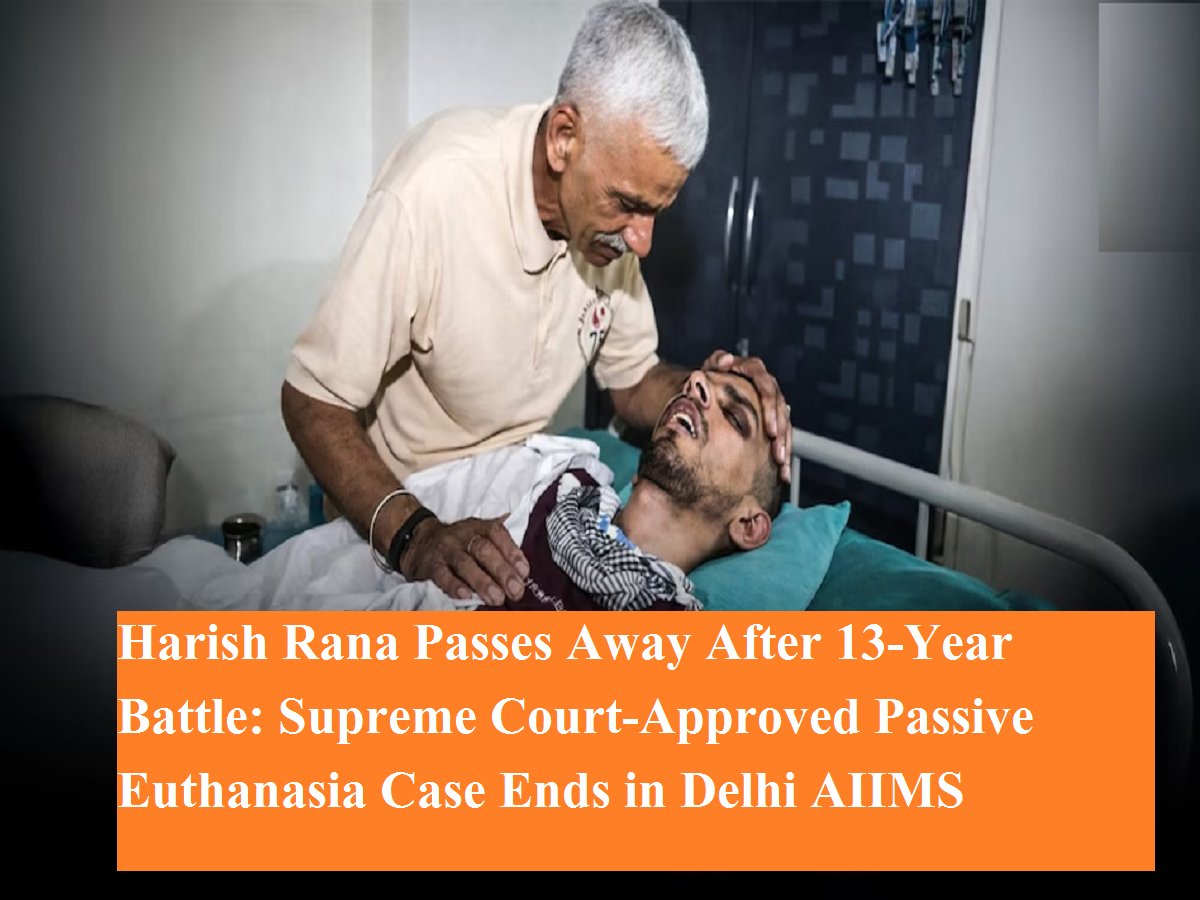
In a deeply emotional development, Harish Rana, a resident of Raj Nagar Extension in Ghaziabad, has passed away at the All India Institute of Medical Sciences (AIIMS) in Delhi. His death marks the end of a long and painful medical journey that lasted more than 13 years. Rana had been in a critical condition for over a decade and was among the rare individuals in India who received permission from the Supreme Court for passive euthanasia.
A Life Marked by Prolonged Suffering
Harish Rana’s story is one that drew national attention due to the extraordinary circumstances surrounding his health. For more than 13 years, he remained in a near-comatose state, dependent on life support systems and medical care. His condition had reportedly left little hope for recovery, and his family had been enduring emotional and financial stress throughout this prolonged period.
Doctors and caregivers had been providing continuous support, but his health showed no significant improvement over the years. His case became a symbol of the challenges faced by families dealing with long-term critical illnesses, especially when there is no clear path to recovery.
Supreme Court’s Permission for Passive Euthanasia
Rana’s case gained legal significance when his family approached the Supreme Court seeking permission for passive euthanasia. Passive euthanasia involves withdrawing or withholding life-sustaining treatment in cases where recovery is deemed impossible, allowing the patient to pass away naturally.
After reviewing medical reports and considering the prolonged suffering, the Supreme Court granted approval, making Rana one of the few individuals in India to receive such a legal nod. The decision highlighted the evolving legal and ethical framework around end-of-life care in the country.
The court’s approval also brought attention to the importance of patient dignity and the rights of families to make difficult decisions in cases of irreversible medical conditions.
Final Moments at AIIMS Delhi
Harish Rana breathed his last at Delhi’s AIIMS, one of India’s leading medical institutions. He had been under treatment there, where doctors continued to monitor his condition until his final moments. His passing has brought closure to a long chapter of pain, both for him and his family.
Family members and close relatives have expressed a mix of grief and relief, acknowledging that his suffering has finally come to an end. The emotional toll of watching a loved one remain in a critical state for years is immense, and Rana’s story resonates with many who have faced similar situations.
A Case That Sparked National Debate
Rana’s case once again brings focus to the sensitive issue of euthanasia in India. While active euthanasia remains illegal, passive euthanasia has been permitted under strict guidelines laid down by the Supreme Court. These guidelines ensure that decisions are made carefully, with medical evidence and legal oversight.
The case also underscores the need for greater awareness about living wills and advance medical directives, which allow individuals to specify their wishes regarding medical treatment in situations where they may not be able to communicate.
The Larger Conversation on End-of-Life Care
Harish Rana’s journey has reignited discussions around healthcare policies, patient rights, and ethical decision-making in India. Experts believe that cases like his highlight the importance of strengthening palliative care services and providing support systems for families dealing with long-term illnesses.
As India continues to develop its legal and medical frameworks, Rana’s story will remain a significant reference point in conversations about dignity in death and compassionate healthcare.
His passing is not just the end of a personal struggle but also a reminder of the complex choices families and medical professionals face in situations where life hangs in balance for years.