ENTERTAINMENT
Ghooskhor Pandat Controversy: Netflix Pulls Teaser After FIR, Neeraj Pandey Clarifies Film’s Intent

The upcoming Bollywood film Ghooskhor Pandat, starring Manoj Bajpayee, has become the center of controversy even before its teaser release. Complaints regarding the film’s title and perceived references to a specific community led to widespread outrage and a formal FIR being registered in Lucknow. In response, Netflix and the filmmakers have removed the teaser and all promotional material from social media platforms.
FIR and Public Reaction
The FIR was filed at Hazratganj Police Station in Lucknow after protests claimed that the title “Ghooskhor Pandat” was derogatory towards the Brahmin community. Critics argued that linking the word “Pandit” with corruption could tarnish the image of an entire community. Various social organizations, including Brahmin groups, demanded immediate action, leading to heightened public scrutiny of the film.
Neeraj Pandey Clarifies
Film producer and writer Neeraj Pandey issued a statement emphasizing that the film is entirely fictional. He said, “Our film is a completely fictional cop drama, and the use of the word ‘Pandit’ is not intended to offend any particular community. The film focuses on the actions and priorities of an individual, and does not focus on any religion, caste, or community. Like my previous films, this project has been made with complete seriousness, and its sole purpose is to entertain.”
Manoj Bajpayee’s Statement
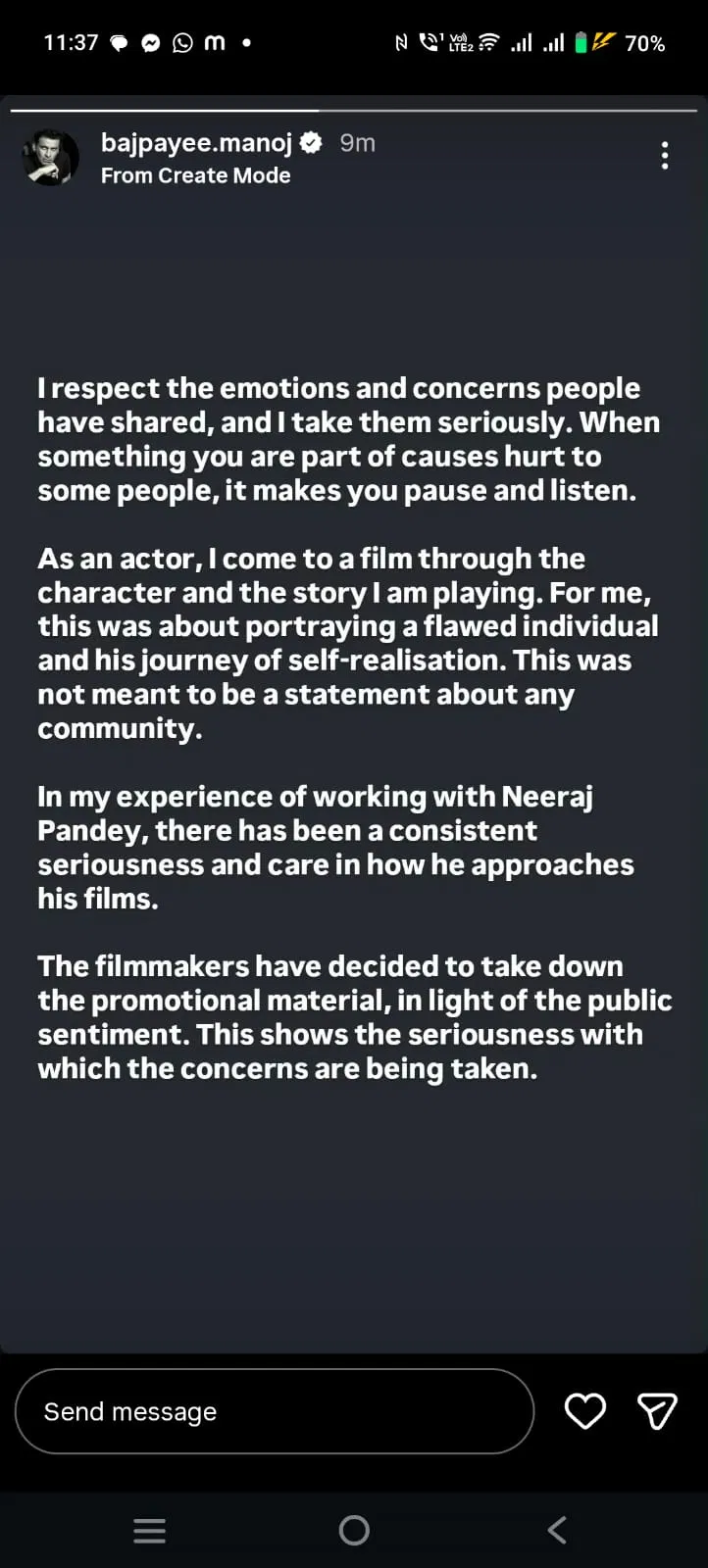
Actor Manoj Bajpayee also addressed the controversy on social media, stating, “I respect the sentiments and concerns shared by people. For me, the role was about portraying a wronged individual and his journey of self-realization. This was never meant as a commentary on any community. Working with Neeraj Pandey, I know the film is created with seriousness and care. Given public sentiment, the filmmakers’ decision to remove promotional material reflects how seriously these concerns are being taken.”
The incident has once again highlighted the sensitivity surrounding film titles and content, prompting filmmakers to tread cautiously while addressing public sentiment.