BUSINESS
Deepinder Goyal’s Temple Wearable Can Track Brain Blood Flow Changes? First Study Shows Promising Results
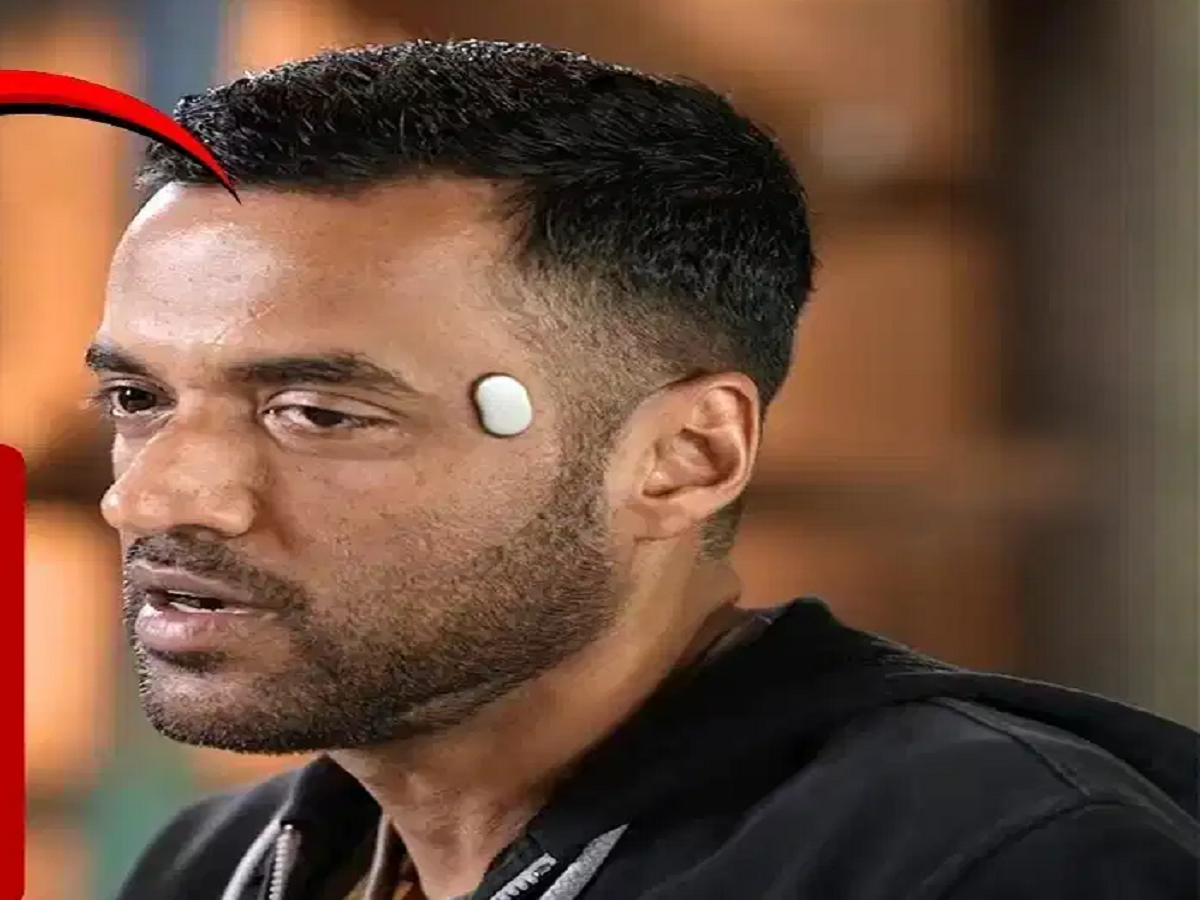
Deepinder Goyal's upcoming wearable Temple has attracted considerable attention since it was first revealed, and its latest research could make the device even more interesting.
The wearable, designed to sit around the temple area of the forehead, has now been evaluated for its ability to detect changes in blood flow related to the brain. The first validation study compared Temple's readings with those from transcranial Doppler (TCD), an established ultrasound-based technique used to assess blood flow in major arteries supplying the brain.
The early results are encouraging, with researchers reporting a strong correlation between the two measurements. However, the study is still preliminary and shouldn't be interpreted as proof that Temple can replace a medical device.
Temple vs transcranial Doppler: What was tested?
The study, titled “Concordance Between a Temple-Worn Optical Wearable and Transcranial Doppler During Exercise and Postural Transitions in Healthy Adults,” examined whether Temple could detect changes that were also observed using TCD.
TCD uses ultrasound to measure blood-flow velocity in major arteries supplying the brain. Temple, meanwhile, uses an optical sensor positioned near the forehead to capture signals from the area and process them into a brain-flow-related measurement.
The study involved 23 healthy adults, although usable data from both experiments was available for 20 participants.
What happened during exercise?
In the first experiment, participants cycled and then entered a recovery period.
As expected, the measurements showed that blood flow to the brain changed during exercise and then moved in the opposite direction during recovery.
Interestingly, Temple detected a similar pattern to the TCD measurements.
This suggests that the wearable may be capable of tracking changes in brain blood-flow-related signals during different physiological conditions.
Heart rate doesn't tell the whole story
The second experiment produced another interesting observation.
Participants repeatedly moved between standing and lying down. During the positional changes, the researchers observed changes in brain blood-flow measurements, while heart rate did not necessarily move in the same direction.
This highlights why measuring only pulse or heart rate may not provide a complete picture of what's happening with circulation in the brain.
According to the study, Temple's signal was able to capture changes that weren't directly apparent from simply looking at heart rate.
Correlation of around 0.8
Across the experiments, researchers reported an individual-level correlation of approximately 0.8 between Temple's brain-flow readings and the corresponding TCD measurements.
That's an encouraging result, but it needs to be interpreted carefully.
Temple does not directly measure blood flowing through the brain in the same way as TCD. Instead, its optical sensor records signals near the temple, which are processed to generate a brain-flow-related measurement.
The study essentially tested whether changes detected by Temple corresponded with changes observed using the established TCD technique.
The research is still preliminary
There is an important caveat: this isn't yet definitive clinical validation.
The study involved a small group of healthy adults, and it is currently a preprint awaiting peer review. More research involving larger and more diverse groups of participants will be needed to determine how reliable the technology is across different people and health conditions.
Therefore, the results shouldn't be taken to mean that Temple can currently diagnose brain or cardiovascular conditions or replace clinical testing.
Temple is getting closer to launch
The study comes as Temple moves closer to becoming available to consumers.
Deepinder Goyal has previously said that the newer version of the wearable is less than half the size of the previous model. Limited-edition pre-orders are expected to open soon, with shipments planned towards the end of 2026.
The company has not yet announced the final price or confirmed the exact launch date.
If the technology performs as suggested in larger studies, Temple could offer something unusual in the wearable market: the ability to continuously track changes in a signal associated with brain blood flow, rather than focusing only on familiar metrics such as heart rate, sleep and activity.
For now, however, the first study is best viewed as an encouraging early validation—not a final verdict on the technology.